Swedish sorting rules, sommarstuga cabins without collection, and a flood of compostable claims make July and August the hardest months for low-waste pet waste management. This comparison weighs compostable litters against biodegradable bags, and bulk buying against convenience packs, so you can choose what actually works.
Key Takeaways
- Swedish sorting rules decide more than the packaging claim does. In most Swedish municipalities, cat litter and dog waste go to restavfall (residual waste), not matavfall (food waste), regardless of whether the product says compostable.
- Compostable litter and biodegradable bags solve different problems. Litter choice affects raw material extraction and transport weight. Bag choice affects plastic volume and end-of-life behaviour. Improving one does not fix the other.
- At a sommarstuga without collection, the container matters more than the material. Odour control, wildlife resistance, and safe transport home outrank certification logos.
- Bulk and refill buying usually cuts more packaging than switching materials. A single 20 to 30 litre litter purchase replaces several small bags and their transport emissions.
- Most home composting of pet waste is not appropriate. Cat faeces carries a real parasite risk, and typical garden compost heaps rarely hold the temperatures needed to destroy pathogens.
- Honest trade-off: the lowest-waste option is often slightly less convenient, heavier to carry, or marginally more expensive per month. Choose the version you will actually maintain through a busy summer.
Why July and August Are the Hard Months in Sweden
Swedish summer routines shift dramatically. Households move between city flats and rural cabins, waste rooms fill unevenly, municipal collection schedules change over the semester period, and pets travel more than at any other point in the year. A litter and waste routine that runs smoothly in a Stockholm apartment in February can collapse within a week at a Dalarna cabin with no bin collection at all.
Warm weather also intensifies odour. Bacterial activity in soiled litter and dog waste accelerates in higher ambient temperatures, which is why owners who never think about waste in winter suddenly start buying scented products, doubling bag thickness, or emptying trays more often in summer. Each of those reactions carries an environmental cost, and some are avoidable with better planning.
The sustainable pet care question is therefore not simply which product is greenest. It is which system holds up across two very different living situations within the same eight weeks. Owners who already track their pet's environmental impact may find our guide to lowering your dog's pawprint in a Dutch summer a useful companion, since many of the principles transfer directly.
Understanding Swedish Sorting Rules First
Before comparing products, the sorting framework has to be clear, because a compostable product placed in the wrong stream delivers no benefit and may create contamination.
The Common Municipal Position
Swedish waste management is municipal, so exact rules vary between kommuner. However, the widely applied general position is as follows:
- Cat litter (all types, including mineral, wood, paper and plant-based): normally sorted as restavfall, the residual waste fraction sent for energy recovery through incineration.
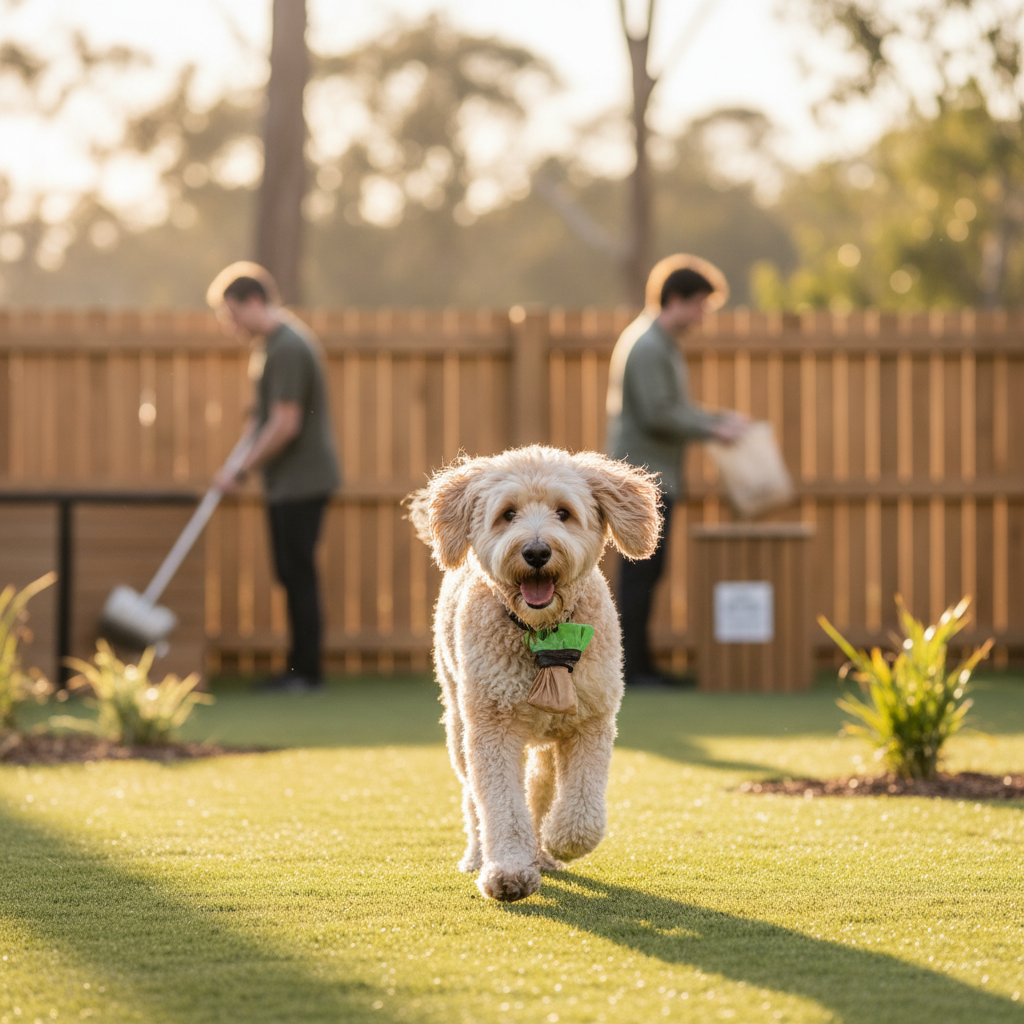
- Dog waste: normally restavfall, or deposited in dedicated hundlatrin bins where a municipality provides them.
- Food waste bins (matavfall): intended for kitchen organic waste. Pet faeces and used litter are generally excluded, because the biogas and digestate processing chain is not designed for animal pathogen loads or mineral litter residue.
The practical consequence is significant. Because most Swedish residual waste goes to energy recovery rather than landfill, a certified compostable bag will typically be incinerated alongside conventional plastic. Its compostability certificate becomes largely irrelevant at end of life. What still matters is the raw material, its production footprint, and the packaging it arrived in.
Always Check Your Own Kommun
Rules genuinely differ. Some municipalities publish specific guidance on wood-fibre litters, and some provide hundlatrin coverage in recreation areas while others expect owners to carry waste to household bins. Checking the local kommun website before summer is a five-minute task that prevents an entire season of well-intentioned mis-sorting.
Side-by-Side Comparison: Compostable Litters and Biodegradable Bags
| Factor | Compostable or plant-based litter | Conventional mineral litter | Certified biodegradable bags | Recycled-content plastic bags |
|---|---|---|---|---|
| Typical raw material | Wood pellets, paper, corn, grass, cassava, coconut fibre | Bentonite or sodium clay, silica gel | Plant starch blends, PBAT compounds | Post-consumer recycled polyethylene |
| Extraction impact | Renewable, often forestry or agricultural side-streams | Mined, non-renewable, land disturbance | Agricultural land use for feedstock | Low, diverts existing plastic |
| Transport weight | Generally lighter per litre | Heavy, higher transport emissions | Negligible | Negligible |
| Odour control in heat | Variable, wood performs well, paper less so | Usually strong, clumping types excel | Varies, thinner films can permeate | Good barrier properties |
| Swedish end-of-life | Restavfall, energy recovery | Restavfall, energy recovery, inert so limited energy value | Restavfall, energy recovery | Restavfall, energy recovery |
| Home composting suitability | Only for herbivore bedding, not cat faeces | Not suitable | Requires industrial conditions, rarely met at home | Not suitable |
| Bulk availability in Sweden | Good, large sacks widely sold | Very good | Moderate, often small rolls | Good |
| Typical monthly cost trend | Comparable to slightly higher | Often lowest per litre | Higher per bag | Lowest per bag |
| Cabin practicality | Strong, lighter to transport | Weak, heavy to haul | Weak if storing waste for days | Strong for sealed storage |
Key Differences That Actually Matter
Weight and Transport
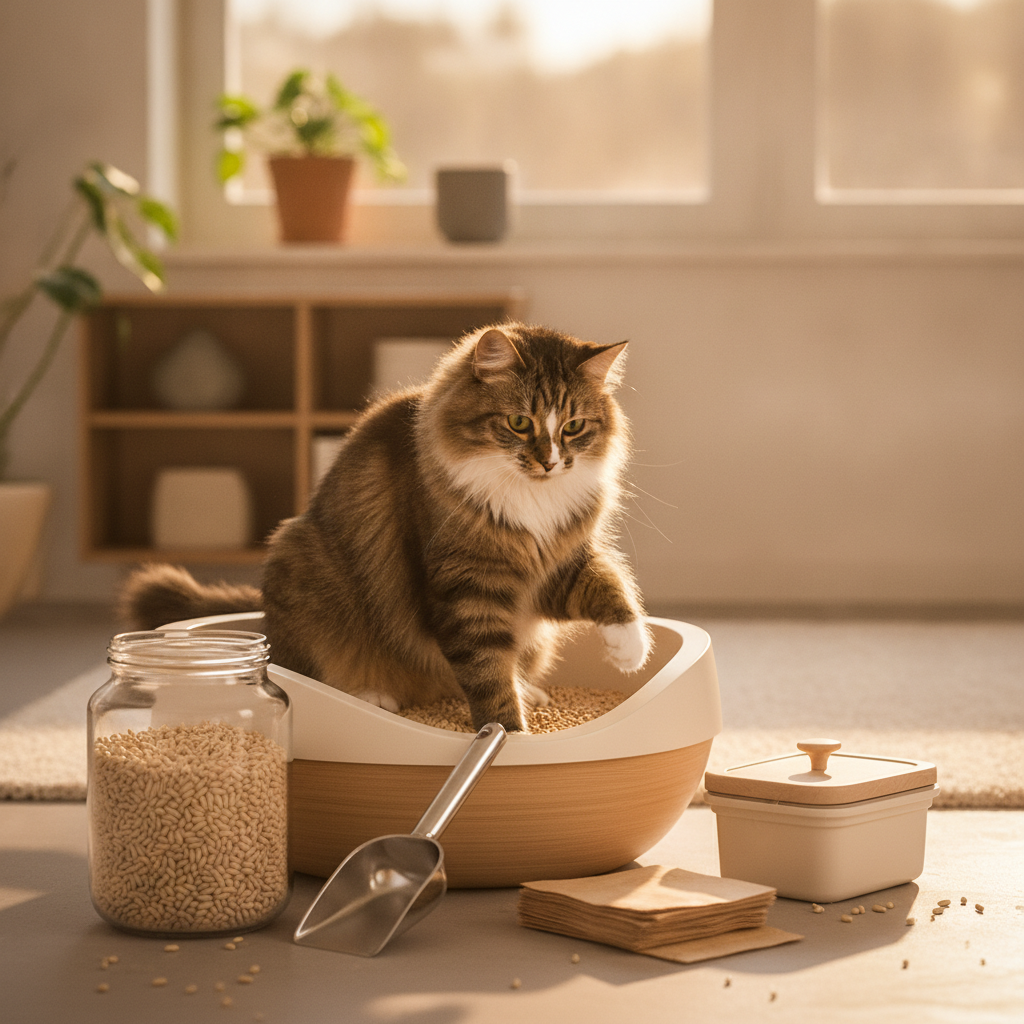
The single most underestimated factor is mass. Mineral clumping litter is dense, and transporting it to a rural cabin means carrying substantial weight by car or boat. Wood pellet and paper litters are notably lighter per litre of coverage, which reduces both the household hassle and the transport emissions attached to every purchase. For owners making multiple trips between city and cabin in July and August, this difference compounds quickly.
Odour Performance Under Summer Conditions
Owners commonly report that clumping mineral litters outperform plant-based options for immediate odour suppression, particularly in warm rooms. Wood pellet litters perform respectably because the natural resin content contributes to odour masking, while some recycled paper products underperform in heat. This is an honest trade-off rather than a marketing myth. The practical mitigation is more frequent scooping rather than a switch back to heavier mineral products, since daily removal of solids addresses the underlying cause.
Litter Box Behaviour and Substrate Preference
Any comparison must acknowledge feline preference. Behavioural guidance from veterinary and welfare bodies consistently notes that cats develop substrate preferences, and abrupt litter changes are a recognised trigger for house-soiling. Professional consensus suggests transitioning gradually, mixing a small proportion of the new material into the existing litter and increasing it over one to two weeks. Switching materials on the day you arrive at a summer cabin, in an unfamiliar environment, is the least favourable timing possible.
Bag Material Realities
Certified compostable bags carry legitimate value in systems that actually compost them industrially. In a Swedish residual waste stream headed for incineration, that value is not realised. A bag made with high post-consumer recycled content may in practice represent a stronger environmental choice, because it displaces virgin plastic production. Neither option is a scandal, and neither is a miracle. Owners should be sceptical of packaging that implies a bag will vanish harmlessly in the forest, because it will not.
Managing Waste at a Sommarstuga Without Collection
This is where most low-waste plans break down, and where practical containment beats material claims.
Build a Closed-Loop Carry-Out System
- Designate a sealed transport container. A rigid, lidded, food-grade bucket or a hard-sided bin with a clamping lid is the core of the system. It contains odour, resists wildlife interest, and prevents leakage in a car boot.
- Line it, do not fill it loose. Bag waste individually, then place bags inside the sealed container. This limits odour release each time the lid opens.
- Keep it shaded and cool. Storage in direct summer sun accelerates decomposition and gas build-up. A shaded outbuilding, north-facing wall, or ventilated shed is preferable.
- Schedule removal with your travel pattern. Most owners return to a town or a återvinningscentral at some point during a cabin stay. Attach waste removal to an existing trip rather than a special journey, which avoids adding emissions.
- Never bury cat faeces near water. Groundwater, wells, and lake margins are the exact places where pathogen transfer becomes a genuine hazard.
Wildlife and Allemansrätten Considerations
Sweden's right of public access carries a corresponding duty not to disturb or damage. Dog waste left on trails, even in a bag intended for later collection, frequently ends up forgotten. Foxes, corvids, and rodents will investigate improperly stored waste. A sealed container is not merely tidy, it is the responsible position under a framework built on mutual trust.
If You Are Leaving Pets With a Sitter
Waste routines break down fastest when someone else takes over. Written instructions covering which bin, which bag, and where the sealed container lives prevent a fortnight of mis-sorting. Our guide to finding trustworthy pet sitters during a summer exodus covers the wider vetting process, and the same handover discipline applies here.
Refill and Bulk Buying: The Highest-Impact Change
Packaging reduction is often the most reliable environmental gain available, because it does not depend on end-of-life infrastructure.
Litter
- Buying one large sack rather than several small packs reduces plastic film per litre substantially and cuts the number of delivery or driving trips.
- Decant into a lidded storage bin at home. This keeps litter dry, which matters in humid coastal summers, and removes the temptation to buy small emergency packs.
- Some Swedish pet retailers and farm supply stores stock wood pellets in large agricultural sacks. Verify the product is intended for animal use and is free of chemical additives before switching.
Bags
- Bulk boxes of rolls reduce per-unit packaging compared with small retail packs.
- Right-size the bag. Oversized bags for a small dog waste tens of thousands of square centimetres of film across a year.
- Reuse suitable household bags where hygiene allows, such as bread bags or cereal liners, for garden or immediate-disposal use.
Food and Consumables
The same logic extends beyond waste. Bulk food purchasing, refillable containers, and avoiding single-serve pouches all reduce the total packaging attributable to a pet. Owners planning a broader sustainability review may find the approach in our heat-resilient eco catio guide useful for thinking about durable, low-replacement pet infrastructure.
Composting Myths Worth Ignoring
Myth: Compostable Litter Can Go in the Food Waste Bin
In most Swedish municipalities it cannot. The matavfall stream is designed for kitchen organics feeding biogas production. Litter volume, mineral content, and pathogen risk all conflict with that process. Check your kommun, but assume no unless explicitly permitted.
Myth: Garden Compost Handles Cat Waste Fine
Cat faeces can carry Toxoplasma gondii oocysts, which are notably resistant. Public health guidance from established bodies consistently advises that pregnant people and immunocompromised individuals avoid handling cat litter. Typical garden compost heaps do not reliably sustain the sustained high temperatures required for pathogen destruction, and finished compost is often used on food crops. The risk is small in absolute terms but the consequences are serious, and the safe answer is straightforward.
Myth: Biodegradable Means It Disappears Outdoors
Certified compostable plastics require specific industrial conditions of temperature, humidity, and microbial activity. In a Swedish forest floor, in a cool climate, degradation is slow and incomplete. A bag left behind is litter regardless of its certification.
Myth: Flushing Is the Green Option
Swedish wastewater guidance broadly discourages flushing pet waste and litter. Treatment plants are not designed for it, litter causes blockages, and rural properties frequently rely on septic systems that cope poorly with the load.
Myth Worth Partially Keeping: Dog Waste Composting
Dedicated dog waste digesters exist and can function at a permanent property with suitable soil, distance from wells, and correct siting. The output should never be used on edible crops. This is a legitimate option for some rural households, but it is a considered installation rather than a casual heap.
Lifestyle Match Guide: Which Setup Fits Your Situation?
City Flat, One Indoor Cat, No Cabin
Prioritise a bulk-bought wood pellet or paper litter decanted into a sealed bin, daily scooping, and a right-sized recycled-content bag for tray waste. Packaging reduction plus consistent routine delivers the strongest realistic outcome.
City Base Plus Regular Sommarstuga Weekends
Run two identical setups, one at each location, using the same litter brand and type to avoid substrate stress. Keep a dedicated sealed transport container permanently in the car. Consistency across locations is the single biggest determinant of success.
Full Summer at a Rural Cabin, Dog Only
Invest in a rigid, wildlife-resistant sealed bin and a fixed weekly removal trip tied to grocery runs. Consider a properly sited dog waste digester only if the property is permanent and well away from water sources.
Multi-Pet Household With High Volume
Bulk buying becomes economically as well as environmentally compelling. Separate trays and staged litter changes matter more here, since multi-cat households are more sensitive to litter box aversion. Expect higher total volume and plan storage before summer starts.
Travelling With Pets Across Regions
Carry a compact spill-proof kit and accept that perfect sorting is not always available in transit. Pair this with broader travel preparation such as our summer pet first aid kit guidance, which covers the same principle of packing once and packing properly.
Sourcing and Purchasing Considerations
- Verify the additive list. Untreated wood pellets are preferable to products with synthetic fragrance, which offers no environmental benefit and may deter sensitive cats.
- Prefer side-stream materials. Litters made from forestry or agricultural by-products carry a lower footprint than those requiring dedicated crop production.
- Consider domestic or regional production. Shorter transport distances meaningfully reduce impact for heavy goods, and Sweden has substantial domestic forestry-based production.
- Be sceptical of vague claims. Terms such as natural or eco-friendly have no regulatory force. Certification marks, material declarations, and stated origin are more informative.
- Buy for the season, not the year. Very large stockpiles of paper-based litter can absorb moisture in humid summer conditions and degrade.
A Low-Waste Routine for July and August
Before the Season
- Check your kommun's current sorting rules for both your home address and your cabin municipality.
- Complete any litter transition at least two weeks before travel, using gradual mixing.
- Buy litter in bulk once, decant into sealed storage at both locations.
- Source a rigid sealed transport container and test it for odour containment.
Daily
- Scoop solids at least once daily, twice in hot weather, to control odour without extra product.
- Use right-sized bags and knot rather than double-bag.
- Store sealed waste in shade, never in a sunlit car.
Weekly
- Transfer accumulated waste to the correct residual stream on an existing trip.
- Wash trays with hot water and unscented detergent rather than replacing them.
- Top up rather than fully replace litter where hygiene permits, which reduces total consumption.
End of Season
- Empty and clean cabin storage completely before closing up, to avoid attracting wildlife.
- Review what actually worked. A routine abandoned in week three is worse than a modest routine sustained all summer.
Decision Checklist: Which Is Right for Me?
- Does my cat already use the tray reliably? If yes, change litter slowly or not at all during summer travel.
- Am I transporting litter by car or boat? If yes, weight reduction favours wood or paper types.
- Does my cabin have any waste collection? If no, container quality outranks material choice.
- Will my waste realistically be incinerated? If yes, recycled-content bags may outperform compostable ones.
- Can I commit to daily scooping? If yes, plant-based litters become far more viable in heat.
- Do I have storage space for bulk purchases? If yes, this is the highest-impact change available.
- Is anyone in the household pregnant or immunocompromised? If yes, follow standard precautions and avoid any composting of cat waste entirely.
- Am I near a well, lake, or watercourse? If yes, rule out burial and digesters near water.
The Honest Bottom Line
The most common regret owners express is not choosing the wrong litter, it is building a summer system so elaborate that it collapses by mid-July. Environmental benefit comes from the routine that survives August, not the one that photographs well in June.
For most Swedish households, the strongest realistic combination is a lighter plant-based or wood litter bought in bulk, right-sized bags with recycled content, disciplined daily scooping, correct sorting into restavfall, and a rigid sealed container for any location without collection. Skip the composting shortcuts for cat waste entirely. That combination is unglamorous, affordable, and consistent with both Swedish municipal rules and sound animal welfare practice.
When to Seek Professional Advice
Consult a veterinarian if a cat stops using the litter tray after a change, shows straining or altered urination, or if a dog's stool consistency changes markedly during travel. House-soiling is frequently a medical sign rather than a preference issue, and welfare organisations consistently advise ruling out medical causes before behavioural intervention. For questions about local waste rules, the relevant kommun's waste department is the authoritative source.
Frequently Asked Questions
Can I put cat litter in the Swedish food waste bin (matavfall)? ↓
Are biodegradable dog waste bags actually better in Sweden? ↓
Is it safe to compost cat waste at a summer cabin? ↓
How do I manage pet waste at a sommarstuga with no bin collection? ↓
Will switching to a compostable litter upset my cat? ↓
Does bulk buying really reduce environmental impact more than switching materials? ↓

Priya Nair
Dog Breed Advisor & Adoption Counsellor
Dog breed advisor and adoption counsellor — honest breed comparisons and lifestyle matching for prospective owners.
Content Disclosure
This article was created using state-of-the-art AI models with human editorial oversight. It is intended for informational and entertainment purposes only and does not constitute veterinary medical advice. Always consult a licensed veterinarian for your pet's specific health needs. Learn more about our process.