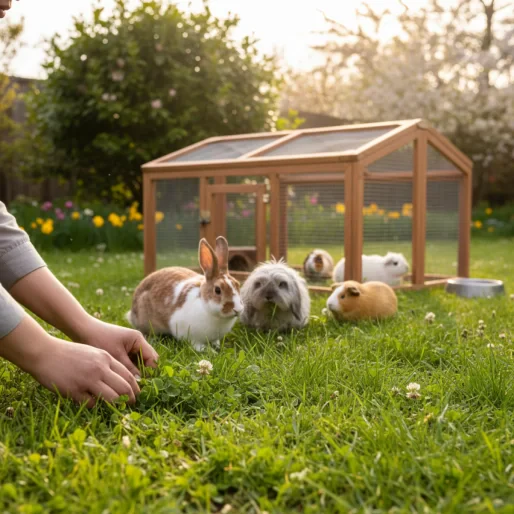

In this article
Key Takeaways
- A predator-proof run requires weld mesh (not chicken wire), a secure roof, buried or weighted edges, and bolt-snap locks.
- Guinea pigs and rabbits should only graze outdoors when temperatures are between roughly 10°C and 25°C (50°F to 77°F).
- Common spring weeds such as buttercup, foxglove, ragwort, and bindweed are toxic and must be removed before any outdoor grazing session.
- Supervision is essential: check your pets at least every 15 to 20 minutes and never leave them outdoors overnight in a temporary run.
- Gradually introduce fresh grass over 7 to 10 days to avoid dangerous digestive upset.
Why Spring Grazing Matters
Spring offers rabbits and guinea pigs something indoor housing cannot fully replicate: direct sunlight for natural vitamin D synthesis, varied foraging opportunities, mental stimulation from new scents and textures, and the chance to exercise on a natural surface. Veterinary guidelines consistently highlight the welfare benefits of safe outdoor access for small herbivores, provided the environment is set up correctly.
However, spring also introduces risks. Predators become more active, toxic weeds sprout rapidly, and changeable weather can push temperatures outside a safe range within minutes. This guide walks through everything needed to set up, use, and supervise a spring grazing run confidently.
What You Will Need
Materials for the Run
- Weld mesh panels (also called welded wire mesh): Choose a gauge no wider than 13 mm x 25 mm (0.5 in x 1 in) for guinea pigs. Chicken wire is not predator-proof because foxes, dogs, and even cats can bend or tear it.
- Timber or metal framing: Pressure-treated, pet-safe timber or powder-coated steel tubing.
- Mesh roofing or solid panel roof: Essential for aerial predator protection and shade.
- Bolt-snap locks or combination padlocks: Simple hook-and-eye latches can be opened by raccoons or clever corvids.
- Ground pegs, paving slabs, or an attached mesh skirt: To prevent digging predators from reaching underneath.
- Shade cloth or a weatherproof tarpaulin: Covering roughly one third to one half of the roof area for sun and rain shelter.
Additional Supplies
- Heavy ceramic water bowl or a clip-on bottle (check it dispenses properly when tilted at an outdoor angle).
- A hay rack or pile of fresh hay for supplementary fibre.
- A hideaway shelter inside the run: a wooden arch, tunnel, or upturned box with an entrance hole.
- A basic outdoor thermometer, ideally one with a max/min memory function.
- Garden gloves and a weed identification guide or reliable plant ID app.
Step-by-Step Setup Guide
Step 1: Choose the Right Location
Place the run on a flat, well-drained section of lawn. Avoid low-lying areas that collect standing water after rain. The spot should receive a mix of sunlight and natural shade from trees or a building for at least part of the day. Owners commonly overlook proximity to compost heaps, garden sheds storing chemicals, or areas recently treated with pesticides or herbicides. Any section sprayed with lawn chemicals in the past four to six weeks is unsafe for grazing.
Step 2: Inspect and Prepare the Ground
Before placing the run, walk the entire area on hands and knees. Remove all identifiable weeds (see the toxic weed section below), litter, sharp stones, and any animal droppings. Check for ant nests, wasp activity near ground level, and slug pellets, which are highly toxic to small animals.
If the lawn has bare patches exposing soil, those spots may harbour parasites such as Encephalitozoon cuniculi spores if wild rabbits have access to the garden. Covering bare patches or choosing a different section is the safer option.
Step 3: Assemble a Predator-Proof Frame
Build or position the run so that:
- All mesh joins are secured with cage clips or screws, not cable ties, which degrade in UV light.
- The roof is fully enclosed. Open-top runs leave pets vulnerable to birds of prey, cats, magpies, and crows.
- Doors or lids have at least two locking points. A determined fox can lift a single latch.
- The base is protected: either attach a mesh floor (less comfortable but very secure), use a mesh skirt extending 30 cm (12 in) outward flat on the ground weighted with paving slabs, or drive ground pegs through the bottom frame rails into the earth.
Professional consensus suggests that the minimum run size for two rabbits is approximately 3 m x 2 m x 1 m high (roughly 10 ft x 6.5 ft x 3 ft). For two guinea pigs the footprint can be smaller, around 1.5 m x 1 m (5 ft x 3 ft), but larger is always better. Height is less critical for guinea pigs but should still allow a solid roof.
Step 4: Add Shade, Shelter, and Water
Attach shade cloth or a tarp over one end. Place a hideaway shelter inside; rabbits and guinea pigs are prey animals and become stressed without a bolt-hole. Position the water source in the shaded section to keep it cooler and reduce algae growth. Provide hay, because fresh grass alone does not replace the long-fibre component of their diet.
Step 5: Introduce Grass Gradually
This step is critical and frequently overlooked by first-time owners. A rabbit or guinea pig that has been on hay and dried food all winter can develop serious gastrointestinal stasis or bloat if suddenly given unlimited fresh grass. Veterinary guidelines recommend starting with 15 to 20 minutes of grazing on day one and increasing by about 10 to 15 minutes each day over 7 to 10 days until the animal is comfortable with a full session. Watch for soft droppings, a hunched posture, or refusal to eat hay afterwards; these signal digestive disturbance.
For more on keeping long-haired rabbits comfortable during the spring transition, see Spring Grooming Guide for Long-Haired Rabbits.
Toxic Weed Identification
Spring growth brings rapid weed emergence. The following plants are commonly found in gardens and are toxic to rabbits and guinea pigs. This is not an exhaustive list; when in doubt about any plant, remove it.
- Buttercup (Ranunculus spp.): Bright yellow flowers, lobed leaves. Contains protoanemonin, which causes mouth irritation, drooling, and gut pain. Toxicity decreases when dried, but fresh plants should always be removed.
- Foxglove (Digitalis purpurea): Tall spikes of tubular purple or pink flowers, large fuzzy leaves in a rosette. Contains cardiac glycosides. Even a small amount can be fatal.
- Ragwort (Jacobaea vulgaris): Yellow daisy-like flower clusters, ragged leaves. Contains pyrrolizidine alkaloids causing irreversible liver damage.
- Bindweed (Convolvulus spp.): Twining vine with trumpet-shaped white or pink flowers.
- Deadly nightshade (Atropa belladonna) and woody nightshade (Solanum dulcamara): Both contain tropane or solanine alkaloids.
- Privet (Ligustrum spp.): Common hedging plant; leaves and berries are toxic.
- Hemlock (Conium maculatum): Tall, white umbrella-shaped flower clusters, purple-blotched stems. Extremely poisonous.
- Lily of the valley (Convallaria majalis): Low-growing with bell-shaped white flowers. Cardiac glycosides throughout the plant.
A reliable approach is to photograph any unidentified plant and cross-reference it with a trusted database such as the ASPCA Poison Control list or the Rabbit Welfare Association and Fund (RWAF) plant guide before allowing grazing in that area.
Spring is also a high-risk season for plant toxicity in other species. Cat owners may find Lily Poisoning in Cats: A Spring Emergency Guide helpful.
Temperature Thresholds
Rabbits and guinea pigs tolerate cool weather reasonably well but are highly susceptible to heat stress. Professional guidelines generally place the comfortable outdoor range as follows:
- Ideal range: 10°C to 20°C (50°F to 68°F).
- Acceptable with shade and water: Up to approximately 25°C (77°F).
- Danger zone: Above 26°C to 28°C (roughly 80°F and above). Rabbits in particular lack effective cooling mechanisms and can develop heatstroke rapidly.
- Too cold for guinea pigs: Below about 10°C (50°F) for extended periods. Guinea pigs are less cold-tolerant than rabbits.
On sunny spring days, ground-level temperatures inside a run can be several degrees higher than ambient air temperature, especially if the run sits on dark soil or paving. Use the thermometer at pet height, not at human standing height, for accurate readings.
Signs of Heat Stress
- Rapid, open-mouth breathing or panting.
- Lethargy, reluctance to move, or lying flat with limbs extended.
- Wet nose and chin from excessive salivation.
- Red or very pale ears (in rabbits).
If these signs appear, move the animal to a cool indoor area immediately, offer water, dampen ears gently with cool (not ice-cold) water, and contact a veterinarian.
Supervision Best Practices
Frequency of Checks
Even in a well-built predator-proof run, supervision remains essential. A good baseline is a visual check every 15 to 20 minutes. Many owners find it practical to place the run within view of a kitchen or living room window.
What to Monitor
- Behaviour: Both species should be alert, moving around, and nibbling. A hunched, motionless animal needs immediate assessment.
- Droppings: Normal rabbit droppings are round, dry, and plentiful. Guinea pig droppings are similar but slightly oval. Watery or mucus-coated droppings suggest digestive trouble. Absence of droppings over a couple of hours in a rabbit can indicate GI stasis, a veterinary emergency.
- Weather shifts: Spring weather changes quickly. If clouds clear and full sun hits the run, temperatures can spike within 20 to 30 minutes.
- Predator presence: Neighbourhood cats, unleashed dogs, foxes (even in urban areas), and birds of prey. A stressed guinea pig may freeze in place rather than run; do not assume a still animal is relaxed.
- Water supply: Bottles can clog or leak. Bowls can tip. Verify water is accessible at every check.
Session Length Guidelines
After the gradual introduction period, typical session lengths vary by temperature:
- Cool days (10°C to 16°C / 50°F to 61°F): Up to 2 to 3 hours for rabbits; 1 to 2 hours for guinea pigs.
- Warm days (17°C to 24°C / 63°F to 75°F): 1 to 2 hours, with mandatory shade.
- Hot days (above 25°C / 77°F): Early morning or late evening only, keep sessions under an hour, and consider skipping outdoor time if temperatures stay high.
Never leave rabbits or guinea pigs outdoors overnight in a temporary grazing run. Nighttime temperatures drop unpredictably in spring, dew soaks the ground, and nocturnal predators (foxes, owls, weasels, stoats) are most active after dark.
Multi-Pet Supervision
If housing rabbits and guinea pigs together in the same run, be aware that many welfare organisations, including the RWAF, advise against mixed-species housing. Rabbits can injure guinea pigs with powerful hind-leg kicks, and rabbits can carry Bordetella bronchiseptica, which causes serious respiratory illness in guinea pigs. If they must share outdoor time, supervise continuously and provide separate hiding spots.
What to Watch for During and After Grazing
- During: Limping (possible thorn or sharp object), scratching or head-shaking (parasites or insects), and excessive digging at the run edges (escape attempt or stress).
- After returning indoors: Check the coat and skin for ticks, grass seeds lodged near eyes or ears, and fly eggs (small white or yellow clusters on fur, especially around the rear). Flystrike in rabbits is a life-threatening emergency where blowfly larvae burrow into skin; it can develop in as few as 12 to 24 hours in warm weather.
- Over the following hours: Monitor appetite and droppings. A guinea pig or rabbit that stops eating or produces no droppings within a few hours of returning inside should be assessed promptly.
Monitoring technology can supplement, though not replace, direct checks. Owners interested in environmental tracking may find useful ideas in Smart Habitat Monitors for Reptile and Amphibian Care, as many of the same temperature and humidity sensors apply.
When to Call Your Vet Immediately
Contact a veterinarian without delay if you observe any of the following:
- Open-mouth breathing, gasping, or blue-tinged gums (oxygen deprivation).
- Complete loss of appetite lasting more than a few hours, especially in rabbits (GI stasis risk).
- Bloated, hard abdomen.
- Visible maggots or fly eggs on fur or skin.
- Sudden collapse, seizures, or inability to stand.
- Suspected plant poisoning: drooling, pawing at the mouth, diarrhoea, tremors.
- Bite wounds from a predator or another animal, even if they look minor. Puncture wounds can harbour deep infection.
Having your vet's emergency contact number saved on your phone before the first outdoor session is a practical step many owners forget. For guidance on managing veterinary costs, see Vet Visit Costs: Budget Alternatives Pet Owners Need.
Ongoing Maintenance
- Weekly: Re-inspect all mesh joins, locks, and frame connections. UV exposure and moisture degrade materials faster than many owners expect.
- Before each session: Walk the grazing area to check for new weed growth, animal droppings from wild visitors, and litter blown in by wind.
- Monthly: Move the run to a fresh patch of grass if possible. This reduces parasite load on the soil and allows the previous patch to recover.
- Seasonally: Reassess the setup as spring turns to summer. Shade requirements increase, and the risk of flystrike escalates with warmer temperatures. Also review any new pet ownership regulations that may affect outdoor enclosure requirements, as covered in New Pet Ownership Laws in 2026: A Global Guide.
Quick Reference Checklist
- Run built with weld mesh, secured roof, and predator-proof locks.
- Ground edges anchored or skirted to prevent digging access.
- Toxic weeds identified and removed.
- Shade covering at least one third of the run.
- Hideaway shelter and fresh hay inside.
- Clean water accessible and tested.
- Thermometer placed at pet height.
- Grazing introduced gradually over 7 to 10 days.
- Checks every 15 to 20 minutes.
- Post-session body check completed (ticks, fly eggs, grass seeds).
- Vet emergency number on hand.
Frequently Asked Questions
Content Disclosure
This article was created using state-of-the-art AI models with human editorial oversight. It is intended for informational and entertainment purposes only and does not constitute veterinary medical advice. Always consult a licensed veterinarian for your pet's specific health needs. Learn more about our process.