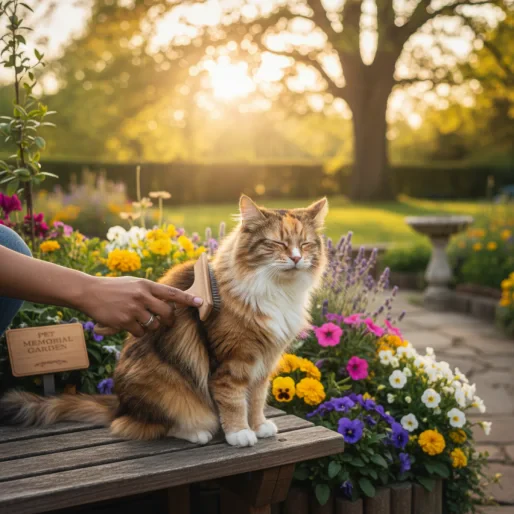
A practical guide to creating a pet-safe memorial garden suited to Ireland's maritime climate. Covers non-toxic plant choices, biodegradable urns, memorial markers, and grief support resources available across Ireland.
Key Takeaways
- Every plant chosen for a pet memorial garden should be cross-checked against the ASPCA Toxic and Non-Toxic Plants database before planting.
- Ireland's mild, wet maritime climate favours roses, snapdragons, asters, and native species such as primrose and heather, all of which are pet-safe.
- Biodegradable urns paired with native Irish trees (birch, rowan, or crab apple) create a living, long-lasting tribute suited to local soil and rainfall.
- Granite, slate, and local limestone are excellent weather-resistant options for engraved markers in Ireland's damp conditions.
- The Veterinary Poisons Information Service (VPIS) is the primary toxicology resource used by veterinary practices across Ireland.
- If a surviving pet ingests unknown plant material, contact your veterinary practice or an emergency out-of-hours veterinary service immediately.
Why a Memorial Garden Suits Irish Pet Owners
The loss of a pet disrupts the rhythm of daily life: the morning walk that no longer happens, the empty bed by the fire, the silence that settles in the evenings. For pet owners across Ireland, where gardens are a feature of most homes outside city centres, creating a memorial garden in spring offers a purposeful way to channel grief into something living.
Research highlighted by the Royal Horticultural Society (RHS) suggests that a significant proportion of bereaved individuals credit gardening with helping them manage grief and keeping the memory of a loved one present. Veterinary Ireland, the representative body for the veterinary profession in Ireland, has noted the growing recognition of pet bereavement as a genuine welfare concern for owners, and structured rituals such as memorial gardening align with the supportive approaches recommended by bereavement counsellors.
Ireland's temperate maritime climate, with its mild winters and reliable rainfall, is well suited to garden projects. The long growing season (typically March through October) and naturally moist soil mean that many pet-safe plants establish quickly without the intensive irrigation required in drier climates.
What You Will Need Before You Start
Tools and Supplies
- Garden fork, spade, and hand trowel
- Compost or well-rotted farmyard manure (widely available at Irish garden centres)
- Watering can or gentle-spray hose (useful during rare dry spells)
- Mulch: use bark mulch or straw. Avoid cocoa shell mulch entirely, as it contains theobromine, which is toxic to dogs.
- Gardening gloves
- Soil pH testing kit: Irish soils tend toward the acidic side, particularly in the west and midlands, so testing helps with plant selection
- A printed list of pet-safe plants from the ASPCA database
Planning Materials
- A rough sketch of your garden area with measurements in metres
- Notes on sun exposure: Irish gardens often have significant shade and cloud cover, so identify the sunniest spots
- Your chosen memorial marker or urn
- Temporary plant labels for planning layout before committing
Step by Step: Creating Your Memorial Garden
Step 1: Choose and Prepare the Site
Select a sheltered corner of your garden, ideally a spot where your pet liked to rest. In Ireland, shelter from prevailing southwesterly winds is particularly important for protecting flowers and young memorial trees. Avoid areas where chemical lawn treatments have been applied, especially if surviving pets will have access to the garden.
Clear the area of weeds and any plants you have not verified as pet-safe. Turn the soil to a depth of around 20 to 30 cm and work in compost. Many Irish gardens sit on heavy clay or waterlogged ground, particularly in the midlands and along river basins. If drainage is poor, consider building a raised bed using untreated timber or natural stone. Raised beds give you full control over soil quality and make it easier to keep the memorial space free of unknown plants.
Step 2: Select Pet-Safe Plants for the Irish Climate
This is the most critical safety step. Many common garden plants are toxic to dogs, cats, or both. Every plant must be checked against the ASPCA Toxic and Non-Toxic Plants database before purchasing.
Pet-Safe Spring Flowers That Thrive in Ireland
- Roses (Rosa spp.): Hardy in all Irish climatic zones. Thornless varieties are preferable if pets roam freely. Expect strong growth in Ireland's moist conditions.
- Snapdragons (Antirrhinum majus): Perform well in Irish spring temperatures (typically 8 to 15 °C). Available in many colours and safe for all household pets.
- Asters (Aster spp.): Daisy-like flowers in purples, pinks, and whites. Tolerant of cool, damp conditions and attractive to pollinators.
- Petunias (Petunia spp.): Ideal for borders and containers. Non-toxic to dogs and cats. Best in the sunniest available spot.
- Marigolds (Tagetes spp.): The common garden marigold (Tagetes) is listed as non-toxic by the ASPCA. Do not confuse with Marsh Marigold (Caltha palustris), which is toxic and grows wild in Irish wetlands.
- Primrose (Primula vulgaris): A native Irish wildflower that blooms from February through May. Non-toxic and perfectly adapted to the climate. It carries particular meaning in Ireland, where it marks the arrival of spring.
- Heather (Calluna vulgaris): Native to Irish boglands and hillsides. Non-toxic, low-growing, and extremely hardy. Provides year-round structure and colour in acid soils common across much of Ireland.
Plants to Avoid Entirely
- Lilies (Lilium and Hemerocallis species): Extremely toxic to cats. Even minor exposure to pollen can cause fatal kidney failure.
- Tulips and Hyacinths: Bulbs contain concentrated toxins. Dogs that dig may unearth and chew them.
- Rhododendrons and Azaleas: Widespread in Irish gardens and woodlands, but toxic to dogs and cats, causing vomiting, diarrhoea, and potentially cardiovascular collapse.
- Yew (Taxus baccata): Common in Irish hedgerows and churchyards. All parts except the fleshy berry coating are highly toxic to dogs, cats, and horses.
- Foxglove (Digitalis purpurea): A native Irish wildflower that often self-seeds in gardens. Beautiful but highly toxic, containing cardiac glycosides dangerous to pets and humans alike.
- Autumn Crocus (Colchicum autumnale): Highly toxic, causing multi-organ failure in pets.
Important safety note: If a surviving pet chews or ingests any plant material and shows signs such as drooling, vomiting, lethargy, tremors, or loss of appetite, contact your veterinary practice immediately. Outside normal hours, contact your nearest emergency or out-of-hours veterinary service. The Veterinary Poisons Information Service (VPIS) is the specialist toxicology resource used by veterinary professionals across Ireland and the UK. Your vet can consult the VPIS directly on your pet's behalf.
UCD Veterinary Hospital / Local Emergency Vet
Call your vet's emergency out-of-hours number or contact the UCD Veterinary Hospital in Dublin.
Irish vet practices provide out-of-hours emergency contact details on their answerphone message.
Step 3: Plan Your Layout
Before digging, lay your plants out in their pots to visualise the arrangement. Place taller varieties (roses, tall snapdragons) toward the back or centre, with lower-growing plants (petunias, primrose, heather) along edges. Leave a central space for your memorial marker or urn planting site.
A circular or semi-circular bed works well, with the marker or memorial tree as the focal point, bordered by rings of flowering plants. In smaller Irish gardens (many suburban plots are 10 to 15 metres deep), a compact raised bed of roughly 1.5 by 1.5 metres can create a meaningful and manageable memorial space.
Step 4: Plant and Mulch
Plant each selection at the depth noted on its nursery label. Water gently after planting, though Ireland's natural rainfall will often take care of ongoing moisture. Apply a 5 to 8 cm layer of pet-safe bark mulch around each plant, keeping mulch a few centimetres from stems to prevent rot.
Mulch warning: Cocoa shell mulch is sometimes sold at Irish garden centres and is toxic to dogs due to its theobromine content. Always choose bark mulch, straw, or untreated wood chips instead.
Step 5: Position Your Memorial Marker
Engraved markers serve as the centrepiece of the memorial garden. Given Ireland's high rainfall and humidity, material choice matters greatly for longevity:
- Granite: Extremely durable. Irish granite (such as stone from Wicklow or Galway quarries) withstands decades of wet weather with minimal degradation. Engravings remain legible for many years.
- Slate: Offers a natural, understated appearance. Performs well in damp conditions and suits woodland or cottage-style gardens.
- Limestone: Widely available in Ireland, particularly from the Burren and midlands regions. Softer than granite, so engravings may weather gently over time, which some owners find meaningful.
- Cast resin or concrete: More affordable (typically €20 to €60) and available in paw-print or heart designs. Less durable over many years in Irish rain but suitable for sheltered spots.
Set flat stones slightly into the ground on a bed of sand to prevent shifting. Upright markers may need a small concrete footing, as soft Irish soil and heavy rain can cause instability.
Step 6: Plant a Biodegradable Urn with a Native Irish Tree
For owners who have had their pet cremated, biodegradable urns designed to grow into trees offer a deeply meaningful option. The urn contains two compartments: one for cremated remains and one for a seed or young seedling. Over time, the urn breaks down and the remains nourish the tree as it grows.
Native Irish trees that are pet-safe and well suited to the climate include:
- Silver Birch (Betula pendula): Fast-growing, graceful, and completely non-toxic. Thrives in most Irish soils.
- Rowan or Mountain Ash (Sorbus aucuparia): A native tree with cultural significance in Ireland, traditionally planted near homes. Non-toxic to pets and produces berries that attract birds.
- Crab Apple (Malus sylvestris): An Irish native that produces beautiful spring blossom. The fruit and leaves are non-toxic, though seeds should not be consumed in quantity.
Tree safety note: Always verify the tree species is non-toxic to surviving pets. Yew (Taxus baccata) and laburnum (Laburnum anagyroides) are both found in Irish gardens and are highly toxic. Cross-reference with the ASPCA database before selecting.
What to Watch for After Planting
In the Garden
- Digging: Dogs may investigate freshly turned soil. Protect a newly planted urn site with a ring of larger stones or a low decorative border for the first few months.
- Slugs and snails: A persistent reality in Irish gardens. Avoid chemical slug pellets, which can be toxic to pets. Use pet-safe alternatives such as wool pellets, copper tape around raised beds, or hand-picking.
- Self-seeding weeds: Foxglove, ragwort, and other toxic plants can appear uninvited. Remove unfamiliar plants promptly and verify safety if pets access the area.
In Your Surviving Pet
- Watch for signs of plant ingestion: drooling, pawing at the mouth, vomiting, diarrhoea, or unusual lethargy.
- Monitor for skin irritation from contact with plants or mulch.
- Cats that eat grass regularly may sample new plants. Consider a designated patch of cat grass nearby to redirect this behaviour.
When to Seek Urgent Veterinary Care
Contact your veterinary practice or emergency service immediately if a surviving pet shows any of the following after time in the garden:
- Repeated vomiting or dry heaving
- Bloody diarrhoea or stool containing plant material
- Excessive drooling, especially with mouth swelling
- Tremors, seizures, or collapse
- Sudden lethargy, unsteadiness, or refusal to eat
- Difficulty breathing or facial swelling
Bring a sample or photograph of the suspected plant to the clinic. Rapid identification significantly improves treatment outcomes.
UCD Veterinary Hospital / Local Emergency Vet
Call your vet's emergency out-of-hours number or contact the UCD Veterinary Hospital in Dublin.
Irish vet practices provide out-of-hours emergency contact details on their answerphone message.
How Tending a Memorial Garden Supports Grief
The therapeutic value of gardening during bereavement is well supported by research into horticultural therapy. Several aspects make memorial gardening particularly helpful after pet loss:
Routine and purpose: Pet ownership structures daily life through feeding times, walks, and grooming. When a pet dies, that structure collapses. Tending a garden reintroduces gentle daily tasks: checking for new growth, pulling a weed, watering during a dry spell. These small obligations provide a reason to step outside each morning.
Sensory grounding: Grief can feel abstract and overwhelming. Gardening engages all senses simultaneously: the texture of damp Irish soil, the scent of roses after rain, the sound of birdsong. Mental health professionals describe this multi-sensory engagement as grounding, redirecting attention from spiralling thoughts toward the present moment.
Visible progress: Unlike many forms of grief processing, gardening produces tangible results. A seedling emerging, a bud opening, a birch tree gaining height each season: these become markers of time passing and life continuing.
Shared space with surviving pets: For households with remaining animals, the memorial garden becomes a place of calm companionship. A dog resting beside the flower bed, a cat sunning near the marker: these quiet moments, in a space dedicated to a lost friend, offer unexpected comfort.
Seasonal Maintenance for the Irish Climate
- Spring (March to May): Prepare soil, plant new annuals, check perennials for winter damage, and prune the memorial tree if needed. Watch for late frosts in inland areas.
- Summer (June to August): Deadhead spent flowers. Water during dry spells, though these are less common in Ireland. Manage slugs and snails using pet-safe methods.
- Autumn (September to November): Remove spent annuals. Plant spring bulbs only if confirmed pet-safe (avoid tulips if pets dig). Add a fresh layer of bark mulch to protect roots.
- Winter (December to February): Protect young memorial trees with horticultural fleece during hard frosts. Clean engraved markers to remove moss and algae, which accumulate quickly in Ireland's damp conditions. A gentle scrub with water and a soft brush is usually sufficient.
A Note on the Emotional Process
Creating a pet memorial garden is a manageable project for most people, even those without gardening experience. The physical work is moderate: digging, planting, and carrying bags of compost. The emotional aspect is what most owners find challenging. Choosing plants, positioning the marker, and spending time in the space can bring up waves of sadness. This is entirely normal and, according to bereavement counsellors, healthy. Allow the process to take as long as it needs. There is no timeline for grief, and there is no deadline for finishing a memorial garden.
Frequently Asked Questions
Which spring flowers are pet-safe and grow well in Ireland? ↓
What native Irish trees are safe for a biodegradable pet memorial urn? ↓
What should I do if my surviving pet eats a plant from the memorial garden? ↓
Why should I avoid cocoa shell mulch in a pet memorial garden? ↓
What marker material lasts longest in Ireland's wet climate? ↓
Are rhododendrons safe for a pet memorial garden? ↓

Emma Lawson
Practical Pet Care Educator
Practical pet home care specialist — clear, step-by-step guidance grounded in veterinary nursing standards.
Content Disclosure
This article was created using state-of-the-art AI models with human editorial oversight. It is intended for informational and entertainment purposes only and does not constitute veterinary medical advice. Always consult a licensed veterinarian for your pet's specific health needs. Learn more about our process.