In this article
- Key Takeaways
- Why Spring Deshedding Matters for Pet Health
- What Are Smart Deshedding Tools?
- How AI Coat Analysis Apps Work
- Tools and Products Needed for a Smart Deshedding Routine
- Step by Step Smart Deshedding Routine
- Frequency Guide by Coat and Breed Type
- Product Comparisons by Coat Type
- Warning Signs to Watch for During Grooming
- Professional Groomer vs Home Grooming: Decision Guide
- Is the Technology Worth the Investment?
- Integrating Smart Grooming Into a Broader Spring Wellness Routine
- Final Recommendations
Key Takeaways
- Smart deshedding brushes use pressure sensors and bristle-load detection to measure how much undercoat is being removed per session.
- AI coat analysis apps score coat health from smartphone photos, flagging thinning, irritation, and uneven shedding patterns.
- Double-coated breeds (Huskies, Golden Retrievers, Samoyeds) benefit most from sensor-tracked deshedding during spring coat blow.
- Technology supplements but does not replace hands-on inspection for mats, hot spots, or parasites.
- Professional grooming is still recommended for severe matting, skin lesions, or breeds with complex clip patterns.
Why Spring Deshedding Matters for Pet Health
Spring triggers a major moult cycle in most double-coated and many medium-coated dog and cat breeds. As daylight hours lengthen, hormonal shifts prompt the release of dense winter undercoat. When this dead fur is not removed regularly, it traps heat and moisture against the skin, creating conditions that favour bacterial dermatitis, fungal infections, and flea infestations.
According to guidelines referenced by the National Dog Groomers Association of America (NDGAA) and the British Dog Groomers Association, regular deshedding during spring reduces the risk of matting near friction zones (behind ears, in armpits, around the collar line) and allows owners or groomers to spot early warning signs such as flaky skin, redness, or asymmetric hair loss.
For cats, spring shedding management is equally important. Excessive loose fur increases hairball formation, which can lead to gastrointestinal obstruction in severe cases. Owners who also care for rabbits during spring moult can find parallel advice in our guide on how to groom a rabbit safely during spring moult.
What Are Smart Deshedding Tools?
Smart deshedding tools refer to a new generation of grooming brushes and rakes that integrate electronic sensors into the brush head or handle. While specific brand availability and features vary, the general technology category includes the following components:
Pressure Sensors
Built into the handle or bristle plate, these sensors detect how firmly the user is pressing against the pet's skin. Excessive pressure during deshedding can cause brush burn or micro-abrasions, especially on thin-skinned breeds like Whippets or Chinese Cresteds. The brush provides haptic feedback (a vibration) or an app notification when pressure exceeds safe thresholds.
Bristle Load Detection
Optical or weight-based sensors near the bristle base estimate the volume of fur being captured per stroke. Over the course of a session, the tool aggregates this data and reports total undercoat removal. Some tools compare session data over weeks, showing whether shedding volume is increasing, plateauing, or declining.
Bluetooth Connectivity
Most smart brushes sync with a companion smartphone app via Bluetooth Low Energy. Session logs, pressure maps, and fur-volume trends are stored in the app, allowing owners to track grooming consistency and share reports with groomers or veterinary dermatologists.
How AI Coat Analysis Apps Work
Separate from (but sometimes paired with) smart brushes, AI coat analysis apps use computer vision to evaluate coat condition from photographs. The typical workflow involves:
- The owner photographs the pet under consistent lighting, usually from three to four angles (dorsal, lateral left, lateral right, ventral if possible).
- The app's machine learning model analyses texture, shine, density distribution, and visible skin patches.
- A coat health score is generated, typically on a 1 to 10 or 1 to 100 scale, with flagged zones highlighted in an overlay image.
- The app may suggest grooming frequency adjustments, product types (conditioning sprays, undercoat rakes), or recommend a veterinary check if irregularities are detected.
It is worth noting that these apps are screening tools, not diagnostic instruments. They can identify visual patterns consistent with thinning or irritation, but they cannot diagnose conditions like alopecia, Cushing's disease, or dermatophytosis. Any persistent or unusual coat change should prompt a visit to a veterinarian.
Tools and Products Needed for a Smart Deshedding Routine
A complete spring deshedding setup that integrates technology typically includes:
- Smart deshedding brush or rake: Choose a tooth spacing appropriate for the coat type (wide for dense double coats, fine for silky single coats).
- Slicker brush: For finishing and removing surface tangles before or after the deshedding pass.
- Stainless steel comb: The final quality check tool. If the comb passes through the coat without catching, the deshedding session is thorough.
- Coat analysis app: Installed on a smartphone with a decent camera (most phones manufactured after 2022 are adequate).
- Detangling spray or light conditioner: Applied before brushing on dry, medium, or long coats to reduce static and breakage.
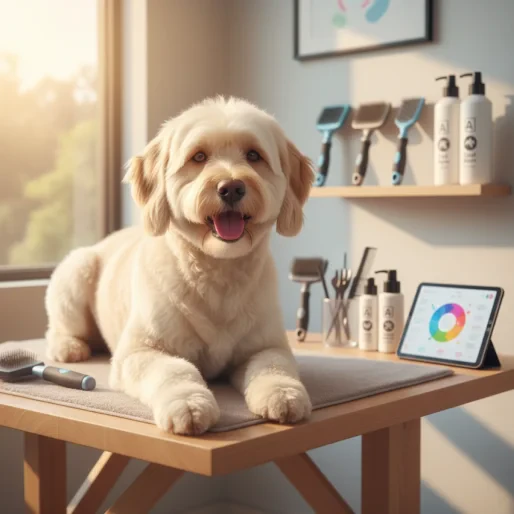
- Grooming table or non-slip mat: Essential for safety and ergonomic positioning, particularly with larger breeds.
Step by Step Smart Deshedding Routine
Step 1: Pre-Session Photo Scan
Open the coat analysis app and photograph the pet from the recommended angles. Save the baseline score. This gives a measurable "before" reference and flags any zones that may need gentle handling or veterinary attention before brushing.
Step 2: Visual and Tactile Inspection
Before powering on any tool, run hands over the entire body. Feel for mats, lumps, scabs, or areas of heat. Technology cannot replace this step. Pay particular attention to behind the ears, the groin, and between the toes.
Step 3: Detangle First
Use a slicker brush or wide-tooth comb to work through any surface tangles. Attempting to deshed through matted fur can pull painfully at the skin and skew the smart brush's fur-volume readings.
Step 4: Deshedding Pass With the Smart Brush
Turn on the smart brush's sensor tracking. Work in the direction of hair growth, starting from the neck and moving toward the tail. Use long, even strokes. Let the pressure sensor guide the force applied. Typical sessions last 10 to 20 minutes for medium-sized double-coated dogs, though breed and coat density vary this significantly.
Step 5: Monitor the App Dashboard
Check fur-volume readings mid-session. A declining capture rate per stroke typically signals that the majority of loose undercoat has been removed. Continuing beyond this point risks pulling live coat or irritating the skin.
Step 6: Finish With a Comb Test
Pass a stainless steel comb through the coat in multiple directions. Smooth passage confirms thorough undercoat removal. Any areas of resistance can receive a few additional brush strokes.
Step 7: Post-Session Photo Scan
Repeat the coat analysis app photos. Compare the before and after scores. Over weeks, this data builds a shedding curve that helps predict peak moult periods and optimal grooming frequency.
Frequency Guide by Coat and Breed Type
Heavy Double Coats (Husky, Malamute, Samoyed, Akita)
During peak spring blow, daily deshedding sessions of 15 to 20 minutes are commonly recommended by professional groomers. Smart brush data typically shows the highest fur capture rates during weeks two through four of the moult cycle.
Moderate Double Coats (Golden Retriever, Labrador, Corgi, Sheltie)
Three to five sessions per week during spring, reducing to one to two per week once the app's coat health score stabilises and fur capture per session drops below the established baseline.
Single Coated, Medium to Long (Yorkshire Terrier, Maltese, Afghan Hound)
These breeds shed less but still benefit from two to three weekly brushing sessions in spring to prevent tangles and distribute natural oils. Smart brush pressure monitoring is especially helpful here, as single coats sit closer to the skin.
Short, Smooth Coats (Beagle, Boxer, Dalmatian)
Weekly grooming with a rubber curry brush is typically sufficient. Smart deshedding rakes may be unnecessary for these coat types, though a coat analysis app can still help detect skin changes visible through sparse fur.
Cats
Long-haired cats (Persian, Maine Coon, Ragdoll) benefit from daily to every-other-day deshedding in spring. Short-haired cats generally require only one to two sessions per week. AI coat apps designed for cats should account for the thinner skin and different fur growth patterns compared to dogs.
Product Comparisons by Coat Type
Rather than endorsing specific brands (which evolve rapidly in the pet tech market), the following framework helps owners evaluate smart deshedding tools:
| Feature | Best for Heavy Double Coat | Best for Single or Silky Coat | Best for Short Coat |
|---|---|---|---|
| Tooth type | Deep, rotating stainless steel teeth | Fine, flexible bristles with rounded tips | Rubber nubs or short bristle pads |
| Pressure sensitivity | Medium threshold (thicker skin tolerance) | High sensitivity (delicate skin) | Low priority |
| Fur volume tracking | Essential (high volume sessions) | Helpful (less volume but tracks tangles) | Optional |
| App integration | Highly recommended | Recommended | Nice to have |
| Price range (typical 2026 market) | Mid to high tier | Mid tier | Entry level |
When evaluating AI coat analysis apps, look for apps that allow multi-pet profiles, support both dogs and cats, provide historical trend graphs, and clearly state that they do not replace veterinary diagnosis.
Warning Signs to Watch for During Grooming
Smart tools enhance visibility, but the owner's eyes and hands remain the first line of detection. During every deshedding session, watch for:
- Bald patches or asymmetric thinning: Could indicate hormonal imbalance, allergies, or stress-related alopecia. Refer to a veterinarian.
- Red, inflamed, or hot skin: Possible dermatitis, hot spot formation, or early infection. Discontinue brushing the area and consult a vet.
- Excessive dandruff or flaking: May suggest dry skin, seborrhea, or nutritional deficiency. A vet check and possible dietary review are warranted. Owners exploring supplementation may find our mushroom supplements guide useful alongside veterinary advice.
- Black specks in shed fur (flea dirt): Indicates active flea infestation. Begin appropriate parasite control before continuing grooming sessions.
- Pain response when brushing specific areas: Could indicate an underlying injury, abscess, or joint pain. Older dogs with arthritis may flinch during positioning; our senior dog arthritis spring walk guide discusses mobility-related comfort strategies.
- Mats that are tight to the skin: Never attempt to cut these with scissors at home. This is a leading cause of accidental lacerations. Seek professional grooming help.
Professional Groomer vs Home Grooming: Decision Guide
Smart deshedding technology empowers owners to handle routine coat maintenance more effectively, but certain situations still call for a certified professional groomer (IPG, NDGAA, or equivalent certification).
When Home Grooming With Smart Tools Is Appropriate
- Routine weekly or bi-weekly deshedding on a cooperative pet
- Maintaining coat condition between professional appointments
- Monitoring coat health trends via app data to share with the groomer
- Breeds with straightforward coat maintenance (Labradors, Beagles, short-haired cats)
When Professional Grooming Is Recommended
- Severe matting, especially near the skin line or in sensitive areas
- Breeds requiring breed-standard clips or hand-stripping (Poodles, terrier breeds, Cocker Spaniels)
- Any visible skin condition: lesions, lumps, parasites, or fungal patches
- Elderly, anxious, or aggressive pets that may not tolerate extended home sessions safely
- Post-surgical or post-illness coat recovery, where professional assessment of skin integrity is important
Many professional groomers in 2026 accept exported data from smart brush apps, allowing them to see a pet's grooming history, pressure trends, and coat health scores before the appointment. This collaboration between home care and professional care represents the ideal use case for the technology.
Is the Technology Worth the Investment?
Smart deshedding tools typically cost two to five times more than their non-connected equivalents. AI coat analysis apps range from free (with limited features) to subscription-based models. The value proposition depends on several factors:
- Owners of heavy-shedding breeds: The investment is most justified here. Tracking undercoat removal prevents both under-grooming (leading to mats and skin issues) and over-grooming (leading to coat damage). The data also helps time professional appointments more efficiently.
- Multi-pet households: Apps that support multiple profiles can centralise grooming schedules and health tracking, adding organisational value beyond a single pet.
- Owners new to grooming: Pressure sensors provide real-time coaching that can prevent common beginner mistakes like pressing too hard or brushing against the grain.
- Experienced owners of low-maintenance breeds: The technology may offer marginal benefit. A quality traditional deshedding rake and regular visual inspections may be sufficient.
Professional consensus suggests that the greatest value of these tools lies not in the hardware alone but in the behavioural change they encourage: more consistent grooming, better record-keeping, and earlier detection of coat anomalies. For owners who tend to forget or skip sessions, app reminders and streak tracking can meaningfully improve grooming regularity.
Integrating Smart Grooming Into a Broader Spring Wellness Routine
Deshedding is one component of a comprehensive spring care plan. Owners preparing for increased outdoor activity should also review guidance on off-leash spring hiking safety, be aware of toxic garden products that can cause skin irritation alongside coat issues, and consider how other AI-powered pet devices like smart water fountains and AI pet cameras can contribute to a connected pet health ecosystem.
Adequate hydration and nutrition directly affect coat quality. A pet that drinks sufficient water and receives balanced fatty acid intake will typically have a smoother moult with less skin irritation, making every deshedding session more productive regardless of whether the brush is "smart" or traditional.
Final Recommendations
Smart deshedding tools and AI coat analysis apps represent a genuine step forward in home grooming capability. They do not replace skilled hands, professional expertise, or veterinary diagnosis, but they raise the floor of home grooming quality by providing objective data, real-time feedback, and longitudinal tracking. For owners of heavy-shedding breeds facing the annual spring coat blow, these tools are a worthwhile consideration. For all owners, the principle remains the same: consistent, gentle, observant grooming is the single most effective way to support coat health and catch problems early.
Frequently Asked Questions
Content Disclosure
This article was created using state-of-the-art AI models with human editorial oversight. It is intended for informational and entertainment purposes only and does not constitute veterinary medical advice. Always consult a licensed veterinarian for your pet's specific health needs. Learn more about our process.