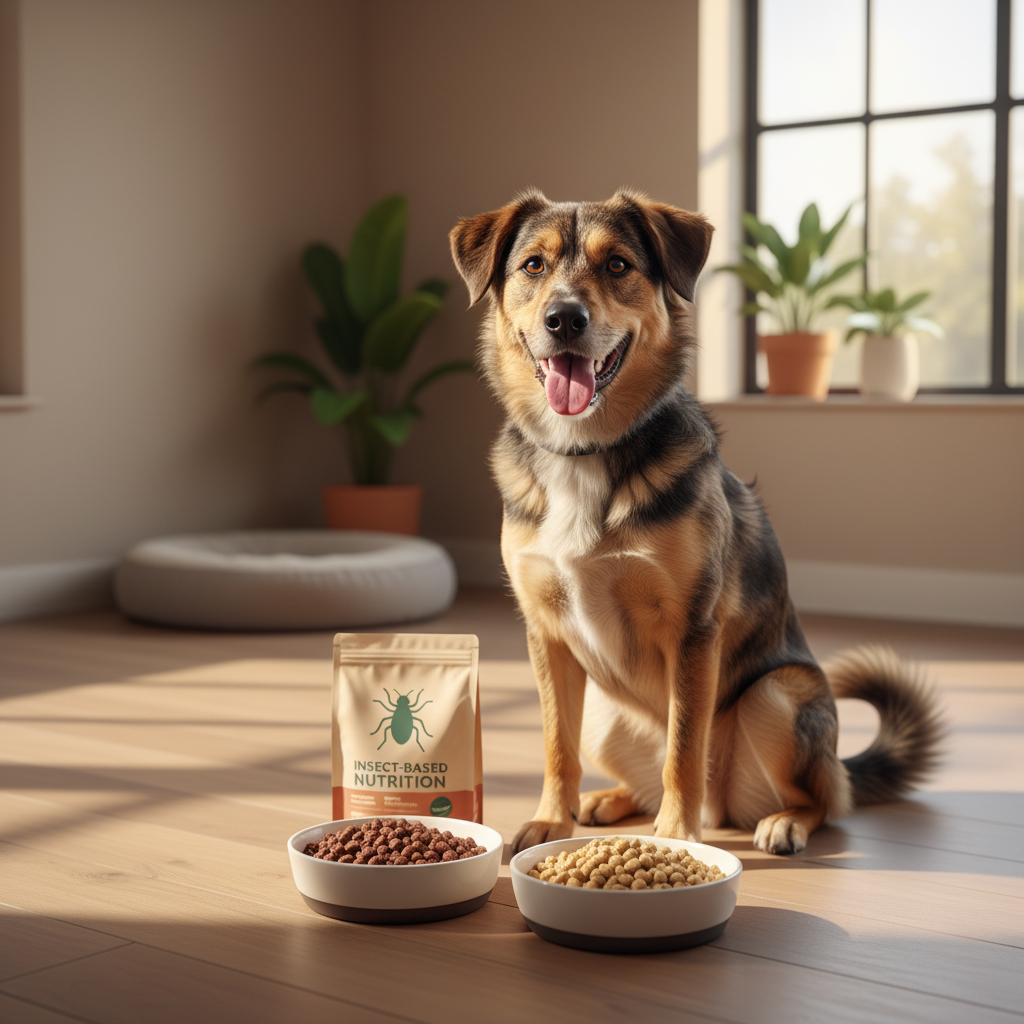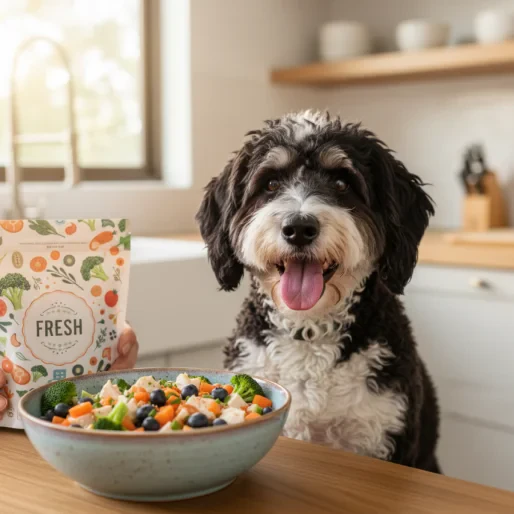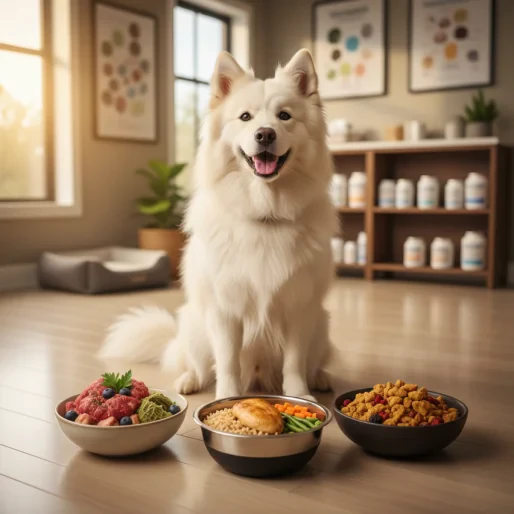
A detailed comparison of raw, gently cooked, and freeze-dried dog food covering nutritional profiles, bacterial safety, cost per serving, and ideal candidates. This guide helps owners choose the right feeding approach based on evidence and lifestyle.
Key Takeaways
- Raw food preserves natural enzymes and nutrients but carries the highest bacterial contamination risk according to AVMA guidelines.
- Gently cooked food reduces pathogen risk significantly while retaining more nutrients than traditional kibble processing.
- Freeze-dried food offers long shelf life and strong nutrient retention, but freeze-drying alone does not eliminate all pathogens.
- Cost per day for a 50 lb dog ranges from roughly $3 to $6 for gently cooked, $5 to $10 for raw, and $8 to $15 for freeze-dried.
- Dogs with compromised immunity, puppies, and senior dogs typically benefit from cooked or pathogen-tested options rather than unprocessed raw diets.
Why the Type of Minimal Processing Matters
The growing interest in fresh and minimally processed dog food reflects owners' desire to move beyond heavily processed kibble. However, "minimally processed" is not a single category. Raw, gently cooked, and freeze-dried diets differ meaningfully in how they handle pathogen risk, preserve nutrients, maintain convenience, and affect the household budget. Understanding these differences is essential before committing to a feeding plan.
Professional organisations such as the American Veterinary Medical Association (AVMA) and the World Small Animal Veterinary Association (WSAVA) have issued guidance on raw and undercooked diets, and their positions are referenced throughout this guide to support evidence-based decision making.
Side-by-Side Comparison Table
| Factor | Raw | Gently Cooked | Freeze-Dried |
|---|---|---|---|
| Nutrient Retention | Very high; enzymes and heat-sensitive vitamins intact | High; low-temperature cooking preserves most nutrients, though some heat-sensitive vitamins may decrease | Very high; studies suggest up to 95 to 97% of raw nutrient value preserved |
| Pathogen Risk | Highest: Salmonella, Listeria, E. coli, Campylobacter documented | Low: cooking to safe internal temperatures eliminates most pathogens | Moderate: freeze-drying can leave dormant bacteria that reactivate upon rehydration |
| Shelf Life | Short; must be refrigerated or frozen, used within 2 to 3 days once thawed | Moderate; typically 5 to 7 days refrigerated, longer if frozen | Long; shelf-stable for months to over a year unopened |
| Convenience | Low: requires safe handling, thawing, cold storage | Moderate: premade options exist; homemade requires batch cooking | High: lightweight, portable, simple rehydration |
| Estimated Daily Cost (50 lb dog) | $5 to $10 | $3 to $8 (homemade on the lower end, premade higher) | $8 to $15 |
| Palatability | Very high for most dogs | High; cooking enhances aroma | High once rehydrated; some dogs accept it dry as a topper |
| Travel Friendliness | Poor: requires cooler or freezer access | Moderate: can be frozen and transported in insulated bags | Excellent: no refrigeration needed until rehydrated |
Nutritional Profiles: What Each Format Preserves and Loses
Raw Diets
Raw feeding aims to replicate the ancestral canine diet by offering uncooked muscle meat, organ meat, bones, and sometimes vegetables or fruit. The primary nutritional advantage is full preservation of heat-sensitive nutrients, including certain B vitamins, natural enzymes, and amino acids in their unaltered forms. Proponents often report improvements in coat quality, dental health, and stool firmness.
However, nutritional completeness is not guaranteed. Homemade raw diets frequently show calcium-to-phosphorus imbalances, inadequate zinc, and variable vitamin D levels when analysed. WSAVA guidelines emphasise that any homemade diet, raw or cooked, should be formulated with input from a board-certified veterinary nutritionist to avoid long-term deficiencies.
Gently Cooked Diets
Gently cooked (sometimes called "lightly cooked") diets use low-temperature cooking, typically below 200°F (93°C), to reduce pathogen load while minimising nutrient degradation. This approach sits between raw and traditional kibble on the processing spectrum. Commercial gently cooked brands often formulate recipes to meet AAFCO (Association of American Feed Control Officials) complete and balanced standards.
Some water-soluble vitamins, particularly B1 (thiamine) and vitamin C, may decrease during cooking. Reputable manufacturers compensate by adding these back in controlled amounts. The trade-off is meaningful: cooking to safe internal temperatures eliminates the majority of Salmonella, Listeria, and E. coli risk while maintaining a recognisable whole-food ingredient profile.
Freeze-Dried Diets
Freeze-drying removes moisture through sublimation (converting ice directly to vapour under vacuum), preserving the structural integrity of raw ingredients. Research suggests this process retains around 95 to 97% of the nutritional value found in the original raw ingredients, making it nutritionally comparable to fresh raw food.
The critical distinction owners should understand: freeze-drying is a preservation method, not a food safety step. Bacteria and viruses can survive the process in a dormant state and may reactivate once the food is rehydrated or reaches a moist environment such as the dog's digestive tract. Some freeze-dried brands incorporate a high-pressure pasteurisation (HPP) step before freeze-drying to address this concern, so reading labels carefully matters.
Bacterial Safety: What the Evidence Shows
The AVMA's policy on raw and undercooked animal-source protein in pet diets is clear: the organisation "discourages the feeding to cats and dogs of any animal-source protein that has not first been subjected to a process to eliminate pathogens, because of the risk of illness to cats and dogs as well as humans." This applies to raw, freeze-dried raw, and any undercooked formulation.
Pathogens documented in raw pet food include Salmonella spp., Campylobacter spp., Clostridium spp., Escherichia coli, Listeria monocytogenes, and enterotoxigenic Staphylococcus aureus. Apparently healthy dogs can shed these organisms in their stool and saliva without showing clinical signs, creating a zoonotic risk for household members.
The risk is heightened for households with young children, elderly individuals, pregnant women, or immunocompromised persons. Veterinary consensus consistently flags these populations as particularly vulnerable to cross-contamination from raw-fed pets.
Practical Safety Ranking
- Lowest risk: Gently cooked food prepared to safe internal temperatures (typically 165°F / 74°C for poultry-based recipes).
- Moderate risk: Freeze-dried food, especially if the manufacturer does not use HPP or another validated kill step. Dormant pathogens may reactivate upon rehydration.
- Highest risk: Raw food, whether commercially prepared or homemade. Even commercially sourced raw food has been subject to numerous recalls for Salmonella and Listeria contamination.
Owners who choose raw or freeze-dried feeding should follow strict hygiene protocols: dedicated preparation surfaces, immediate cleaning of bowls, frequent handwashing, and preventing the dog from licking faces or open wounds after meals. For more on handling and conditioning routines for dogs adjusting to new feeding methods, see Teaching a Rescue Dog to Accept Handling and Grooming.
Cost Per Serving: Breaking Down the Budget
Cost is often the deciding factor for owners weighing these three options. The figures below represent approximate daily costs for feeding a moderately active 50 lb (23 kg) adult dog, based on widely available commercial products in 2025 to 2026 pricing.
Raw (Commercial Premade)
Expect to pay roughly $5 to $10 per day. Homemade raw can be less expensive if ingredients are sourced in bulk, but this introduces the additional variable of nutritional balancing, which may require periodic veterinary nutritionist consultations (often $200 to $400 per formulation).
Gently Cooked (Commercial Premade)
Premade gently cooked subscription services typically cost $3 to $8 per day for a 50 lb dog, depending on protein source and brand. Homemade gently cooked is the most affordable fresh-food option, often running $2 to $5 per day when ingredients are purchased strategically, though it demands time for batch preparation.
Freeze-Dried
Freeze-dried food carries the highest price tag, averaging $8 to $15 per day for a 50 lb dog when used as a complete diet. This premium reflects the expensive sublimation process and the high-quality proteins typically used. Many owners reduce costs by using freeze-dried food as a topper or mixer (roughly 25% of the meal) combined with a high-quality kibble or gently cooked base, bringing the added daily cost down to $2 to $4.
Hidden Costs to Consider
- Freezer space and energy: Raw diets demand dedicated freezer capacity, which adds to electricity costs.
- Veterinary nutritionist fees: Homemade diets (raw or cooked) benefit from professional formulation to avoid nutrient gaps.
- Supplements: Many raw and cooked diets require added calcium, omega-3 fatty acids, or vitamin and mineral premixes.
- Hygiene supplies: Raw feeders often invest in separate cutting boards, dedicated bowls, and sanitising agents.
Which Dogs Benefit Most from Each Format?
Raw Diets May Suit
- Adult dogs in robust health with no chronic conditions, living in households with no immunocompromised members.
- Working or performance dogs where owners report anecdotal improvements in stamina and lean body condition (though controlled studies are limited).
- Dogs with specific food intolerances where a simplified raw protein rotation has helped identify triggers under veterinary supervision.
Gently Cooked Diets May Suit
- Puppies and senior dogs who benefit from pathogen-reduced food that is still nutrient-dense and highly digestible.
- Dogs recovering from illness or surgery, where the veterinary team recommends a bland, cooked, whole-food diet.
- Households with young children, elderly residents, or immunocompromised individuals where minimising bacterial shedding is a priority.
- Dogs with gastrointestinal sensitivities who respond well to soft, easily digestible meals.
- Owners looking for a middle ground between the freshness of raw and the safety of processed food.
Freeze-Dried Diets May Suit
- Frequent travellers or owners with active lifestyles who need portable, shelf-stable nutrition. If travel is part of the plan, also review the EU Pet Relocation After April 2026: The Full Checklist for cross-border considerations.
- Dogs transitioning from kibble to fresh food, as freeze-dried can serve as an introductory step.
- Owners who want raw-equivalent nutrition without the daily thawing, handling, and cleaning demands.
- Multi-pet households where storage simplicity matters.
Lifestyle Match Guide: Which Option Fits Your Situation?
Matching a diet format to a household's real constraints prevents frustration and diet-hopping. Consider these scenarios:
- Busy professionals with limited prep time: Freeze-dried (rehydrate and serve in minutes) or premade gently cooked (thaw and serve) are the most practical. Raw demands the most daily handling.
- Budget-conscious owners: Homemade gently cooked offers the best value in the fresh-food space. Freeze-dried as a topper rather than a sole diet keeps costs manageable.
- Families with small children: Gently cooked is the safest choice. The AVMA's caution about zoonotic risk from raw-fed pets applies directly here.
- Owners of dogs with seasonal allergies: A simplified cooked or raw protein rotation can help with elimination diets. For more on managing environmental triggers, see Canine Spring Allergies: Pollen, Dermatitis, Relief.
- Pet sitters and daycare providers: Freeze-dried food is easiest to portion and store when caring for multiple dogs. Check Prepare Your Dog for Its First Day at Daycare for guidance on communicating dietary needs to care providers.
Sourcing and Quality Considerations
Regardless of which format owners choose, the following sourcing principles apply:
- Look for AAFCO complete and balanced statements on commercial products. This indicates the food has been formulated (or feeding trials conducted) to meet established nutritional standards for the appropriate life stage.
- Check for third-party testing: Reputable brands voluntarily test for Salmonella, Listeria, and E. coli and publish their protocols.
- Verify the protein source: Named single proteins (e.g., "beef liver" rather than "meat by-products") indicate higher ingredient transparency.
- For homemade diets: Consult a board-certified veterinary nutritionist (DACVN or ECVCN credential) rather than relying solely on online recipes, which studies have repeatedly shown to be nutritionally incomplete.
- Storage and handling: Follow manufacturer guidelines strictly. Even freeze-dried food, once rehydrated, should be treated as perishable and refrigerated if not consumed within an hour.
Decision Checklist: Which Is Right for Your Dog?
Use this checklist to narrow down the best format. The more boxes checked in a column, the stronger the match.
Choose Raw If:
- Your dog is a healthy adult with no chronic health issues.
- No household members are immunocompromised, elderly, or under five years old.
- You have dedicated freezer space and time for daily safe-handling protocols.
- You are willing to invest in veterinary nutritionist formulation for homemade diets.
- Your veterinarian supports the decision after evaluating your dog's individual health status.
Choose Gently Cooked If:
- You want fresh, whole-food nutrition with significantly reduced pathogen risk.
- Your household includes vulnerable individuals (children, elderly, immunocompromised).
- Your dog is a puppy, a senior, or recovering from illness.
- You prefer a format endorsed more readily by mainstream veterinary organisations.
- Budget is a factor and you are willing to batch-cook at home.
Choose Freeze-Dried If:
- Portability and shelf life are top priorities (travel, camping, emergency preparedness).
- You want raw-level nutrient retention without the handling complexity of fresh raw.
- You plan to use it as a topper or rotational component rather than a sole diet.
- You can afford the higher per-serving cost.
- You select a brand that uses HPP or another validated pathogen reduction step.
Whichever format is chosen, monitoring the dog's body condition score, coat quality, energy levels, and stool consistency provides the most practical feedback on whether the diet is working. Regular veterinary check-ups, including bloodwork, help catch any nutritional gaps early.
Dogs thrive on consistency and gradual transitions. When switching between any of these formats, a 7 to 10 day gradual transition (mixing increasing ratios of the new food with the old) helps prevent gastrointestinal upset. Enrichment during mealtimes can also support a positive feeding experience. For creative ideas, see DIY Dog Enrichment Rotation From Recycled Materials.
Building a strong physical foundation supports any dietary approach. Owners interested in complementary wellness strategies may find value in Canine Proprioception Exercises for Balance and Safety as a complement to nutritional planning.
Frequently Asked Questions
Is freeze-dried dog food safer than raw dog food? ↓
Can I mix freeze-dried food with kibble or cooked food? ↓
What does the AVMA say about feeding raw food to dogs? ↓
Which diet format is best for puppies? ↓
How much does it cost to feed a dog raw, cooked, or freeze-dried food per day? ↓

Priya Nair
Dog Breed Advisor & Adoption Counsellor
Dog breed advisor and adoption counsellor — honest breed comparisons and lifestyle matching for prospective owners.
Content Disclosure
This article was created using state-of-the-art AI models with human editorial oversight. It is intended for informational and entertainment purposes only and does not constitute veterinary medical advice. Always consult a licensed veterinarian for your pet's specific health needs. Learn more about our process.