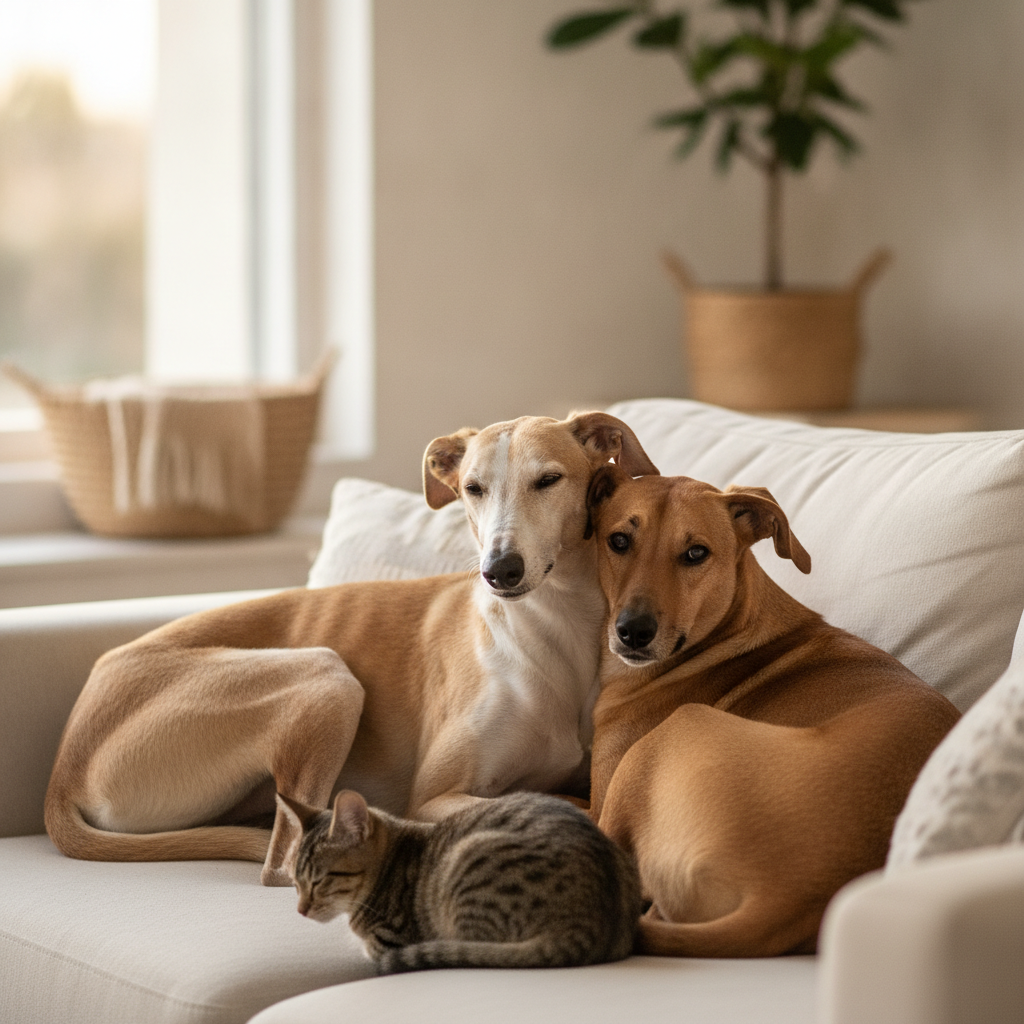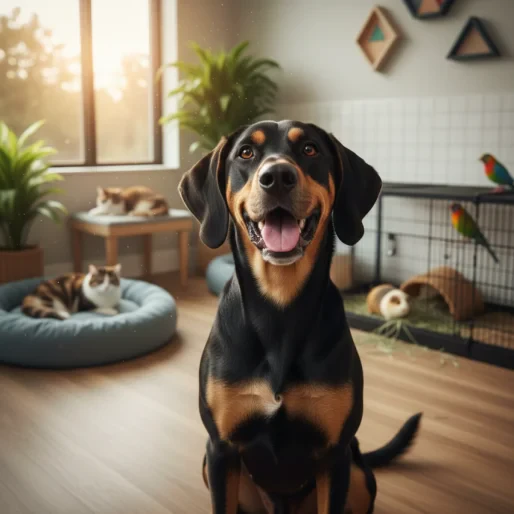
Large dog breeds consistently wait longer for adoption than their smaller counterparts. This FAQ guide explains why, busts common myths, and helps first-time adopters prepare confidently.
Key Takeaways
- Large dogs typically wait two to three times longer in shelters than small breeds, driven by housing restrictions, cost concerns, and misconceptions about behaviour.
- Most large breed shelter dogs are adolescents or young adults surrendered during a predictable 'difficult phase,' not because they are inherently problematic.
- First-time adopters can succeed with a large breed by budgeting realistically, preparing their living space, and committing to consistent training from day one.
- Many large breeds are calmer indoors than popular small breeds, making them surprisingly well suited to quieter households.
- Shelter staff and foster networks are excellent resources: use them before, during, and after adoption.
Frequently Asked Questions About Adopting Large Dogs From Shelters
1. Why do large dogs stay in shelters longer than small dogs?
Several factors work against large breeds in the adoption queue. Housing restrictions (rental agreements, strata bylaws, and breed-specific legislation) immediately disqualify a significant portion of potential adopters. The perceived cost of food, veterinary care, and equipment also deters budget-conscious families. On top of that, cultural stereotypes paint large dogs as destructive, dangerous, or 'too much to handle,' even when individual temperament data says otherwise. Shelters commonly report that medium-to-large mixed breeds in the 25 to 40 kg range have the longest average stays.
2. Are large shelter dogs more likely to have behavioural problems?
Not as a rule. Professional consensus among certified animal behaviourists is that behaviour problems are driven by history, socialisation, and management rather than size alone. Large dogs may appear more problematic simply because the consequences of under-socialisation are more visible: a 5 kg dog that jumps on visitors is 'cute,' while a 35 kg dog doing the same thing is 'out of control.' Many large shelter dogs were surrendered during the adolescent phase (roughly 8 to 18 months), a period when normal developmental behaviour, such as increased energy, mouthiness, and boundary-testing, is misinterpreted as permanent dysfunction. With consistent structure, these behaviours typically resolve. For more on understanding breed-specific energy levels, see What to Tell Your Dog Sitter About Your Dog's Breed Traits.
3. What does it really cost to own a large dog compared to a small one?
The honest answer: more, but perhaps not as dramatically as people fear. Food is the most consistent ongoing expense, and a large active dog may consume two to four times the daily volume of a toy breed. Veterinary costs tend to scale with body weight for medications, anaesthesia, and surgery. Preventative treatments (flea, tick, heartworm) are priced by weight band. Boarding and daycare facilities may charge a size premium. A realistic annual budget difference between a small and large dog might range from a few hundred to over a thousand dollars or pounds, depending on the dog's health and the owner's location. Reviewing insurance options early is strongly recommended. Our guide on What Pet Insurance Actually Pays Out explains how to compare policies before you need them.
4. Can a large dog live comfortably in a flat or apartment?
Yes, provided exercise and enrichment needs are met outside the home. Many giant and large breeds, such as Greyhounds, Mastiff types, and Great Danes, are famously low-energy indoors and are content to sleep for much of the day. What matters more than square footage is access to safe outdoor exercise and a consistent daily routine. Owners in smaller spaces should focus on enrichment feeding (see Using Food Puzzles and Scatter Feeding to Slow Down Fast Eaters), structured walks, and mental stimulation games. The myth that 'big dog equals big garden' persists, but a bored large dog in a mansion is far worse off than a well-exercised large dog in a one-bedroom flat.
5. How do I know if a shelter dog's size is right for my family?
Start by being honest about your daily routine, not your ideal routine. Questions to ask yourself: How many minutes of active outdoor time can you genuinely commit to every single day, including when the weather is terrible? Can every adult in the household physically manage the dog on a lead? Do you have children under five? (Large dogs can inadvertently knock over toddlers even with no aggressive intent.) Are there elderly or mobility-limited family members? Shelter staff can help match temperament to household dynamics, so be transparent with them rather than choosing by appearance alone.
6. What health issues should first-time large dog adopters know about?
Large and giant breeds have well-documented predispositions to certain conditions. Joint problems (hip dysplasia, elbow dysplasia, cruciate ligament injuries) are common across many large breeds. Bloat (gastric dilatation-volvulus, or GDV) is a life-threatening emergency more prevalent in deep-chested large breeds. Cardiac conditions, including dilated cardiomyopathy, appear at higher rates in some giant breeds. Lifespan is generally shorter than small breeds: many giant breeds have average lifespans of 7 to 10 years, while smaller dogs may live 12 to 16 years. Understanding these risks is not meant to discourage adoption but to ensure owners plan for veterinary care proactively. Our article on Recognising When Symptoms Require Immediate Vet Attention is a helpful reference for new owners of any size dog.
7. What is the adjustment period really like for a large shelter dog?
The widely referenced guideline among rescue organisations is the '3-3-3 rule': three days to decompress, three weeks to learn routines, and three months to feel truly at home. For large dogs, especially those that have spent extended periods in kennels, this timeline may stretch. Owners commonly report that the first two weeks involve a 'honeymoon phase' where the dog is unusually quiet and compliant, followed by a period where the real personality (and real challenges) emerge. Patience during weeks three to six is critical. Using an indoor pet camera can help owners monitor settling-in behaviour when they are not at home.
8. Will my landlord let me have a large dog?
This is one of the most common barriers and must be resolved before adoption, not after. Many rental agreements specify weight limits (often around 10 to 15 kg) or ban certain breeds outright. In some regions, tenant protection laws are shifting to be more pet-friendly, but enforcement varies widely. Owners should obtain written permission, check strata or homeowner association rules separately from the lease, and consider that future moves may be constrained by having a large dog. Adopting a large dog without secure, long-term housing is one of the leading causes of re-surrender.
9. How do large shelter dogs typically do with other pets?
It depends entirely on the individual dog's history and socialisation, not on size. Many shelters conduct dog-to-dog assessments, cat tests, and small-animal compatibility checks before placing a dog. First-time adopters should ask for these results and, where possible, arrange a supervised introduction before finalising the adoption. Large dogs with high prey drive (common in sighthounds, terrier mixes, and herding breeds) require extra caution around cats and pocket pets. A slow, managed introduction over days to weeks is professional best practice, never a same-day 'let them figure it out' approach.
10. What equipment do I need before bringing a large dog home?
Essentials include: a properly fitted flat collar or harness (front-clip harnesses are commonly recommended for large dogs that pull), a sturdy 1.5 to 2 metre lead (avoid retractable leads for large breeds), size-appropriate food and water bowls (raised feeders were once standard advice for large breeds but the evidence on GDV prevention is mixed, so consult a vet), a crate or safe space large enough for the dog to stand and turn around, and enzymatic cleaner for house-training accidents. Budget for a veterinary check-up within the first week of adoption.
11. Should first-time owners invest in professional training?
Strongly recommended, especially for large breeds. A 35 kg dog that pulls on the lead, resource guards, or has poor recall presents a materially different safety risk than a 5 kg dog with the same behaviours. Group classes with a qualified, force-free trainer provide both education for the owner and socialisation for the dog. The Association of Professional Dog Trainers (APDT) and the International Association of Animal Behavior Consultants (IAABC) maintain directories of credentialed professionals. Even a single private session in the first week can establish foundations that prevent months of frustration.
12. What if the adoption does not work out?
Responsible shelters and rescues universally prefer that a dog be returned to them rather than rehomed informally or surrendered to a different facility. Most adoption contracts include a return clause. Owners should never feel ashamed about this: the goal is the right match, and shelters understand that some placements do not work despite everyone's best intentions. However, giving the adjustment a fair chance (typically at least four to six weeks barring safety concerns) is important, because many issues that feel overwhelming in week two resolve by week six with consistency and support.
Myth vs. Reality
| Myth | Reality |
| Large dogs need a big garden to be happy. | Exercise needs are met through structured activity, not garden size. Many large breeds rest most of the day indoors. |
| Shelter dogs are in shelters because they are 'broken.' | The most common surrender reasons are changes in owner circumstances: moving, financial hardship, relationship breakdown, and new baby logistics. |
| Large dogs are aggressive by nature. | Aggression is a behavioural response influenced by genetics, learning history, health, and environment. Size does not equal temperament. |
| You cannot adopt a large dog if you have children. | Many large breeds are exceptionally patient with children. Supervision, training, and teaching children to respect a dog's space are the critical factors. |
| Older large dogs are not worth adopting because they will not live long. | Senior large dogs are often the calmest, most predictable companions. Even a few years of a loving home is profoundly meaningful for both dog and owner. |
Quick Reference: Large Dog Adoption Checklist
- Housing confirmed: Written landlord or HOA permission secured, with breed and weight checked against any restrictions.
- Budget reviewed: Food, veterinary care, insurance, equipment, and emergency fund estimated for a dog over 25 kg.
- Household agreement: Every person in the home (including children old enough to understand) has discussed expectations and responsibilities.
- Exercise plan: A realistic daily schedule for walks, play, and mental enrichment, including a wet-weather backup plan.
- Veterinary relationship: A local vet clinic identified and a first-week check-up booked in advance.
- Training commitment: At minimum, a group obedience class booked or a trainer consultation scheduled for the first two weeks.
- Safe space prepared: A crate, bed, or designated room where the dog can decompress without being overwhelmed.
- Emergency knowledge: Signs of bloat, poisoning, and other emergencies reviewed by all household adults.
- Return policy understood: The shelter's return or support policy reviewed and saved, just in case.
A Final Note for First-Time Adopters
The question shelter volunteers and helpline advisors hear most often, sometimes anxiously at odd hours, is: 'Did I make the right decision?' The answer, almost always, is that the willingness to ask that question is itself a strong indicator of a thoughtful, caring owner. Large dogs ask more of us in practical terms: more food, more physical management, more space planning. But they do not ask for more love than any other dog. They simply need an owner who walked in prepared. If you have read this far, you are already that person.
For further guidance on managing a new dog's behaviour in unfamiliar environments, explore our article on How Dogs Behave in Hotel Rooms and Holiday Rentals. And if your large dog will occasionally need professional care while you are away, How to Evaluate Dog Daycare Play Group Management will help you choose a safe facility.
Frequently Asked Questions
Why do large dogs stay in shelters longer than small dogs? ↓
Are large shelter dogs more likely to have behavioural problems? ↓
Can a large dog live in a flat or apartment? ↓
What health issues should first-time large dog adopters prepare for? ↓
What is the adjustment period like for a large shelter dog? ↓
Should first-time large dog owners invest in professional training? ↓
What if the adoption does not work out? ↓

Hannah Cole
Pet Owner Community Advisor
Pet owner community advisor — calm, clear answers to the questions every pet parent asks.
Content Disclosure
This article was created using state-of-the-art AI models with human editorial oversight. It is intended for informational and entertainment purposes only and does not constitute veterinary medical advice. Always consult a licensed veterinarian for your pet's specific health needs. Learn more about our process.