
In this article
- Key Takeaways
- Why Aquatic Rehabilitation Matters After Joint Surgery in U.S. Dogs
- Underwater Treadmill vs. Therapeutic Pool
- U.S. Climate Considerations for Hydrotherapy Scheduling
- Preparation: What You Need Before the First Session
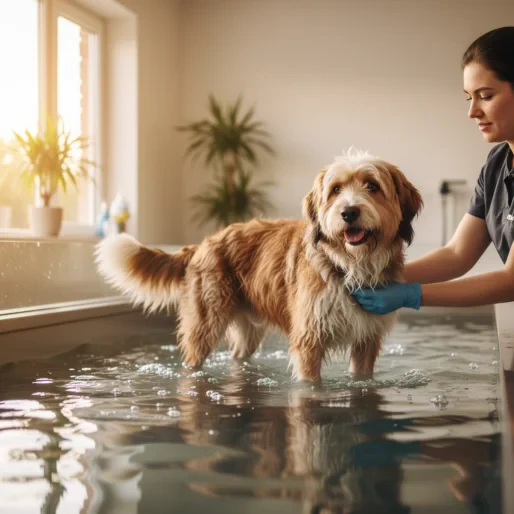
- What Happens During Hydrotherapy Sessions
- Warning Signs: When to Contact Your Vet
- Cost of Canine Hydrotherapy in the United States
- Finding a Certified Canine Hydrotherapist in the U.S.
- Supporting Recovery at Home Between Sessions
Key Takeaways
- Hydrotherapy uses buoyancy, resistance, and warm water to help dogs rebuild strength and range of motion after joint surgery while minimizing stress on healing tissues.
- The two primary modalities are the underwater treadmill (controlled gait retraining) and the therapeutic pool (free swimming for cardiovascular fitness and whole body muscle work).
- Sessions typically begin two to four weeks post surgery, once the incision has fully closed, and continue for six to twelve weeks or longer.
- In the U.S., session costs generally range from $40 to $100, with veterinary hospital programs often at the higher end.
- The American Association of Rehabilitation Veterinarians (AARV) and the American College of Veterinary Sports Medicine and Rehabilitation (ACVSMR) both recognize hydrotherapy as a core element of post surgical recovery.
- Always obtain veterinary clearance before starting any aquatic rehabilitation program.
Why Aquatic Rehabilitation Matters After Joint Surgery in U.S. Dogs
Joint surgeries such as TPLO (tibial plateau leveling osteotomy), TTA (tibial tuberosity advancement), lateral suture stabilization, femoral head ostectomy (FHO), and total hip replacement are among the most commonly performed orthopedic procedures in American veterinary medicine. Breeds popular in the U.S., including Labrador Retrievers, Golden Retrievers, German Shepherds, and Rottweilers, are especially prone to cranial cruciate ligament disease and hip dysplasia, making post surgical rehabilitation a frequent concern for owners.
On land, a recovering dog bears full body weight on a healing limb, which can trigger pain, compensatory gait patterns, and muscle guarding. Water changes the equation significantly. When submerged to hip level, buoyancy offloads roughly 60 percent of body weight. This allows controlled weight bearing exercises to begin much earlier than would be comfortable on dry ground. Water resistance simultaneously forces muscles to work harder per stride, accelerating strength gains. Warm water, typically kept between 82°F and 90°F in U.S. facilities, promotes circulation and relaxes tight muscles.
Underwater Treadmill vs. Therapeutic Pool
Underwater Treadmill
The underwater treadmill is an enclosed chamber that fills with temperature controlled water to a precise depth. The therapist adjusts water height, belt speed, and sometimes jet resistance. This modality excels at:
- Gait retraining: The moving belt encourages a normal, rhythmic stride, which is critical when a dog has been limping or non weight bearing for weeks.
- Targeted limb loading: Water depth can be fine tuned so the dog bears a specific percentage of body weight on the surgical limb.
- Controlled environment: The dog walks in a confined space, reducing the risk of sudden, uncontrolled movements that could stress a healing joint.
Therapeutic Pool (Free Swim)
A heated therapeutic pool allows the dog to swim freely or with therapist support. Pool therapy is useful for:
- Cardiovascular conditioning: Swimming elevates heart rate and builds endurance without joint impact.
- Full body muscle engagement: All four limbs, the core, and the neck work simultaneously.
- Range of motion: The kicking motion of swimming often achieves greater joint flexion and extension than walking.
Many U.S. rehabilitation plans combine both modalities. Brachycephalic breeds (Bulldogs, Pugs, Boston Terriers) typically do better with the treadmill, where their heads remain well above water at all times.
U.S. Climate Considerations for Hydrotherapy Scheduling
The geographic and climate diversity across the United States creates practical considerations that affect scheduling and post session care:
- Northern states and harsh winters: Dogs leaving a warm hydrotherapy session and stepping into sub freezing temperatures can experience rapid chilling. Thoroughly towel dry your dog, use a microfiber drying coat, and warm your vehicle before loading. Facilities in states like Minnesota, Wisconsin, and Michigan often advise scheduling morning sessions so dogs are fully dry before evening temperatures drop further.
- Southern states and humid summers: In states like Texas, Florida, and Georgia, high heat and humidity can compound post session fatigue. Avoid scheduling hydrotherapy during the hottest part of the day. Ensure your dog has access to cool water and shade during the drive home. Ear infections are more common in humid climates, so post swim ear drying is especially important.
- Western states and wildfire season: During wildfire events in California, Oregon, or Washington, air quality can deteriorate rapidly. Dogs with respiratory compromise or those recovering from surgery should avoid unnecessary outdoor exposure on poor air quality days. Plan facility arrival and departure to minimize time outdoors if smoke advisories are active.
Preparation: What You Need Before the First Session
Step 1: Obtain Veterinary Clearance
No reputable U.S. hydrotherapy facility will accept a post surgical dog without written clearance from the treating veterinarian or surgeon. The vet must confirm that the surgical incision is fully closed and infection free, that any external fixation hardware is compatible with water immersion or has been removed, and that the dog is medically stable.
Step 2: Gather Medical Records
Bring or have your vet send surgical reports, post operative radiographs, and the current medication list. Many U.S. rehabilitation facilities now accept records through veterinary software platforms, making transfers straightforward.
Step 3: Home Preparation Checklist
- Towels and a drying coat: Pack at least two large towels and a microfiber drying coat.
- Non slip leash: A short, non slip leash helps you manage your dog on wet surfaces.
- Meal timing: Feed a small meal at least two hours before the appointment. A full stomach combined with exertion in water can cause nausea.
- Ear care: Dogs prone to ear infections benefit from a veterinarian approved ear drying solution after each swim.
- Comfort item: A favorite toy or high value treat can help anxious dogs settle into the new environment.
What Happens During Hydrotherapy Sessions
The Assessment Session
The initial visit typically lasts 45 to 60 minutes and includes a thorough evaluation:
- Health and history review: The therapist reviews veterinary notes, asks about current mobility, pain levels, and temperament around water.
- Physical assessment: The therapist observes the dog's gait on land, palpates the surgical limb, checks range of motion, and measures thigh or forearm circumference to track muscle rebuilding over time.
- Water introduction: First time dogs are given ample time to acclimate. The underwater treadmill fills slowly; pool entry may use a ramp or gentle lift.
- Short initial exercise: The first water session is intentionally brief, typically three to eight minutes, to gauge response without causing fatigue.
- Post session evaluation and treatment plan: Owners receive a summary and proposed schedule with frequency and goals.
Ongoing Sessions
Follow up sessions are usually 30 to 45 minutes total, with 10 to 25 minutes of active water exercise. A typical progression:
- Weeks 2 to 4 post surgery: One to two sessions per week. Low treadmill speed or gentle assisted swimming. Focus on pain free weight bearing and gentle range of motion.
- Weeks 4 to 8: Two to three sessions per week. Increasing treadmill speed, water depth adjustments, or longer swim intervals. Muscle building becomes the priority.
- Weeks 8 to 12 and beyond: Tapering to one to two sessions per week as the dog transitions to normal land based activity. Emphasis on endurance, proprioception, and functional strength.
A large breed dog (80 lbs or more) recovering from a TPLO may need a longer program than a small dog recovering from patella luxation repair.
Warning Signs: When to Contact Your Vet
Monitor your dog after every session. Positive signs include willingness to use the surgical limb in water, gradual improvement in stride symmetry, and measurable increases in muscle mass. Warning signs that warrant a call to your veterinarian include:
- Increased lameness lasting more than 24 hours after a session
- Swelling, heat, or redness at the surgical site
- Sudden reluctance to enter the water, vocalizing during movement, or snapping when the limb is touched
- Any discharge, opening, or odor from the incision
- Excessive fatigue preventing normal walking for the rest of the day
Contact your veterinary clinic immediately if your dog shows sudden complete non weight bearing (possible implant failure), vomiting or diarrhea combined with lethargy, rapid or labored breathing not resolving within 15 to 20 minutes of rest, or signs of ear infection developing within days of a pool session.
ASPCA Animal Poison Control Center
Call the ASPCA Poison Control hotline or contact your nearest emergency veterinary clinic immediately.
A consultation fee may apply. For non-poison emergencies, search "emergency vet near me" or call your local animal ER.
Cost of Canine Hydrotherapy in the United States
U.S. pricing reflects significant regional variation. Urban centers and coastal areas tend to be higher than rural or Midwestern locations:
- Initial assessment session: $75 to $150. This longer appointment covers evaluation and first water introduction.
- Standard follow up session (30 to 45 minutes): $40 to $100 per visit.
- Package deals: Many facilities offer blocks of 5, 10, or 12 sessions at a discounted per session rate, typically saving 10 to 20 percent.
- Veterinary hospital based rehab: Tends toward the higher end but may include on site veterinary oversight and access to additional modalities like laser therapy or therapeutic ultrasound.
U.S. pet insurance policies from providers such as Nationwide, Trupanion, and Pets Best increasingly cover rehabilitation services, including hydrotherapy, when prescribed by a veterinarian. Coverage varies by plan, so review your policy or contact your insurer before the first session. Some policies require pre authorization for rehabilitation services.
Finding a Certified Canine Hydrotherapist in the U.S.
Credentials matter. The difference between a certified, experienced therapist and an unqualified one can directly affect surgical outcomes. Steps to find a qualified professional:
Ask Your Veterinary Surgeon or Rehabilitation Vet
Board certified veterinary surgeons (Diplomates of the American College of Veterinary Surgeons, or DACVS) and rehabilitation specialists (Diplomates of ACVSMR) who perform joint procedures regularly will know which local hydrotherapists produce consistent results.
Check Professional Credentials
Look for therapists who hold recognized certifications:
- Certified Canine Rehabilitation Practitioner (CCRP): Awarded through the University of Tennessee College of Veterinary Medicine.
- Certified Canine Rehabilitation Therapist (CCRT): Awarded through the Canine Rehabilitation Institute.
- Licensed veterinary technicians or physical therapists with additional aquatic rehabilitation training.
The AARV maintains a directory of rehabilitation professionals that can help locate credentialed practitioners by state.
Visit the Facility
Before booking, visit the center and evaluate water quality and temperature monitoring, slip proof flooring, emergency protocols, staff to dog ratio, and overall cleanliness. Ask how many post surgical cases they handle monthly, whether they communicate directly with your dog's surgeon, and what their treatment plan reporting looks like.
Supporting Recovery at Home Between Sessions
Hydrotherapy works best as part of a broader rehabilitation plan. Between sessions, owners can support recovery by following prescribed home exercises (gentle range of motion, controlled leash walks), maintaining a healthy body weight to reduce joint stress, monitoring the surgical limb daily for swelling or changes in use, and keeping a simple recovery journal noting session dates, exercise duration, lameness score (0 to 5 scale), and observations.
For dogs over 50 lbs, even a few extra pounds can significantly increase mechanical load on healing joints. A structured weight management and fitness plan can complement hydrotherapy goals. Senior dogs recovering from joint surgery may also benefit from reviewing guidance on supporting cognitive health through diet as part of a comprehensive approach to aging well.
Frequently Asked Questions
Content Disclosure
This article was created using state-of-the-art AI models with human editorial oversight. It is intended for informational and entertainment purposes only and does not constitute veterinary medical advice. Always consult a licensed veterinarian for your pet's specific health needs. Learn more about our process.