
In this article
- Key Takeaways
- Why US Veterinarians Recommend Hydrotherapy After Surgery
- Pool Therapy vs. Underwater Treadmill: Choosing the Right Modality
- What Drives Hydrotherapy Costs Across the United States?
- Realistic Total Cost Scenarios for US Dog Owners
- Climate Considerations for US Dog Owners
- Pet Insurance Coverage for Hydrotherapy in the US
- DIY Swimming vs. Professional Hydrotherapy
- Finding a Certified Canine Hydrotherapist in the US
- When to Start and When to Complete Rehabilitation
- Budgeting for Canine Hydrotherapy in the US
Key Takeaways
- Underwater treadmill sessions in the US typically cost $50 to $100 per 30 minutes, while pool therapy averages $35 to $60 per session.
- A full post surgical hydrotherapy program commonly runs 8 to 16 sessions, placing total costs between approximately $400 and $1,600 depending on modality, region, and clinic.
- Geographic location within the US is a major cost driver: sessions in metro areas like New York, Los Angeles, or San Francisco often cost 30 to 50 percent more than in smaller cities or rural areas.
- Many US pet insurance providers (including Nationwide, Trupanion, and Healthy Paws) cover rehabilitative therapies on certain plan tiers when prescribed by a veterinarian.
- Look for practitioners holding a CCRP (Certified Canine Rehabilitation Practitioner) from the University of Tennessee or CCRT (Certified Canine Rehabilitation Therapist) from the Canine Rehabilitation Institute.
Why US Veterinarians Recommend Hydrotherapy After Surgery
Hydrotherapy leverages the physical properties of water, primarily buoyancy, hydrostatic pressure, and resistance, to facilitate safe post surgical rehabilitation. After common orthopedic procedures such as TPLO (tibial plateau leveling osteotomy) for cruciate ligament repair, femoral head ostectomy, or spinal surgery, dogs face a critical recovery window where weight bearing exercise on land can damage healing tissues.
The American College of Veterinary Sports Medicine and Rehabilitation (ACVSMR) recognizes hydrotherapy as a valuable component of canine rehabilitation programs. Water based movement reduces joint loading while engaging muscles, helping to reduce post operative pain and inflammation, rebuild muscle mass lost during crate rest, improve joint range of motion, and support cardiovascular fitness without excessive joint stress.
Research published in the Journal of the American Veterinary Medical Association has explored early post operative hydrotherapy protocols, though no universal guideline currently establishes a single ideal start date. Timing should always be determined by the attending veterinary surgeon.
Pool Therapy vs. Underwater Treadmill: Choosing the Right Modality
Pool (Free Swim) Therapy
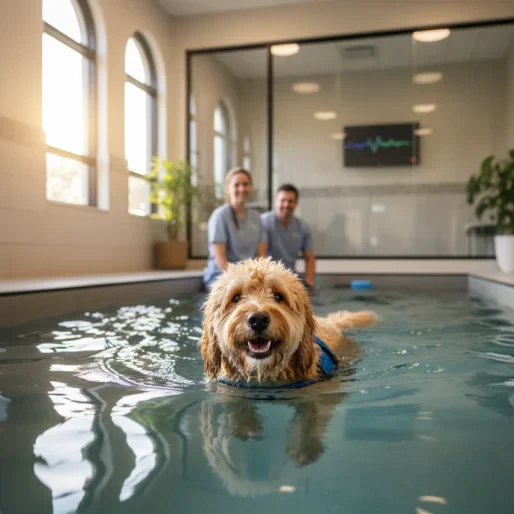
In pool therapy, dogs swim in a heated, purpose built pool with a therapist guiding their movement. This modality is excellent for non weight bearing exercise and cardiovascular conditioning. It is commonly used for dogs recovering from spinal surgery (such as intervertebral disc disease procedures common in Dachshunds and French Bulldogs) or those with severe joint disease who cannot tolerate ground contact.
Underwater Treadmill Therapy
An underwater treadmill encloses the dog in a chamber that fills with warm water to a controlled depth. The dog walks on a treadmill belt while the therapist adjusts water height and belt speed. This modality allows precise control over weight bearing and is frequently preferred for post orthopedic surgical recovery (such as TPLO or total hip replacement) because it encourages a natural gait pattern. Underwater treadmills are particularly popular in US rehabilitation facilities due to their versatility.
US Cost Comparison
- Pool therapy: Typically $35 to $60 per 30 minute session.
- Underwater treadmill: Typically $50 to $100 per 30 minute session.
- Initial assessment or consultation: Often $75 to $150, sometimes waived with a treatment package purchase.
The underwater treadmill commands higher fees because veterinary grade units represent a capital investment often exceeding $40,000 for US clinics.
What Drives Hydrotherapy Costs Across the United States?
Regional Price Variation
Veterinary care costs vary dramatically across the US. Sessions in major metropolitan areas (New York City, San Francisco, Boston, Seattle) typically fall at the upper end of the range, while clinics in the Midwest, Southeast, or rural areas may charge 20 to 40 percent less. For example, an underwater treadmill session that costs $100 in Manhattan might cost $55 to $65 in a mid sized city in Ohio or Tennessee.
Type and Severity of Surgery
A Labrador Retriever recovering from bilateral TPLO surgery will need considerably more sessions than a dog recovering from a minor soft tissue procedure. Complex cases involving large breed dogs (common US breeds like Labs, Golden Retrievers, and German Shepherds are especially prone to cruciate ligament injuries) often require 12 to 16 or more sessions.
Breed and Size Considerations
Larger breeds may require longer sessions or specialized handling. A dog weighing over 80 lbs requires more therapist effort and facility resources than a 15 lb dog. Some US clinics apply size based pricing tiers, typically with breakpoints around 25 lbs, 50 lbs, and 75 lbs.
Therapist Credentials
Sessions led by a CCRP or a Diplomate of the American College of Veterinary Sports Medicine and Rehabilitation may cost more than sessions run by a technician with basic training. The clinical expertise is generally worth the premium for complex post surgical cases.
Session Frequency and Package Deals
Most rehabilitation plans call for two to three sessions per week in the early stages, tapering to once per week. Many US clinics offer package pricing: for example, a bundle of 10 underwater treadmill sessions might reduce the per session fee from $85 to $70.
Realistic Total Cost Scenarios for US Dog Owners
- Mild case (8 sessions, pool therapy): $280 to $480 plus initial assessment.
- Moderate case (12 sessions, underwater treadmill): $600 to $1,200 plus initial assessment.
- Complex case (16 or more sessions, combination therapy): $1,000 to $1,600 or more plus initial assessment and periodic veterinary re evaluations.
These figures do not include the cost of surgery itself (TPLO surgery in the US commonly ranges from $3,500 to $6,000 per knee) or post operative medications.
Climate Considerations for US Dog Owners
The United States spans vastly different climate zones, which can affect rehabilitation planning:
- Northern states with harsh winters: Outdoor exercise alternatives are limited from November through March. Indoor hydrotherapy becomes especially valuable during this period, and demand may increase during winter months, potentially affecting appointment availability.
- Southern states with hot, humid summers: When outdoor temperatures exceed 90°F, land based rehabilitation exercises become risky due to heat exhaustion. Hydrotherapy in a temperature controlled facility (water typically maintained at 82 to 90°F) offers a safe alternative.
- Western states with wildfire seasons: Poor air quality during fire season can make outdoor activity unsafe for recovering dogs. Indoor hydrotherapy facilities provide a controlled environment unaffected by smoke.
Pet Insurance Coverage for Hydrotherapy in the US
The US pet insurance market has expanded significantly, and many providers now offer coverage for rehabilitative therapies:
- Plan type: Comprehensive or accident and illness policies are more likely to cover rehabilitative therapies than accident only plans.
- Veterinary prescription: Most US insurers require that a licensed veterinarian formally prescribes hydrotherapy as medically necessary. Self referred sessions are rarely covered.
- Policy sub limits: Some policies cap rehabilitative therapy coverage at a set annual amount, commonly $500 to $2,000 per year depending on the plan tier.
- Waiting periods: If hydrotherapy relates to a condition that arose during the policy waiting period, the claim will likely be denied.
Major US pet insurance providers such as Nationwide, Trupanion, Healthy Paws, and Embrace offer varying levels of rehabilitation coverage. Always review the specific policy language regarding "rehabilitative therapy" or "alternative therapies" before assuming coverage.
Financing Options for US Pet Owners
- CareCredit: A widely accepted healthcare credit card that many US veterinary rehabilitation clinics take, often with promotional zero interest periods.
- Scratchpay: Another veterinary specific financing option available at many US practices.
- Clinic payment plans: Some rehabilitation centers offer in house installment options.
- Charitable assistance: Organizations like The Pet Fund, RedRover, and breed specific rescue groups sometimes assist with rehabilitation costs.
ASPCA Animal Poison Control Center
Call the ASPCA Poison Control hotline or contact your nearest emergency veterinary clinic immediately.
A consultation fee may apply. For non-poison emergencies, search "emergency vet near me" or call your local animal ER.
DIY Swimming vs. Professional Hydrotherapy
Some US dog owners consider using backyard pools, lakes, or rivers as cost saving alternatives. While gentle swimming can benefit a healthy dog, it is not a substitute for professional post surgical hydrotherapy:
- No clinical oversight: A certified therapist monitors gait, compensatory movement, pain responses, and fatigue throughout each session.
- Infection risk: Lakes, rivers, and improperly maintained pools expose surgical wounds to bacteria. Leptospirosis (present in many US waterways) poses an additional risk.
- Temperature control: Professional facilities maintain water at 82 to 90°F, optimal for therapeutic benefit. Backyard pools and natural water bodies rarely fall within this range.
- Legal liability: Some US states have specific regulations regarding animal care services. Professional facilities carry appropriate liability coverage.
Finding a Certified Canine Hydrotherapist in the US
Certification standards matter. The following credentials are recognized across the United States:
- CCRP (Certified Canine Rehabilitation Practitioner): Awarded through the University of Tennessee program. This is one of the most widely recognized rehabilitation credentials in the US.
- CCRT (Certified Canine Rehabilitation Therapist): Awarded by the Canine Rehabilitation Institute, based in Florida.
- Diplomate, ACVSMR: Board certified specialists in veterinary sports medicine and rehabilitation, representing the highest level of expertise.
How to Search
The American Association of Rehabilitation Veterinarians (AARV) maintains resources for locating qualified practitioners. University veterinary teaching hospitals (such as those at Colorado State University, University of Tennessee, and Ohio State University) often have rehabilitation departments that offer hydrotherapy services or can provide referrals.
Questions to Ask Before Booking
- What certification do you hold (CCRP, CCRT, or board certification)?
- How many post surgical rehabilitation cases do you handle monthly?
- Do you communicate directly with my dog's surgeon?
- What is the water temperature, and how often is water quality tested?
- Can you provide a written treatment plan with expected milestones?
- Do you accept pet insurance or CareCredit?
When to Start and When to Complete Rehabilitation
There is no universal timeline, but general professional consensus in US veterinary rehabilitation suggests:
- Starting: Most dogs begin hydrotherapy between 10 and 14 days post surgery, once the surgical incision has healed and sutures or staples have been removed. The surgeon must provide clearance.
- Progressing: Frequency typically starts at two to three sessions per week and reduces as the dog regains strength and mobility.
- Completing: A rehabilitation program commonly spans 6 to 12 weeks, though complex cases (bilateral procedures, large breed dogs, or revision surgeries) may extend further.
Budgeting for Canine Hydrotherapy in the US
Hydrotherapy represents an investment in surgical outcomes. When budgeting for a planned orthopedic or spinal procedure, veterinary practice management professionals recommend including rehabilitation costs in the overall treatment estimate from day one. The cost of rehabilitation is modest compared to the expense of managing complications from inadequate recovery, which can include implant failure, muscle contracture, or the need for revision surgery.
By selecting a certified rehabilitation practitioner, maintaining close communication with the veterinary surgical team, and exploring insurance or financing options early, US dog owners can give their pets the best possible chance of a full, comfortable recovery.
Frequently Asked Questions
Content Disclosure
This article was created using state-of-the-art AI models with human editorial oversight. It is intended for informational and entertainment purposes only and does not constitute veterinary medical advice. Always consult a licensed veterinarian for your pet's specific health needs. Learn more about our process.