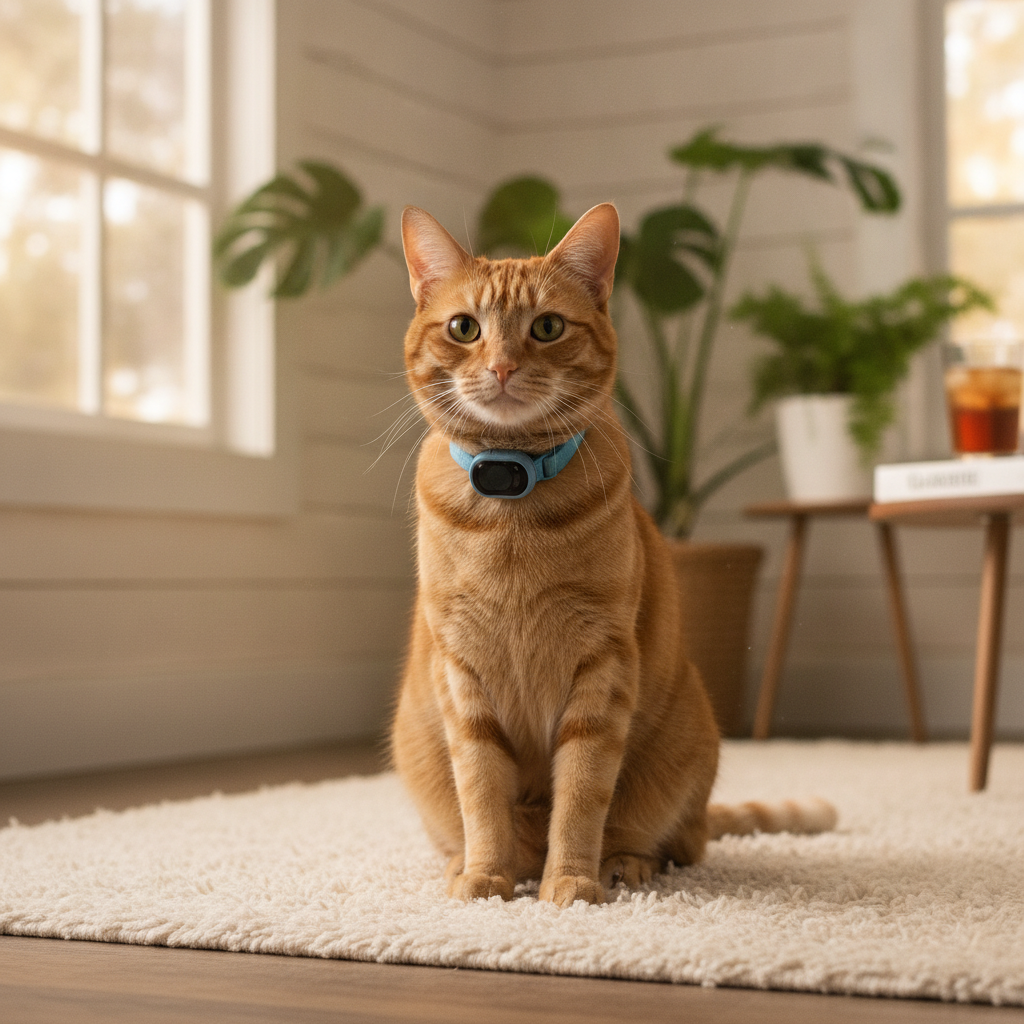
GPS pet trackers vary widely in coverage, cost, and features across the United States. This comparison helps American pet owners choose the right tracker based on local network coverage, climate, and lifestyle.
Key Takeaways
- GPS pet trackers in 2026 typically deliver 15 to 30 foot accuracy outdoors, with top models achieving closer to 12 to 15 feet during live tracking.
- Battery life ranges from 5 days on compact cellular models to roughly 3 months on low power designs, though real world use shortens these claims significantly.
- Subscription fees range from zero (one time purchase models) to roughly $19 per month, with annual plans offering meaningful savings.
- US cellular coverage gaps in rural states, national parks, and mountainous regions remain a weak point for all cellular based trackers.
- Climate extremes across the US, from triple digit heat in Arizona to subzero winters in Minnesota, affect both battery performance and device durability.
Why GPS Tracking Is Essential for American Pet Owners
The American Society for the Prevention of Cruelty to Animals (ASPCA) has noted that roughly one in three pets will become lost at some point in their lives. American shelters take in millions of animals annually, and reunion rates for dogs without identification remain low. Microchips, required alongside rabies vaccination in many US states, help identify a pet after it is found, but GPS trackers serve a fundamentally different purpose: locating a missing pet in real time before it reaches a busy highway, gets picked up by animal control, or suffers exposure to extreme weather.
Escape prone breeds popular in the US, such as Siberian Huskies, Beagles, German Shorthaired Pointers, and Labrador Retrievers, benefit especially from GPS tracking. For owners using dog sitters or boarding facilities, a tracker provides accountability and peace of mind. For guidance on communicating breed specific tendencies to temporary carers, see What to Tell Your Dog Sitter About Your Dog's Breed Traits: High-Energy Working Dogs, Velcro Breeds, and Independent Sighthounds Compared.
Side by Side Comparison: US Focused
| Feature | Tractive (6th Gen) | Fi Series 3+ | Aorkuler |
|---|---|---|---|
| Tracking Technology | GPS, Wi-Fi, cellular (LTE) | GPS, Wi-Fi, cellular (LTE), Bluetooth | Radio frequency (no cellular) |
| Reported Accuracy | Approximately 20 to 25 feet (95% confidence) | Approximately 12 to 15 feet during live tracking | Directional compass with distance readout, no map pinpoint |
| Battery Life | 5 to 12 days (up to 4 weeks with Power Saving Zones) | Up to 3 months (typical real world: 6 to 8 weeks) | Up to 15 days |
| Subscription Cost | From roughly $108/year (Basic) to $120/year (Premium) | $19/month, lower on annual or 2 year bundles (as low as roughly $3.20/week) | None (radio frequency, no SIM required) |
| Device Cost | $50 to $70 | $100 to $150 (often bundled with membership) | $60 to $90 |
| Health/Activity Monitoring | Activity tracking, bark monitoring | Activity, rest, barking, licking, scratching, eating, drinking | Location only |
| Waterproof Rating | IPX7 (submersible) | IP68 (submersible) | IP65 (splash resistant) |
PitPat GPS has been excluded from this US focused comparison because it primarily serves the UK market and is not widely available or supported in the United States.
US Cellular Coverage: The Real Limiting Factor
Both Tractive and Fi rely on LTE cellular networks to transmit location data. In major metro areas such as New York, Los Angeles, Chicago, Houston, and Phoenix, coverage is robust and these trackers perform reliably. However, the US has vast stretches of land with limited or no cellular service: rural areas across Montana, Wyoming, the Dakotas, large portions of Appalachia, and most national parks and wilderness areas.
The Federal Communications Commission (FCC) broadband maps offer a general sense of coverage gaps, though real world connectivity can differ from what carriers report. Pet owners in rural counties should test their cell signal along typical walking and hiking routes before committing to a cellular tracker with an annual subscription.
Aorkuler's radio frequency approach bypasses cellular dependency entirely, making it a practical alternative for owners on ranches, farms, or properties bordering national forests. Its range is limited to a few miles under optimal conditions, so it works best for locating a dog that has wandered nearby rather than one that has bolted across open terrain.
How US Climate Extremes Affect Tracker Performance
The United States spans climate zones from subarctic Alaska to subtropical Florida, and these extremes directly impact GPS tracker performance.
Extreme Heat (Southwest, Southeast summers): Temperatures above 100°F are common across Arizona, Nevada, Texas, and much of the Southeast from June through September. Lithium batteries lose capacity in sustained high heat, and a tracker left in direct sun on a dark colored collar can exceed safe operating temperatures. Trackers with IP68 ratings (like the Fi Series 3+) tolerate heat better due to superior sealing, but all units perform best when the pet has access to shade. For dogs outdoors in triple digit heat, a GPS tracker is critical precisely because heat emergencies escalate fast: a lost dog without water in 110°F conditions faces life threatening heatstroke within hours.
ASPCA Animal Poison Control Center
Call the ASPCA Poison Control hotline or contact your nearest emergency veterinary clinic immediately.
A consultation fee may apply. For non-poison emergencies, search "emergency vet near me" or call your local animal ER.
Severe Cold (Midwest, Northeast, Mountain West winters): Subzero temperatures in states like Minnesota, Wisconsin, and Colorado significantly reduce lithium battery capacity, sometimes cutting expected battery life in half. Fi's longer baseline battery life provides a buffer here, while Tractive's shorter cycle means more frequent charging during winter months. Owners in cold climates should plan for accelerated battery drain and check tracker charge levels before walks.
Humidity and Rain (Pacific Northwest, Gulf Coast): Year round moisture in the Pacific Northwest and intense Gulf Coast storms make waterproofing critical. IP68 rated devices handle submersion, while IP65 rated devices like Aorkuler are rated only for splashes, not sustained rain or puddle submersion.
Lifestyle Match Guide for US Owners
City Apartment With a Small Dog (Under 20 lbs)
For owners in cities like San Francisco, Boston, or Seattle with strong LTE coverage, Tractive's Basic plan offers an affordable solution. The compact tracker fits breeds like French Bulldogs, Chihuahuas, and Miniature Dachshunds. The American Veterinary Medical Association (AVMA) recommends that any collar attachment weigh no more than roughly 5% of the pet's body weight, so owners of very small dogs (under 10 lbs) should weigh the device carefully. Geofencing alerts can notify owners instantly if a dog walker takes the pet outside a defined area.
Suburban Family With a Medium to Large Dog (30 to 80 lbs)
Fi Series 3+ suits this profile well. The extended battery life accommodates busy family schedules, and the health monitoring features (tracking activity levels, rest, scratching, and licking) can flag issues worth discussing at the next veterinary appointment. At $19/month, the subscription is a meaningful ongoing cost, but many owners find the behavioral data valuable. For energetic breeds, combining a GPS tracker with enrichment strategies helps manage restlessness: see Using Food Puzzles and Scatter Feeding to Slow Down Fast Eaters: The Nutritional and Behavioural Case for Enrichment Feeding in Dogs.
Rural Property, Ranch, or Farm
Cellular dead zones make this the trickiest scenario. If your property has reliable LTE signal, Tractive Premium works. If coverage is spotty, Aorkuler's radio frequency tracker avoids the cellular problem entirely. Many owners in rural areas run both a GPS tracker and an Apple AirTag for redundancy: AirTags cost around $29 and have no subscription, though location updates depend on passing iPhones and are sparse in low population areas.
Hikers, Campers, and Outdoor Enthusiasts
Owners who hike with their dogs in US national forests, BLM land, or state parks should expect unreliable cellular service. Aorkuler provides a baseline tracking option independent of cell towers. For longer backcountry trips, no consumer pet GPS tracker currently offers satellite based communication (as some personal locator beacons do for humans), so keeping dogs leashed in wilderness areas remains the most reliable safety measure.
Adoption and the Critical First Months
US shelters and rescues handle millions of animals annually. Dogs adopted from shelters, particularly Why Large Dogs Wait Longer in U.S. Shelters, frequently display escape behavior in the first weeks: bolting through open doors, jumping fences, or pulling free from leashes. The ASPCA and many municipal animal services recommend GPS tracking as a practical safety tool during the adjustment period.
Professional adoption counselors typically recommend keeping a GPS tracker active for at least the first 3 to 6 months after adoption. This period is when the dog is still learning its new environment, building trust with its family, and may be most flight prone if startled by fireworks (a major trigger around July 4th and New Year's Eve in the US), thunderstorms, or unfamiliar visitors.
Most US states require rabies vaccination and many require local licensing for dogs: ensure these are in place alongside your GPS tracker for a thorough start. For health considerations during the early adoption period, see The First Emergency With a New Puppy: Recognising When Symptoms Require Immediate Vet Attention vs. Calm Observation at Home.
Bluetooth Tags as a Low Cost Backup
Apple AirTags and Samsung SmartTags are widely available across the US and cost $25 to $35 with no subscription. They rely on crowd sourced Bluetooth networks: location updates happen when another compatible device passes nearby. In dense urban areas like Manhattan or downtown Chicago, updates can be surprisingly frequent. In rural Wyoming or northern Maine, updates may be hours or days apart.
Bluetooth tags lack real time tracking, geofencing, and health monitoring. They are best used as a secondary layer alongside a dedicated GPS tracker rather than a primary solution.
Long Term Cost Comparison in USD
Over a dog's average lifespan of 10 to 13 years, subscription fees add up substantially:
- Fi Series 3+: At $19/month ($228/year), the 10 year cost reaches roughly $2,280 plus the initial device cost.
- Tractive Premium: At roughly $120/year, the 10 year cost totals approximately $1,200 plus hardware.
- Aorkuler: One time cost of $60 to $90 with no ongoing fees.
For broader context on managing ongoing pet expenses, see What US Pet Insurance Actually Pays Out: How to Read Deductibles, Co-Insurance, and Annual Limits Before You Claim.
Decision Checklist for US Pet Owners
- Test your cellular coverage first. Walk your usual routes and check signal strength before buying a cellular tracker with an annual plan.
- Factor in your climate. Extreme heat or cold reduces battery life; choose a tracker with enough baseline capacity to absorb that loss.
- Budget over 3 to 5 years, not just upfront. Include subscription fees in your calculation.
- Check device weight against your pet. Follow AVMA guidelines: the tracker should weigh no more than roughly 5% of the pet's body weight.
- Recently adopted a shelter dog? GPS tracking during the first 3 to 6 months is strongly recommended regardless of which model you choose.
- Consider redundancy. A cellular GPS tracker plus an AirTag provides two independent layers of tracking for under $200 total upfront.
Final Perspective
No GPS pet tracker is perfect, and marketing claims consistently overstate battery life and accuracy. However, the technology has improved substantially, and for US pet owners navigating a landscape of busy roads, extreme weather, and inconsistent rural coverage, a well chosen tracker provides genuine safety value. The best tracker matches your actual daily routine, your local network reality, and your pet's specific escape risk. Choose based on those factors, not on spec sheets alone.
Frequently Asked Questions
Which GPS pet tracker works best in rural areas of the US? ↓
How does extreme US weather affect GPS tracker battery life? ↓
Do I need a GPS tracker for a newly adopted shelter dog? ↓
Are Apple AirTags a good alternative to GPS pet trackers? ↓
How much does a GPS pet tracker cost over a dog's lifetime in the US? ↓

Priya Nair
Dog Breed Advisor & Adoption Counsellor
Dog breed advisor and adoption counsellor — honest breed comparisons and lifestyle matching for prospective owners.
Content Disclosure
This article was created using state-of-the-art AI models with human editorial oversight. It is intended for informational and entertainment purposes only and does not constitute veterinary medical advice. Always consult a licensed veterinarian for your pet's specific health needs. Learn more about our process.