
In this article
- Key Takeaways
- Why Senior Dogs Need Mental Exercise in Spring
- Understanding the Behaviour: Why Dogs Love to Sniff
- Training Prerequisites
- Step by Step Positive Reinforcement Technique
- Why Nosework Suits Dogs With Mobility Limitations
- Common Mistakes Owners Make
- Troubleshooting Slow Progress
- Integrating Nosework Into a Senior Dog's Routine
- When to Bring in a Professional Trainer
- Final Thoughts
Key Takeaways
- Nosework is one of the most accessible enrichment activities for senior dogs because it requires minimal physical effort while delivering high mental stimulation.
- Spring offers ideal conditions for transitioning scent games from indoors to gardens, with moderate temperatures and gentle air currents.
- A basic starter kit (containers, high value treats, target scent) costs very little and can be assembled at home.
- Progression should follow a structured path: paired odour introductions indoors, then simple garden searches, then increased complexity.
- Dogs with arthritis, post surgical mobility restrictions, or age related vision or hearing decline often thrive in nosework because scent detection relies on their strongest sense.
- Always consult a veterinarian before starting any new activity programme with a senior dog, and seek a certified trainer if progress stalls or stress signals appear.
Why Senior Dogs Need Mental Exercise in Spring
As dogs age, their capacity for long walks, fetch sessions, and vigorous play typically declines. Joint stiffness, reduced stamina, and conditions such as osteoarthritis or hip dysplasia can make traditional exercise uncomfortable or risky. Yet the need for cognitive stimulation does not diminish with age. Research in animal cognition suggests that mental enrichment may help slow cognitive decline in ageing dogs, much as puzzle solving and learning benefit older humans.
Spring presents an excellent window for introducing nosework. Temperatures are moderate, reducing the risk of heatstroke that warmer months can bring. Gentle breezes carry scent plumes in predictable patterns, making outdoor searches more accessible for beginners. Gardens are coming to life with new scents, providing a naturally stimulating backdrop without requiring the dog to travel far from home.
Understanding the Behaviour: Why Dogs Love to Sniff
A dog's olfactory system is extraordinarily powerful. Estimates suggest dogs possess around 200 to 300 million olfactory receptors compared to roughly 5 to 6 million in humans. The olfactory bulb, the brain region dedicated to processing scent, is proportionally around 40 times larger in dogs than in humans. Sniffing is not merely a passive act; it involves active cognitive processing, pattern recognition, and decision making.
For senior dogs, scent work taps into this innate ability without placing demands on failing eyesight, diminishing hearing, or stiff joints. A dog that can no longer chase a ball across a field can still follow a scent trail across a living room floor with obvious enthusiasm and focus. Professional trainers commonly observe that even dogs showing signs of age related lethargy or low confidence will perk up and engage when given a scent puzzle to solve.
Confidence Building Through Success
Nosework is structured so the dog always wins. In properly designed sessions, the hide is always findable, and every successful indication is reinforced with a reward. This creates a positive feedback loop that is especially valuable for senior dogs who may have become withdrawn or anxious. The LIMA (Least Intrusive, Minimally Aversive) approach endorsed by the International Association of Animal Behavior Consultants (IAABC) aligns perfectly with nosework principles: the dog works at their own pace, choices are respected, and force or correction is never part of the process.
Training Prerequisites
Veterinary Clearance
Before beginning any new activity with a senior dog, a veterinary check is strongly recommended. While nosework is low impact, a vet can identify conditions that might require modifications. For example, a dog with cervical spine issues may need elevated hides rather than floor level placements. Dogs using wearable health monitors can provide useful baseline data to share with a veterinarian before starting.
Starter Kit Essentials
A basic nosework kit does not require significant investment, making it accessible regardless of budget. The first year cost considerations for pet owners often focus on food and vet care, but enrichment supplies are an important addition. Essential items include:
- Containers: Four to eight small, identical containers with ventilation holes or slots. Cardboard boxes, plastic food storage containers with holes punched in the lids, or purpose made nosework tins all work well.
- High value treats: Soft, aromatic, and small enough to be consumed quickly. Cooked chicken, commercial training treats, or small pieces of cheese are common choices. Choose treats compatible with the dog's dietary requirements.
- Target scent (optional for beginners): Competitive nosework uses essential oils such as birch, anise, or clove on cotton swabs. For casual enrichment, food odour alone is sufficient. Introduce target scents only once the dog reliably indicates on food hides.
- Treat pouch or apron: Quick access to rewards supports precise timing, which is critical in positive reinforcement training.
- Leash and harness: A well fitted harness (not a collar) is preferable for senior dogs during garden searches to avoid neck strain. A longer lead of around 2 to 3 metres gives the dog room to move freely while maintaining safety.
- Towels or mats: Useful as markers, barriers, or comfort surfaces for dogs with joint pain who need cushioning while searching.
Environment Setup
Begin in a quiet, familiar indoor space with minimal distractions. A bathroom or small bedroom works well for the first sessions. Remove competing food sources (pet bowls, crumbs on the floor). Ensure the space is comfortable in temperature, which is naturally easier during spring months.
Step by Step Positive Reinforcement Technique
Phase 1: Introduction to the Game (Days 1 to 5)
The goal of the first phase is simply to teach the dog that searching is fun and always results in a reward.
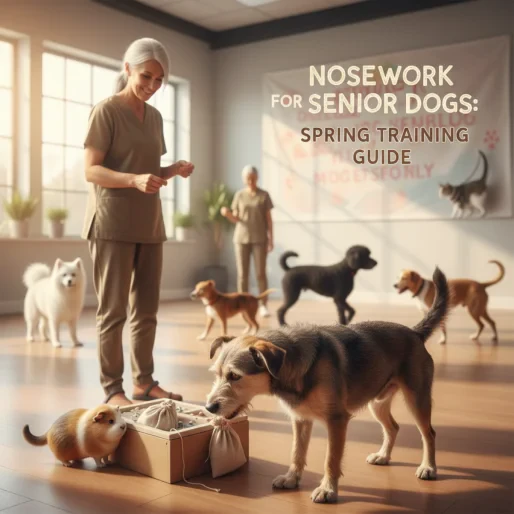
- Step 1: Place a single container on the floor with a treat visible on top (not hidden). Allow the dog to approach and eat the treat. Mark the moment of eating with a verbal marker such as "yes" or a clicker. Repeat 5 to 8 times.
- Step 2: Place the treat just inside the container so the dog must nose into it slightly. Mark and reward each success. If the dog hesitates, do not lure with hand gestures; simply wait. Shaping through patience is more effective than prompting.
- Step 3: Add a second empty container beside the baited one. The dog now makes a simple choice. Reward only when the dog indicates (sniffing, nudging, pawing) the correct container. Avoid correcting wrong choices; simply wait and let the dog self correct.
- Step 4: Gradually increase to three, then four containers. Randomise the position of the baited container. Sessions should last no more than 3 to 5 minutes for a senior dog, with rest breaks as needed.
Phase 2: Closing the Container (Days 6 to 14)
Once the dog confidently identifies the baited container among several empty ones, begin closing the lid (with ventilation holes). The dog must now rely entirely on scent rather than sight. This is the critical transition point.
- If the dog struggles, partially close the lid for a few repetitions before fully closing it.
- Watch for stress signals in body language such as lip licking, yawning, turning away, or whale eye. If these appear, simplify the task immediately.
- End every session on a success, even if that means reverting to an easier step.
Phase 3: Simple Indoor Hides (Days 15 to 30)
Move beyond the container lineup and begin placing hides around the room.
- Start with hides at nose height (floor level for most dogs, elevated for very large breeds).
- Place the treat or scented item in accessible locations: beside a chair leg, next to a door frame, under the edge of a towel.
- Let the dog search off leash in the room. Remain calm and quiet; excessive verbal encouragement can distract the dog from scent processing.
- Gradually increase the number of hides from one to two or three per session.
- Begin varying hide heights if the dog is physically comfortable reaching slightly above or below nose level.
Phase 4: Transition to the Garden (Week 5 Onward)
Spring conditions make the garden an ideal next step. Move outdoors only when the dog is reliably finding indoor hides with clear enthusiasm.
- First garden session: Use a small, enclosed area. Place one or two hides in sheltered spots (near a fence post, beside a planter) where wind will not scatter scent unpredictably.
- Surface considerations: Senior dogs with joint issues may struggle on uneven ground. Choose flat, grassy areas and avoid gravel or steep slopes.
- Wind awareness: Position the dog downwind of the hide initially so scent blows toward them. This sets them up for early success outdoors.
- Session length: Outdoor searching is more mentally taxing due to competing environmental odours. Keep garden sessions to 3 to 5 minutes initially, building gradually.
- Safety: Check the garden for toxic plants, pesticides, slug pellets, or sharp objects before each session. Always supervise directly.
Why Nosework Suits Dogs With Mobility Limitations
Dogs recovering from orthopaedic surgery, those with chronic arthritis, breeds prone to spinal conditions (such as Dachshunds), and retired greyhounds transitioning to home life all share a common challenge: they need mental engagement but cannot tolerate high impact activity. Nosework addresses this beautifully for several reasons:
- Self paced: The dog chooses how quickly to move. There is no need to run, jump, or twist.
- Adjustable difficulty: Hides can be placed at whatever height the dog can reach comfortably.
- Short duration: Effective sessions can last as little as 2 to 3 minutes, making it suitable for dogs with low stamina.
- Independent of other senses: Dogs with vision or hearing loss can participate fully.
- Minimal equipment footprint: No agility jumps, tunnels, or large spaces required.
Observations from professional training settings suggest that dogs with mobility limitations often show increased confidence and engagement after even a few weeks of consistent nosework practice. The predictable success structure provides emotional security that these dogs may lack in other contexts.
Common Mistakes Owners Make
- Sessions too long: Enthusiasm is understandable, but senior dogs tire quickly. Cognitive fatigue can appear as disengagement, wandering, or stress signals. Three to five minutes per session, with no more than two sessions per day, is a sound guideline.
- Helping too much: Pointing at hides, leading the dog by the collar, or repeating cues undermines the dog's independent problem solving. The goal is for the dog to trust its own nose.
- Inconsistent reward timing: The marker (click or verbal) should occur at the exact moment the dog indicates the hide, followed immediately by the reward. Delayed or inconsistent marking weakens the association.
- Progressing too fast: Moving from closed containers to room searches too quickly can cause frustration. If the dog's success rate drops below roughly 80 percent, return to the previous difficulty level.
- Using aversive corrections: Never punish a wrong choice. Nosework must remain a pressure free activity. The CPDT-KA code of ethics and IAABC position statements are clear that aversive interventions have no place in enrichment activities.
- Ignoring physical discomfort: A dog that suddenly refuses to search may be experiencing pain. Changes in willingness to engage should prompt a veterinary consultation rather than increased pressure.
Troubleshooting Slow Progress
Dog Shows No Interest in Containers
Try higher value treats. Some dogs are not motivated by commercial treats but will work eagerly for tiny pieces of cooked meat or fish. If interest remains low, consider whether the dog might be experiencing nausea, dental pain, or other health concerns that reduce food motivation.
Dog Paws or Destroys Containers
This is actually a strong indication behaviour and can be shaped. If the pawing is gentle, mark and reward it. If it becomes too vigorous, switch to sturdier containers (metal tins) and reward the moment the dog's nose touches the container, before pawing begins. This shapes a nose touch as the preferred indication.
Dog Searches Well Indoors but Refuses Outdoors
The transition to outdoor environments can be overwhelming for some senior dogs, particularly those who have become homebodies. Return to indoor sessions and introduce outdoor elements gradually: practice near an open door, then on a porch, then in a small enclosed garden area. Environmental desensitisation should proceed at the dog's pace.
Dog Appears Anxious During Sessions
Anxiety during what should be a fun activity signals that something in the setup needs adjustment. Common causes include sessions that are too long, hides that are too difficult, unfamiliar environments, or the presence of other pets or people who create social pressure. Simplify everything and rebuild slowly. If anxiety persists, a qualified behaviourist or certified trainer should assess the situation.
Integrating Nosework Into a Senior Dog's Routine
Nosework should complement, not replace, other aspects of a senior dog's care. Consider it one component of a holistic enrichment plan that might include gentle walks, social interaction, puzzle feeders, and appropriate nutritional support. A sample spring schedule might look like this:
- Morning: Short garden walk (5 to 15 minutes depending on ability), followed by breakfast.
- Midday: Brief nosework session (3 to 5 minutes) during the warmest, most comfortable part of the day.
- Afternoon: Rest, gentle social interaction, or a second short nosework session if the dog is enthusiastic.
- Evening: Calm bonding time, light grooming, or a puzzle feeder.
For households introducing a new puppy alongside a senior dog, nosework can be a valuable confidence builder for the older dog. Running separate training sessions ensures the senior dog gets focused attention and success without competition.
When to Bring in a Professional Trainer
While nosework is one of the more owner friendly training activities, professional guidance is warranted in several situations:
- The dog shows persistent fear, anxiety, or avoidance during sessions despite simplification.
- The dog has a history of resource guarding around food, which could complicate treat based searching.
- The owner wishes to progress to formal competition nosework using target odours.
- The dog has complex behavioural needs alongside mobility limitations (for example, a senior rescue dog with both anxiety and arthritis).
- Progress stalls for more than two to three weeks despite troubleshooting.
When selecting a professional, look for credentials such as CPDT-KA (Certified Professional Dog Trainer, Knowledge Assessed), CBCC-KA (Certified Behavior Consultant Canine), or membership in the IAABC. Trainers who specialise in nosework or scent detection will offer the most targeted support. The TrustMyPets guide to choosing between a behaviourist and trainer provides further details on finding qualified help.
Final Thoughts
Nosework stands out as one of the most inclusive, rewarding, and accessible activities available to senior dogs. It honours their most powerful natural ability, provides genuine cognitive challenge without physical strain, and builds the kind of quiet confidence that enriches an older dog's daily life. Spring offers the perfect conditions to begin: comfortable temperatures, fresh garden scents, and longer daylight hours that invite gentle outdoor exploration. With patience, proper setup, and a commitment to positive reinforcement, owners can open up a world of joyful engagement for their ageing companions.
Frequently Asked Questions
Content Disclosure
This article was created using state-of-the-art AI models with human editorial oversight. It is intended for informational and entertainment purposes only and does not constitute veterinary medical advice. Always consult a licensed veterinarian for your pet's specific health needs. Learn more about our process.