Grooming a cat at home with sustainable tools reduces single-use plastic waste without compromising coat health or skin monitoring quality. This guide covers reusable wipe techniques, compostable brush selection, breed-specific grooming frequency, and practical second uses for collected shed fur.
Key Takeaways
- Regular at-home grooming reduces hairball formation, prevents matting, and supports early detection of skin and coat changes.
- Reusable grooming cloths, bamboo-handled brushes, and stainless steel combs replace single-use alternatives without compromising grooming quality.
- Collected shed fur has practical second lives: hot compost enrichment, bird nesting material, needle-felting fibre, and biodegradable garden mulch.
- Coat type determines grooming frequency: double-coated breeds such as the Maine Coon require daily carding during seasonal coat blows, while short single-coated breeds typically need only weekly sessions.
- Tight mats at skin level, undiagnosed skin lesions, and sudden coat changes should prompt professional groomer or veterinary consultation before any grooming proceeds.
Why Zero-Waste Cat Grooming Matters for Health and the Environment
Regular grooming is not simply cosmetic. The skin and coat serve as the first line of defence against infection, temperature extremes, and environmental irritants. When loose fur accumulates close to the skin, it traps moisture and debris, creating conditions that favour bacterial or fungal overgrowth. Equally, fur ingested during self-grooming contributes to hairball formation, a common cause of gastrointestinal discomfort in cats.
From a sustainability perspective, conventional grooming products generate substantial plastic waste: disposable wet wipes in single-use sachets, nylon-bristle brushes with non-recyclable handles, and adhesive lint rollers with sheets that cannot be composted or recycled. Shifting to reusable and compostable alternatives addresses both feline health and the environmental footprint of the grooming routine.
This guide draws on standards upheld by organisations including the International Professional Groomers (IPG) and the National Cat Groomers Institute of America (NCGIA), and is intended to complement professional appointments rather than replace them. Owners already exploring sustainable choices in other areas of cat care will find the guide on eco-friendly cat litter substrates a useful companion reference.
Understanding Your Cat's Coat Type Before You Begin
Accurate coat-type identification is essential before selecting tools or establishing a routine. Grooming needs differ considerably across coat categories, and using the wrong tool can cause coat damage or skin irritation.
Single Coat
Breeds such as the Siamese, Burmese, and Cornish Rex carry a single-layer coat with minimal or absent guard hairs and very little undercoat. These cats shed lightly and rarely mat. Grooming sessions focus on distributing skin oils, removing surface debris, and monitoring skin condition rather than removing bulk undercoat.
Double Coat
The double coat comprises a dense, soft undercoat beneath longer, coarser guard hairs. Breeds including the Maine Coon, Norwegian Forest Cat, and Siberian carry dense double coats. Without regular carding (the systematic removal of dead undercoat using a fine-toothed comb or slicker brush), the undercoat compresses and forms mats, particularly behind the ears, in the axilla (armpit), and along the lower flanks. Seasonal shedding in double-coated cats can be substantial, as discussed in the guide on tools for managing feline undercoats during the spring shed.
Semi-Long Coat
The Ragdoll, Turkish Angora, and Birman carry semi-long coats with a silkier texture than true double-coated breeds. While they shed moderately, the longer guard hairs are prone to tangling at the collar area, hindquarters, and the trousers (the long fur at the back of the thighs).
Rex and Curly Coats
Devon Rex and Selkirk Rex cats have soft, loosely curled or wavy coats that are fragile and prone to breakage under aggressive brushing. Gentle detangling with a wide-tooth comb is recommended over stiff-bristle tools. The Cornish Rex carries only a soft undercoat with no guard hairs, making it one of the most delicate coat types to work with.
The Zero-Waste Grooming Toolkit
Reusable Grooming Wipes
Conventional pre-moistened pet wipes come in single-use plastic sachets and generate considerable landfill waste. Reusable alternatives include the following options:
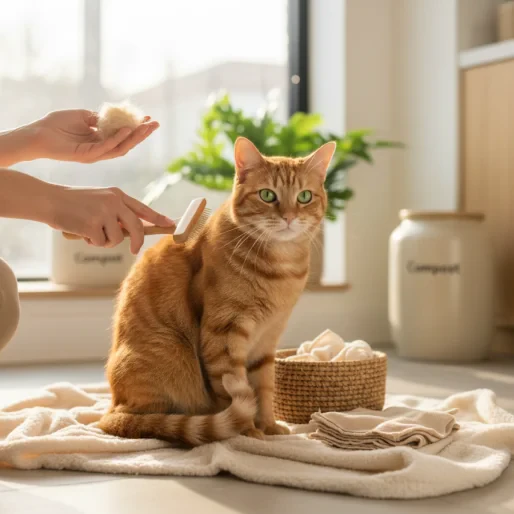
- Cut muslin or organic cotton cloths: These can be dampened with plain water or a dilute, cat-safe, fragrance-free cleanser for facial and paw cleaning. After use, they are laundered and reused indefinitely.
- Bamboo terry face cloths: Bamboo fibre is naturally soft, fast-drying, and compostable at end of life. A set of eight to twelve cloths covers a full week of daily wipe-downs before laundering.
- Repurposed cotton clothing: Clean cotton T-shirts cut into grooming-sized squares represent the zero-waste hierarchy of reuse before recycling, and cost nothing to source.
For the wipe solution, plain warm water is appropriate for most healthy cats. Where a cleansing agent is required, veterinary guidance should confirm the product is pH-appropriate for feline skin (typically in the range of 6.0 to 7.2) and free from essential oils such as tea tree, eucalyptus, or citrus compounds, all of which carry documented toxicity risks in cats. For a broader strategy on reducing single-use items across all areas of pet care, the guide on reducing single-use plastics in your pet's daily life offers practical room-by-room advice.
Compostable and Sustainably Sourced Brushes
- Bamboo-handled slicker brushes: Reputable versions feature FSC-certified bamboo handles and bristle pads mounted in natural rubber rather than petroleum-based foam. Both components are compostable or biodegradable at end of product life.
- Boar-bristle finishing brushes: Traditional boar-bristle brushes with solid wooden handles and natural bristles are well suited to short and single-coat cats for coat polishing and sebum distribution. They are fully compostable at end of life.
- Stainless steel combs with wooden handles: Wide-tooth and fine-tooth combs with FSC timber handles and stainless steel tines are durable, repairable, and metal-recyclable. A quality comb of this type can last many years with basic maintenance.
- Natural rubber grooming gloves: For short-coated cats that respond better to hand-contact grooming than to brushes, natural latex or rubber gloves are available as a more sustainable alternative to fully synthetic versions.
The article on eco-friendly grooming: natural brushes and biodegradable shampoos provides a broader assessment of sustainable tool selection applicable to cats and dogs.
Additional Low-Waste Tools
- Stainless steel flea comb: A metal flea comb is durable, long-lasting, and does not require replacement the way plastic alternatives do. It also permits close inspection of the skin surface during each pass.
- Reusable lint brushes: Base-material lint brushes with reusable adhesive surfaces or rubber pile options eliminate the need for disposable lint roller refills for coat management between sessions.
Step-by-Step Zero-Waste Home Grooming Routine
Step 1: Prepare the Environment
Professional grooming protocol recommends a calm, consistent setting for each session. A non-slip mat made from natural rubber or jute-backed material on a stable surface prevents the cat from sliding, which reduces anxiety. All tools should be gathered before beginning so the session is not interrupted by searching for equipment. For cats new to grooming, the guide on desensitizing kittens to grooming and handling outlines a structured conditioning approach that applies equally to adult cats being introduced to new routines.
Step 2: Visual and Manual Skin Assessment
Before introducing any tool, part the coat in several locations (behind the ears, along the spine, in the axilla, and at the base of the tail) and inspect the skin directly. This pre-groom assessment is a core element of IPG-aligned grooming practice and serves to identify:
- Flea dirt (small dark specks that turn red-brown when pressed onto a damp white cloth)
- Redness, scaling, or flakiness that may indicate seborrhoea or allergic dermatitis
- Early matting or coat compaction close to the skin surface
- Lumps, cysts, or areas of localised hair loss requiring veterinary review
Step 3: Carding the Undercoat (Double and Semi-Long Coats)
Using a wide-tooth comb, work through the coat in sections following the direction of hair growth. Carding removes loose, dead undercoat before it has the opportunity to compact into mats. Short, gentle strokes are preferred over long forceful pulls. Where resistance is encountered, stop and assess before continuing: forcing through a tangle can cause brush burn (superficial skin abrasion from friction), particularly in older cats whose skin becomes thinner with age. Where mats have already formed, the article on managing spring matting: shave vs. detangle decisions sets out the appropriate decision criteria clearly.
Step 4: Finish with a Bristle Brush or Grooming Glove
After carding, a boar-bristle brush or natural rubber grooming glove distributes sebum along the hair shaft, promoting coat gloss and collecting any remaining loose hairs. On single-coated cats, this step may serve as the primary grooming action for most weekly sessions.
Step 5: Facial and Paw Wipe-Down
Using a dampened reusable cloth, gently wipe the eye corners (working outward from the inner corner to avoid cross-contamination between eyes), the chin (a common site for feline acne), and between the paw pads. This is also the ideal moment to check the paw pads for cracking, overgrown nails, or foreign material lodged between the digits.
Step 6: Flea Comb Pass
A final pass with a fine-tooth stainless steel flea comb checks for ectoparasites and provides a detailed skin inspection along the dorsal midline and the base of the tail, where flea activity is typically most concentrated. Any findings should be cross-referenced with current flea prevention protocols; the article on spring flea and tick prevention for cats provides a thorough treatment comparison.
Frequency Guide by Coat Type and Breed
- Short single coat (Siamese, Burmese, Abyssinian): Weekly grooming is generally sufficient. A boar-bristle brush pass combined with a flea comb check is the standard routine.
- Short double coat (British Shorthair, Russian Blue): Two to three sessions per week, with additional carding emphasis during seasonal shedding periods in spring and autumn.
- Semi-long coat (Ragdoll, Birman, Turkish Angora): Three to four sessions per week, with particular attention to the collar zone, hindquarters, and trousers.
- Long double coat (Maine Coon, Norwegian Forest Cat, Siberian): Daily grooming during coat blows; three to four times per week during stable coat phases. The guide on mastering the autumn coat blow provides detailed seasonal de-shedding technique applicable across double-coated breeds.
- Rex and curly coat (Devon Rex, Cornish Rex, Selkirk Rex): Once or twice weekly with a very soft brush or slightly dampened cloth. Aggressive brushing can permanently damage the fragile curl structure of these coats.
During high-pollen periods, increased grooming frequency can also reduce the allergen load carried on the coat surface, as explored in the article on grass pollen and seasonal allergy symptoms in cats.
What to Do With Shed Fur: Zero-Waste Options
A significant volume of fur is collected during grooming sessions, particularly from double-coated breeds during seasonal coat blows. Rather than sending this material to landfill, several practical applications exist.
Hot Composting
Cat fur is nitrogen-rich and qualifies as a green (nitrogen-rich) compost material. It breaks down slowly, so it is best added in thin, fluffed layers between carbon-rich (brown) materials such as cardboard or dry leaves in an active hot compost pile. Clumped fur does not decompose efficiently. Importantly, fur from cats recently treated with topical flea or parasite treatments should not be composted for garden use until the treatment residue period indicated on the product packaging has passed, as these compounds may persist in the fur and could affect soil invertebrates. The guide on vermicomposting pet waste provides a useful scientific overview of responsible composting of pet-related materials.
Bird Nesting Material
During spring nesting season, small handfuls of collected fur placed in a mesh bag, a suet feeder cage, or loosely draped in a garden shrub provide nesting material for garden birds. Fur should be confirmed free from topical parasite treatment residues before placing it outdoors.
Needle Felting and Craft Use
Cat fur collected and cleaned from grooming sessions can be used in needle-felting projects. Owners with craft hobbies commonly repurpose longer fur from breeds such as the Maine Coon or Persian into small felted items. This represents a genuinely zero-waste end use and has a modest but established following among sustainable craft communities.
Garden Mulch and Deterrent Layer
Thin layers of fur can be applied as a biodegradable mulch around the base of garden plants. The same precautions regarding recent topical parasite treatment apply. Some gardeners also report placing collected fur around plant bases as a deterrent for small animals such as rabbits, though evidence for effectiveness remains anecdotal.
Warning Signs to Watch for During Grooming
The grooming session provides one of the most reliable opportunities for early detection of health changes. Professional grooming bodies consistently note that owners who groom regularly are better positioned to identify problems early than those who rely solely on annual veterinary health checks.
The following findings during grooming warrant veterinary attention:
- Sudden coat thinning or patchy hair loss: May indicate hyperthyroidism, ringworm, feline alopecia, or allergic skin disease. Hyperthyroidism is particularly common in middle-aged to senior cats and often presents initially as a change in coat quality before other clinical signs emerge.
- Greasy or malodorous coat: Can signal seborrhoea, dietary imbalance, or systemic disease. Cats that have reduced or stopped self-grooming often develop a greasy, unkempt coat, which may indicate pain, obesity, or early cognitive decline, as discussed in the article on why your cat's self-grooming changes in spring.
- Miliary dermatitis (small crusty bumps along the dorsal midline): A classic presentation of flea allergy dermatitis or other hypersensitivity reaction. Veterinary diagnosis is required. The guide on seasonal allergies and atopy in pets provides useful context on allergic skin conditions.
- Redness, swelling, or skin discharge: Requires prompt veterinary assessment. No topical remedy should be applied without professional guidance, as inappropriate treatment can mask diagnostic signs or worsen the condition.
- Flinching, vocalising, or aggression during previously tolerated grooming: Pain-associated behaviour change is a meaningful clinical signal. Dental pain, arthritis, or internal conditions commonly manifest as sudden handling intolerance and should not be attributed to temperament alone.
- Mats tight against the skin: These should not be cut with scissors at home. Feline skin is thin and moves freely from the underlying tissue; it can be inadvertently lifted into scissor blades, resulting in lacerations that require veterinary suturing. A professional groomer or veterinary practice should address skin-level mats using clippers with an appropriate guard.
Professional Groomer vs. Home Grooming: A Decision Guide
Home grooming, done consistently, is appropriate for the majority of cats under most circumstances. However, certain situations require professional involvement.
When Home Grooming Is Appropriate
- Routine coat maintenance between professional appointments
- Weekly brushing, flea combing, and facial wipe-downs for healthy cats
- De-shedding sessions during seasonal coat blows for double-coated breeds
- Basic paw inspection and inter-digital cleaning
When Professional Grooming Is Required
- Matting that is close to or touching the skin (requires clipper work rather than brushing)
- Cats that are unsafe or highly distressed to handle at home
- Senior cats with arthritis or mobility conditions where prolonged grooming causes discomfort
- Full lion cuts, tipping of guard hairs, or breed-standard show trims
- Any grooming that involves scissors working close to the skin
When Veterinary Consultation Should Precede Grooming
- Visible skin lesions, open wounds, or undiagnosed rashes
- Suspected ringworm (a highly contagious zoonotic condition: professional groomers typically require veterinary clearance before accepting affected cats)
- Sudden or unexplained coat changes in a cat over eight years of age
- Cats on systemic medication where skin sensitivity may be altered
Building a Sustainable Grooming Habit
Consistency is the single most effective factor in successful at-home grooming. Short, frequent sessions of five to ten minutes every two to three days are better tolerated by most cats and more effective at preventing mat formation than long, infrequent sessions. Pairing grooming with a predictable part of the daily routine, such as after a meal or during a calm evening period, builds positive associations over time.
Investing in quality sustainable tools at the outset reduces long-term replacement costs. A well-maintained bamboo-handled slicker brush or stainless steel comb outlasts multiple lower-quality plastic equivalents, making the zero-waste approach both environmentally and economically rational over the life of the product. For households committed to reducing their environmental footprint across all aspects of pet ownership, the guide on eco-friendly spring cleaning for pet homes offers complementary advice on non-toxic household maintenance that supports feline skin and respiratory health.
Frequently Asked Questions
Is it safe to cut out my cat's mats with scissors at home? ↓
Can cat fur collected during grooming be composted safely? ↓
Why are bamboo-handled brushes considered a sustainable grooming tool? ↓
How do I know when my cat needs a professional groom rather than home grooming? ↓
How often should a Maine Coon be groomed at home? ↓

Sophie Bianchi
Certified Master Pet Groomer
Certified master pet groomer — breed-standard techniques, skin health awareness, and at-home grooming guidance.
Content Disclosure
This article was created using state-of-the-art AI models with human editorial oversight. It is intended for informational and entertainment purposes only and does not constitute veterinary medical advice. Always consult a licensed veterinarian for your pet's specific health needs. Learn more about our process.