A practical New Zealand guide to canine hydrotherapy for arthritic and overweight dogs, covering vet referrals, accredited centres, and summer planning. Includes home water exercises suited to Kiwi conditions and an eight week tracking framework.
Key Takeaways
- Hydrotherapy reduces joint load by roughly 60 to 90 percent depending on water depth, which suits arthritic and overweight dogs that struggle with land exercise during the Kiwi summer (December to February).
- Underwater treadmills suit controlled gait retraining and weight loss, while pool work suits non weight bearing endurance and severe joint disease.
- A written referral from an NZVA registered veterinarian is essential. Hydrotherapy is contraindicated in conditions such as open wounds, otitis, uncontrolled cardiac disease, and active skin infections.
- Look for hydrotherapists working under veterinary supervision or those affiliated with international bodies such as the IAVRPT, given New Zealand does not yet have a single dedicated canine hydrotherapy accreditation body.
- An eight week structured plan with weekly tracking lets owners measure real change in mobility, weight, and stamina.
Why Hydrotherapy Suits the New Zealand Climate
New Zealand summers can be deceptively hard on overweight and arthritic dogs. The maritime climate keeps temperatures lower than parts of Australia, yet UV intensity is among the highest in the world, footpaths in Auckland, Hamilton, and Napier heat quickly, and humidity in the upper North Island makes panting less effective. In the South Island, dry nor'westers and sudden afternoon heat can catch owners off guard. Many Kiwi owners cut walks to early morning or late evening, which often results in a sedentary dog, weight gain, and stiffer joints by autumn.
Hydrotherapy offers a controlled, low impact way to keep these dogs moving. Buoyancy reduces the load on painful joints, while the resistance of warm water builds supporting muscle without the concussive forces of running on dry ground. For senior Labradors, arthritic Huntaways retired from farm work, or overweight Staffies, it can be the difference between a flat summer and a meaningfully active one.
Preparation: What You Need Before Booking
Veterinary Clearance
Reputable centres in New Zealand will not accept a dog without a written referral from a registered veterinarian. The referral should include current diagnoses, medications, recent imaging or surgical notes, and any movement restrictions. Conditions that may rule out hydrotherapy include uncontrolled cardiac disease, active skin infections, open wounds, recent surgery before sutures are removed, gastrointestinal illness, and ear infections, which are common in floppy eared breeds after swims in warm humid weather.
Under the Animal Welfare Act 1999, owners also have a duty of care to ensure exercise programmes do not cause unreasonable pain or distress, which reinforces the value of a proper veterinary assessment before starting.
Practical Items to Bring
- Two large absorbent towels (microfibre dries faster in humid Auckland or Bay of Plenty conditions)
- A non slip mat for the ute tray cover or car boot
- The dog's regular flat collar and lead (centres usually supply a buoyancy harness)
- A small high value treat that does not crumble, used outside the pool only
- Any prescribed joint supplements or pain medication, given at the usual time
- A copy of the veterinary referral, microchip details, and vaccination records
At Home Preparation
Feed a small meal at least two to three hours before the session to reduce regurgitation risk, ensure a full toilet break before arrival, and keep the car cool. Many North Island centres ask owners to park in the shade and avoid leaving dogs in vehicles, in line with general advice from the SPCA and NZVA on summer car safety. A quick brush to remove loose hair keeps centre filters cleaner and is usually a stated requirement.
Underwater Treadmill vs Pool Sessions
Underwater Treadmill
The dog walks on a belt inside a sealed chamber that fills with warm water, usually 28 to 30 degrees Celsius, to a chosen depth between hock and shoulder height. The water level controls how much body weight is carried by the joints. Speed and incline are adjusted gradually.
Best for: weight loss in food motivated breeds such as Labradors and Beagles, post operative gait retraining, mild to moderate osteoarthritis, hip and elbow dysplasia, and dogs lacking confidence in water. The enclosed environment feels safer to anxious dogs because there is a solid surface underfoot.
Pool Sessions
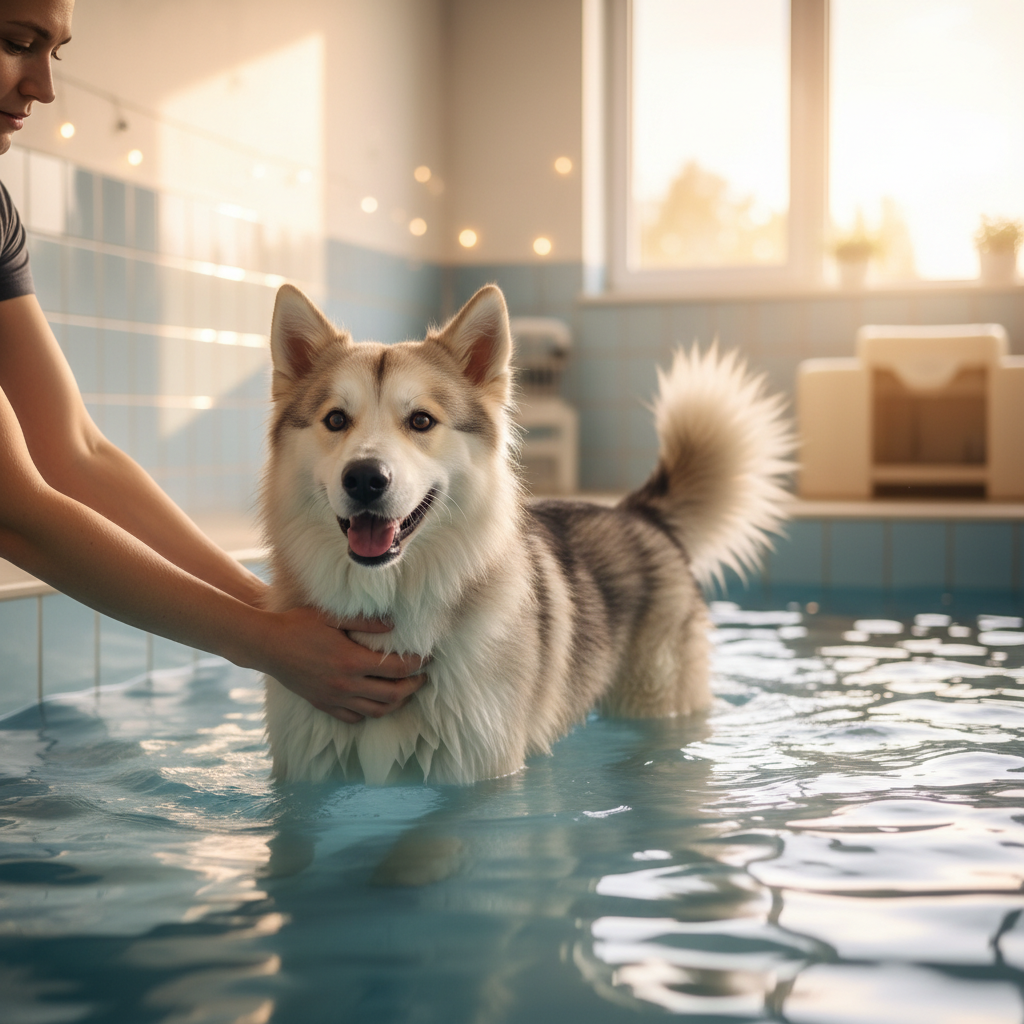
The dog swims in a temperature controlled pool wearing a buoyancy harness, with a hydrotherapist guiding them. Sessions often combine swimming laps with stretching and turning exercises.
Best for: severe osteoarthritis where any weight bearing is painful, cardiovascular conditioning, working dogs such as Huntaways or Border Collies needing endurance, and rehabilitation from spinal conditions where controlled non weight bearing exercise is prescribed.
Which One Should You Choose?
For most overweight, arthritic family dogs, an underwater treadmill is the more controlled starting point. Pool work is often introduced later for variety or when greater joint offloading is needed. The veterinary referral typically specifies a preference, and the hydrotherapist will tailor the plan from there.
Finding a Qualified Hydrotherapy Provider in New Zealand
Standards vary across the country. New Zealand does not have a single dedicated canine hydrotherapy registration body equivalent to the CHA or NARCH in the UK, so the most reliable approach is to look for centres that operate under direct veterinary supervision or that are run by qualified animal physiotherapists.
Credentials Worth Checking
- NZVA registration of the supervising veterinarian (search via the New Zealand Veterinary Association directory)
- Veterinary Council of New Zealand registration for any veterinarian signing off on rehab plans
- Animal physiotherapy qualifications through recognised tertiary providers, often Australian or UK trained
- IAVRPT (International Association of Veterinary Rehabilitation and Physical Therapy) membership for veterinary credentialed practitioners
Questions to Ask Before Booking
- Do you require a veterinary referral for every dog?
- What qualifications does the hydrotherapist hold, and which professional body are they registered with?
- How often is the water tested, and what disinfection system is used?
- What is the water temperature range, and is it adjusted for senior or arthritic dogs?
- Is a first aid trained person always present during sessions?
- What is the cost per session in NZD, and does it include drying facilities?
Indicative session costs around New Zealand currently sit in the region of $60 to $120 NZD, with initial assessments often slightly higher. Vague answers about water testing or pressure to prepay for a block of sessions before any assessment are red flags.
What to Expect at a First Session
The first appointment is rarely a full workout. Most reputable centres run a longer initial consultation of 45 to 60 minutes, with only a short time in the water.
1. Health Check and History
The hydrotherapist reviews the veterinary referral, weighs the dog in kilograms, assesses body condition score, palpates joints and muscles, and discusses goals. Owners are asked about stair use, slipping on timber or tile floors, willingness to jump into the car or onto the bed, and how long the dog can walk before tiring.
2. Introduction to the Equipment
The dog is shown the treadmill or pool with the equipment off, allowed to sniff, and rewarded for calm behaviour. Nervous dogs may need ten minutes or more at this stage.
3. Fitting the Buoyancy Aid
For pool work, a fitted harness with handles is essential. Straps are adjusted to support the chest without restricting breathing or shoulder movement.
4. Short Water Introduction
First time water exposure is usually two to five minutes, often broken into short intervals. The aim is positive association, not exercise. Many dogs need two or three sessions before meaningful work begins.
5. Drying and Debrief
The dog is rinsed with fresh water, towel dried, and sometimes blow dried on a low heat setting. The hydrotherapist explains what was observed and the plan for the next visit. Most dogs sleep deeply afterwards, which is normal.
Home Water Exercises Between Visits
Between professional sessions, gentle home based water exercise can help maintain progress during hot Kiwi summer days. These are general suggestions only. Anything beyond paddling should be cleared with the veterinary team first.
Shallow Paddling Pool Work
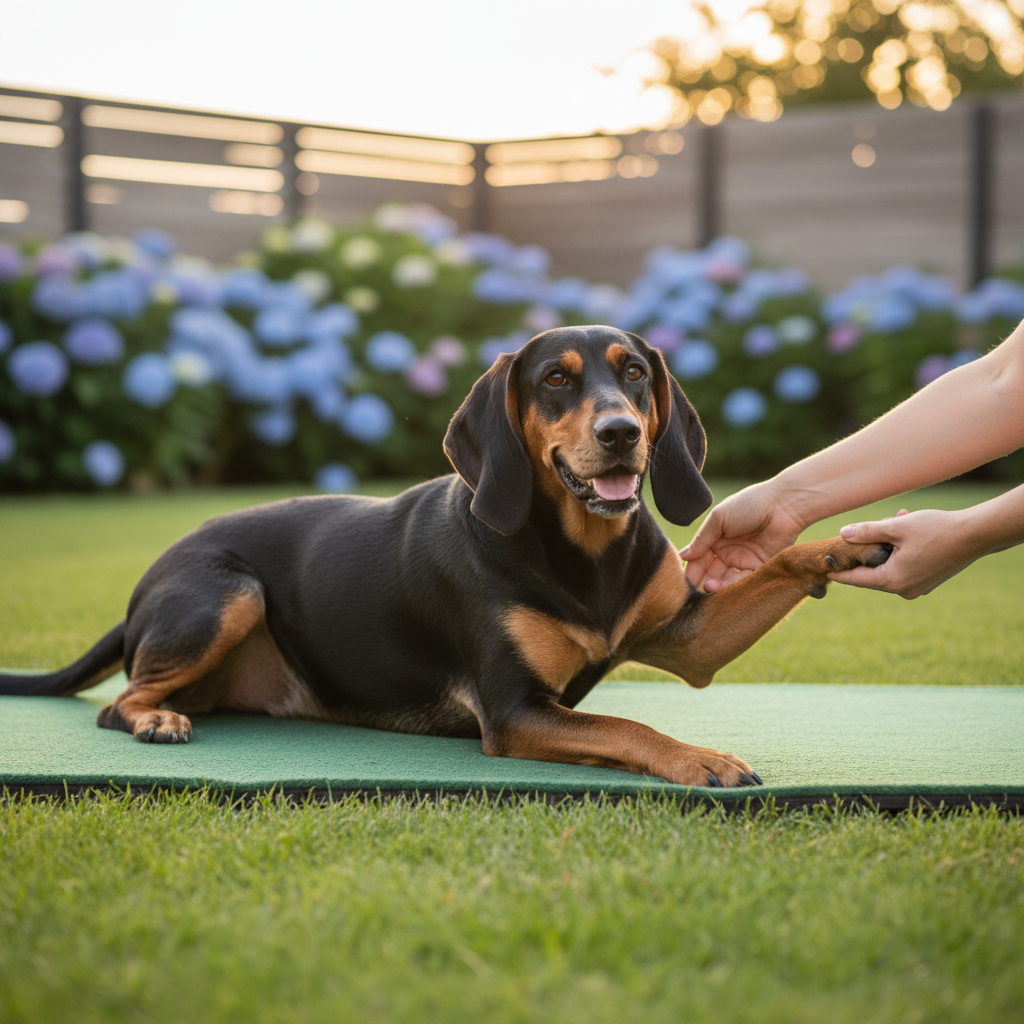
A hard sided paddling pool filled to carpus (wrist) height gives a safe space for standing and gentle weight shifting. Encourage stepping in and out slowly and tight circle turns using a treat held at nose height. Five minutes is usually enough for a beginner.
Cool Hose Down Stretches
On warm days, a gentle cool (not cold) hose over the legs can ease joint stiffness before a short lead walk. Avoid spraying the head or directly into the ears. Tap water in many parts of New Zealand is naturally cool, so let it run briefly before applying.
Beach and River Considerations
Many Kiwi owners are tempted to use the ocean or local rivers for free swimming. This can work for confident, fit dogs, but be aware of:
- Rip currents on west coast beaches, which can exhaust an arthritic dog very quickly
- Cold alpine fed rivers in the South Island, which can trigger muscle cramping
- Toxic algal blooms (cyanobacteria) that affect rivers and lakes in summer; check regional council water quality alerts before letting any dog enter
- Conservation areas and beaches with dog restrictions to protect nesting native birds such as dotterels and kiwi, governed by Department of Conservation rules and council bylaws under the Dog Control Act 1996
What to Avoid at Home
- Throwing balls into deep water for an unsupervised, unfit dog
- Cold sea or river swimming without acclimatisation
- Repeated jumping in and out of pools, which loads the same joints hydrotherapy is trying to protect
- Any water play if the dog has an ear infection, skin lesion, or recent wound
For wider summer heat planning, owners may find AI Climate Monitors: Protecting Pets From Heatstroke a useful complement to hydrotherapy, particularly in humid Northland and Auckland conditions.
Tracking Progress Over Eight Weeks
Eight weeks is a realistic timeframe to see measurable change in most dogs. A simple notebook or phone note works well.
Weekly Metrics to Record
- Body weight in kg (same scales, same day of week)
- Body condition score from 1 to 9, ideally by the same person
- Treadmill or pool duration achieved that week
- Land walk duration in minutes or distance in km between sessions
- Morning stiffness score on a 1 to 10 scale
- Willingness to use stairs, jump into the car, or get on the sofa
A Sample Eight Week Framework
Weeks 1 to 2: Two sessions per week focused on water confidence and short treadmill walks of three to five minutes. Focus on consistency rather than duration.
Weeks 3 to 4: Build treadmill time toward 8 to 12 minutes at a comfortable walking pace. Add brief incline changes if approved. Land walks remain short and on soft surfaces such as grass berms or local parks.
Weeks 5 to 6: Introduce pool work for variety where appropriate, or extend treadmill sessions with structured intervals. Many owners notice the dog rising more easily from rest by this point.
Weeks 7 to 8: Review progress with the veterinary team. Decide whether to maintain twice weekly sessions, taper to weekly maintenance, or progress to a higher workload.
What to Watch For During and After Sessions
During the Session
- Heavy panting that does not settle within a minute of rest
- Reluctance to put a limb down or sudden lameness
- Coughing, gagging, or swallowing pool water
- Glassy eyes, stumbling, or disorientation
In the 24 to 48 Hours After
- Mild tiredness and longer naps are normal
- Slight stiffness for a few hours can occur
- Appetite and toileting should remain normal
When to Call Your Vet Immediately
For after hours concerns, contact your regular clinic or the nearest after hours emergency provider: [LOCAL_VET_EMERGENCY_en-nz]. Seek urgent advice if any of the following occur after a hydrotherapy session:
- Persistent coughing, laboured breathing, or blue tinged gums (possible water aspiration)
- Vomiting or diarrhoea lasting more than a few hours
- Sudden non weight bearing lameness
- Head shaking, ear pain, or discharge
- Collapse, severe lethargy, or refusal to eat for more than 24 hours
- Signs of heatstroke: excessive panting, drooling, bright red gums, weakness
Final Thoughts
Hydrotherapy is one of the most effective summer tools for keeping overweight and arthritic dogs moving without overheating or overloading sore joints. Success depends on three things: an accurate veterinary diagnosis from an NZVA registered veterinarian, a properly qualified hydrotherapy provider, and consistent owner follow through between visits.
For owners arranging summer travel around Christmas and the New Year break, pairing a hydrotherapy plan with Hiring a Trustworthy In-Home Pet Sitter This Summer who can maintain the routine is usually more effective than pausing the programme. Senior dogs in particular benefit from continuity, and consistent low impact movement also supports the sleep patterns discussed in Summer Daylight, Senior Pets' Sleep and Sundowning.
Frequently Asked Questions
Do I need a vet referral for canine hydrotherapy in New Zealand? ↓
How much does a canine hydrotherapy session cost in New Zealand? ↓
Is hydrotherapy safe for senior dogs during a New Zealand summer? ↓
Can I let my dog swim in local rivers or beaches instead? ↓
How quickly should I expect to see improvement? ↓

Emma Lawson
Practical Pet Care Educator
Practical pet home care specialist — clear, step-by-step guidance grounded in veterinary nursing standards.
Content Disclosure
This article was created using state-of-the-art AI models with human editorial oversight. It is intended for informational and entertainment purposes only and does not constitute veterinary medical advice. Always consult a licensed veterinarian for your pet's specific health needs. Learn more about our process.