Canine hydrotherapy in New Zealand typically costs $70 to $100 NZD per session, with initial assessments around $120 to $150 NZD. This guide covers what Kiwi dog owners need to know about post-surgical rehabilitation, local providers, and insurance options.
Key Takeaways
- Underwater treadmill sessions in New Zealand typically cost $70 to $100 NZD per 30 minutes, while pool therapy averages $50 to $80 NZD per session.
- Initial assessments generally range from $120 to $150 NZD and include a physical evaluation, treatment plan, and home exercise programme.
- A full post-surgical hydrotherapy course often runs 8 to 16 sessions, putting total costs between roughly $560 and $1,600 NZD depending on modality and location.
- Southern Cross Pet Insurance covers hydrotherapy under its PetCare plan when prescribed by a veterinarian, though sub-limits and conditions apply.
- Confirm your hydrotherapist holds a recognised credential such as the Certified Canine Rehabilitation Practitioner (CCRP) or is a member of the New Zealand Association of Canine Hydrotherapists (NZACH).
Why Hydrotherapy Is Recommended After Canine Surgery in New Zealand
Hydrotherapy uses the physical properties of water (buoyancy, hydrostatic pressure, and resistance) to support rehabilitation. After orthopaedic procedures such as TPLO (tibial plateau levelling osteotomy) for cruciate ligament repair, femoral head ostectomy, or spinal surgery, dogs face a critical recovery window. Weight-bearing exercise on land can be painful and risky during early healing, whereas water-based movement reduces load on joints while still engaging muscles.
In New Zealand, cruciate ligament injuries are among the most common orthopaedic conditions treated in medium to large breed dogs, including Labrador Retrievers, Huntaways, and Heading Dogs. These working and active breeds benefit significantly from structured aquatic rehabilitation following surgical repair.
Veterinary rehabilitation specialists note that hydrotherapy can help reduce post-operative pain and inflammation, rebuild muscle mass lost during rest periods, improve joint range of motion, and support cardiovascular fitness without excessive joint stress. The New Zealand Veterinary Association (NZVA) supports integrative rehabilitation approaches as part of comprehensive post-surgical care.
Pool Therapy vs. Underwater Treadmill: What Is the Difference?
Pool (Free Swim) Therapy
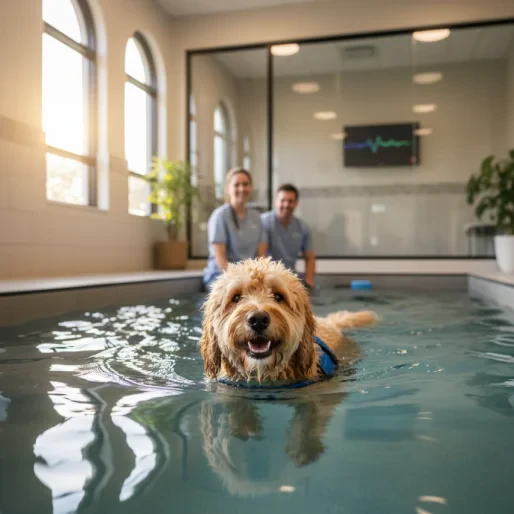
In pool therapy, dogs swim in a heated, purpose-built pool with a therapist guiding their movement. This modality is excellent for non-weight-bearing exercise and cardiovascular conditioning. It is commonly used for dogs recovering from spinal surgery or those with severe joint disease who cannot yet tolerate any ground contact.
Underwater Treadmill Therapy
An underwater treadmill encloses the dog in a chamber that fills with warm water to a controlled depth. The dog then walks on a treadmill belt. Because the therapist can adjust water height and belt speed, this modality allows precise control over how much weight the dog bears. It is frequently preferred for post-orthopaedic surgical recovery because it encourages a natural gait pattern.
Several veterinary specialist hospitals in New Zealand, including Veterinary Specialists Aotearoa (VSA) in Auckland and Christchurch, operate HydroPhysio underwater treadmill units as part of their rehabilitation services.
NZ Cost Comparison at a Glance
- Pool therapy: Typically $50 to $80 NZD per 30-minute session.
- Underwater treadmill: Typically $70 to $100 NZD per 30-minute session.
- Initial assessment or consultation: Often $120 to $150 NZD, sometimes partially offset if a treatment package is purchased.
The underwater treadmill tends to cost more because the equipment itself represents a significant capital investment, often exceeding $50,000 NZD for a veterinary-grade unit.
What Drives the Cost of Canine Hydrotherapy in New Zealand?
Geographic Location Within NZ
Prices vary between regions. Auckland and Wellington practices typically charge at the upper end of the range due to higher operational costs. Smaller centres and rural areas may offer slightly lower fees, though availability of qualified practitioners is more limited outside the main centres.
Type and Severity of Surgery
A dog recovering from bilateral TPLO surgery will almost certainly need more sessions than one recovering from a minor soft tissue procedure. The complexity of the case determines the length of the rehabilitation programme and thus the total cost.
Breed and Size
Larger breeds common in New Zealand, such as Huntaways, German Shepherds, and Labrador Retrievers (often 25 to 40 kg), may require longer sessions or specialised handling. Some clinics apply size-based pricing tiers.
Therapist Credentials
Sessions led by a Certified Canine Rehabilitation Practitioner (CCRP) or a veterinarian holding membership in the Australia and New Zealand College of Veterinary Scientists (ANZCVSc) in Veterinary Sports Medicine and Rehabilitation may cost more than sessions run by a technician with basic training. The clinical oversight is generally considered worth the premium for complex post-surgical cases.
Session Frequency and Package Deals
Most rehabilitation plans call for two to three sessions per week in the early stages, tapering to once per week as the dog progresses. Many NZ clinics offer package pricing (for example, a five-session card) that reduces the per-session cost by $5 to $10 NZD.
Average Total Cost: Realistic NZ Scenarios
Below are approximate total cost ranges in NZD for common post-surgical hydrotherapy courses:
- Mild case (8 sessions, pool therapy): $400 to $640 NZD plus initial assessment.
- Moderate case (12 sessions, underwater treadmill): $840 to $1,200 NZD plus initial assessment.
- Complex case (16 or more sessions, combination therapy): $1,120 to $1,600 NZD or more, plus initial assessment and periodic veterinary re-evaluations.
These figures do not include the cost of the surgery itself (TPLO surgery in New Zealand typically ranges from $3,500 to $6,000 NZD per knee) or post-operative medications. Owners should factor hydrotherapy into their broader surgical budget from the outset.
DIY Hydrotherapy vs. Professional Sessions
Some owners consider swimming their dog at a beach, lake, or home pool as a cost-saving alternative. While New Zealand offers abundant natural waterways, unsupervised swimming is not a substitute for professional post-surgical hydrotherapy:
- No clinical oversight: A certified therapist monitors gait, compensatory movement patterns, pain responses, and fatigue levels throughout each session.
- No controlled environment: Professional facilities maintain water temperature (typically 28 to 32°C), use ramps or hoists for safe entry and exit, and follow strict hygiene protocols that reduce infection risk to surgical wounds.
- Environmental hazards: New Zealand rivers and lakes can carry Leptospirosis, and cold water temperatures (particularly in the South Island) can cause muscle cramping and shock in post-surgical dogs.
- Risk of setbacks: Incorrect exercise intensity or timing can lead to implant failure, wound dehiscence, or muscle strain, resulting in far higher veterinary bills.
For dogs who have fully recovered and been discharged from rehabilitation, gentle swimming in safe, calm water can become part of an ongoing fitness routine. For ideas on low-impact exercise after rehab is complete, see our guide on building a DIY garden agility course for dogs.
What to Expect at Your First Hydrotherapy Appointment
Before the Session
The hydrotherapist will request a veterinary referral or surgical report. They will ask about the procedure performed, the date of surgery, current medications, and any movement restrictions set by the veterinary surgeon. Most NZ facilities require proof of current vaccinations, including canine parvovirus, distemper, and kennel cough (Bordetella).
The Assessment
An initial consultation (typically 45 to 60 minutes) involves a physical and gait assessment on land. The therapist will observe the dog's posture, muscle symmetry, range of motion, and comfort level. This assessment informs a tailored rehabilitation plan, including recommended modality, session frequency, water depth, and exercise intensity.
The First Water Session
The first session is usually shorter and gentler than subsequent ones. For the underwater treadmill, the therapist will guide the dog into the chamber, slowly raise the water level, and start the belt at a very low speed. For pool therapy, the dog will be supported by the therapist and, in many cases, a buoyancy aid. Sessions typically last 15 to 30 minutes initially, building gradually.
After the Session
Dogs are dried thoroughly, and the therapist will note observations about gait improvement, muscle engagement, or signs of discomfort. A progress report is often shared with the referring veterinary surgeon. In New Zealand's cooler months (May to September), ensure your dog is kept warm and dry during transport home.
After Hours Veterinary Clinics
Contact your regular vet's after-hours service or your nearest emergency veterinary clinic.
Major centres (Auckland, Wellington, Christchurch) have dedicated 24-hour emergency vet hospitals.
Pet Insurance and Hydrotherapy Coverage in New Zealand
Whether pet insurance covers hydrotherapy depends on several factors:
- Plan type: Southern Cross Pet Insurance covers rehabilitation including hydrotherapy under its PetCare plan. Other NZ providers such as PD Insurance, Petcover, and SPCA Pet Insurance may also include rehabilitative therapies under comprehensive plans.
- Veterinary prescription: Most NZ insurers require that a veterinarian formally prescribes hydrotherapy as medically necessary. Self-referred sessions are rarely covered.
- Policy sub-limits: Some policies cap complementary or rehabilitative therapy coverage at a set annual amount, so check your policy document carefully.
- Waiting periods: If hydrotherapy relates to a condition that arose during the policy waiting period, the claim may be denied. For a deeper explanation, see our article on Pet Insurance Waiting Periods in NZ: FAQs.
Payment Plans and Financial Assistance
If insurance does not cover hydrotherapy or the out-of-pocket cost is still significant, consider:
- Clinic payment plans: Many NZ rehabilitation centres offer instalment options.
- Veterinary financing: Some clinics accept Q Card or other NZ-based finance options that can spread costs over several months.
- Charitable funds: Organisations such as the SPCA and breed-specific rescue groups sometimes assist with rehabilitation costs for qualifying cases.
Skipping prescribed rehabilitation to save money can lead to poorer surgical outcomes, prolonged recovery, and potentially more expensive corrective procedures.
How to Find a Certified Canine Hydrotherapist in New Zealand
Certification matters. The difference between a trained and a certified hydrotherapist is significant: certification requires formal education, supervised clinical hours, and ongoing professional development.
Recognised Credentials in New Zealand
- Certified Canine Rehabilitation Practitioner (CCRP): Awarded through the University of Tennessee programme, which offers courses in New Zealand via the Veterinary Academy of Higher Learning. A CCRP credential indicates advanced training in canine rehabilitation including hydrotherapy.
- Certified Canine Rehabilitation Therapist (CCRT): Awarded by the Canine Rehabilitation Institute. Another internationally recognised credential held by NZ practitioners.
- ANZCVSc Membership in Veterinary Sports Medicine and Rehabilitation: Indicates specialist-level veterinary training recognised across Australia and New Zealand.
- New Zealand Association of Canine Hydrotherapists (NZACH): A local professional body for canine hydrotherapy practitioners.
Questions to Ask Before Booking
- What certification or qualification do you hold, and through which body?
- How many post-surgical rehabilitation cases do you handle each month?
- Do you communicate directly with my dog's veterinary surgeon?
- What is the water temperature, and how often is water quality tested?
- Can you provide a written treatment plan with expected milestones?
- What is your pricing structure, and do you offer packages or payment plans?
Seasonal Considerations for NZ Dog Owners
New Zealand's temperate maritime climate means rehabilitation logistics change with the seasons:
- Winter (June to August): Cold temperatures across much of the country make professional heated hydrotherapy pools essential. Avoid transporting a wet dog in cold weather without proper drying and warm blankets.
- Summer (December to February): New Zealand's intense UV levels mean post-session outdoor rest should be in the shade. Dogs with surgical sites or shaved areas are particularly vulnerable to sunburn.
- Travel distances: Because specialist hydrotherapy facilities are concentrated in main centres (Auckland, Wellington, Christchurch, Hamilton), rural owners may need to factor in travel time and fuel costs when budgeting for a multi-week rehabilitation programme.
When to Start and When to Stop
There is no one-size-fits-all timeline. General professional consensus suggests:
- Starting: Most dogs begin hydrotherapy between 10 and 14 days post-surgery, once the surgical wound has adequately healed and sutures or staples have been removed. The veterinary surgeon must give clearance.
- Progressing: Frequency typically starts at two to three sessions per week and reduces as the dog regains strength and mobility.
- Completing: A rehabilitation programme commonly spans 6 to 12 weeks, though complex cases may extend further. Discharge criteria usually include restored range of motion, adequate muscle mass, and return to comfortable daily function.
Final Thoughts on Budgeting for Canine Hydrotherapy in NZ
Hydrotherapy is an investment in surgical outcomes. The cost, while not insignificant, is modest compared to the price of the surgery itself and the potential expense of managing complications from inadequate rehabilitation. When budgeting for a planned orthopaedic or spinal procedure, building rehabilitation costs into the overall treatment estimate from day one is strongly recommended.
By choosing a certified hydrotherapist, communicating closely with the veterinary team, and exploring insurance or financing options such as Southern Cross PetCare or Q Card, Kiwi dog owners can give their dogs the best possible chance of a full, comfortable recovery.
Frequently Asked Questions
How much does dog hydrotherapy cost in New Zealand? ↓
Does Southern Cross Pet Insurance cover dog hydrotherapy in NZ? ↓
How do I find a certified canine hydrotherapist in New Zealand? ↓
When can my dog start hydrotherapy after surgery? ↓
Can I swim my dog in a lake or at the beach instead of professional hydrotherapy? ↓

Rachel Simmons
Pet Ownership Cost Advisor
Pet ownership cost advisor — transparent vet fee breakdowns, insurance guidance, and financial planning for owners.
Content Disclosure
This article was created using state-of-the-art AI models with human editorial oversight. It is intended for informational and entertainment purposes only and does not constitute veterinary medical advice. Always consult a licensed veterinarian for your pet's specific health needs. Learn more about our process.