
In this article
The Science Behind Aquatic Rehabilitation
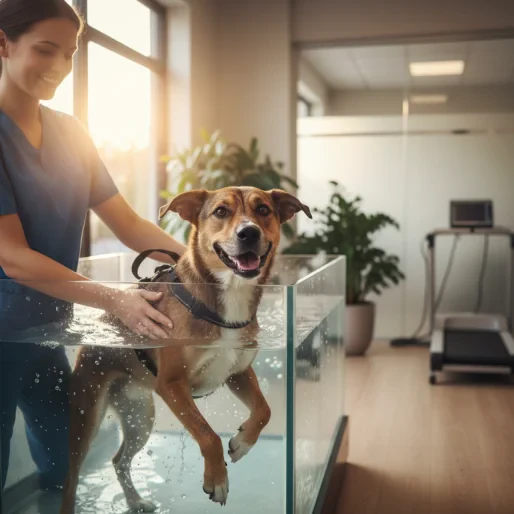
In the fifteen years I have spent in veterinary medicine, few advancements have transformed post-operative recovery as profoundly as hydrotherapy. Once reserved for equine athletes, aquatic therapy has become a cornerstone of rehabilitation for dogs recovering from orthopedic and neurological surgeries. But it is not simply 'swimming', it is a precise medical modality rooted in physics.
When a dog enters a hydrotherapy pool or underwater treadmill (UWTM), four fundamental principles of fluid dynamics immediately begin to alter their physiology. Understanding these mechanisms helps owners appreciate why we prescribe this therapy, often before the stitches are even fully dissolved.
1. Buoyancy: Defying Gravity
The most immediate benefit of water is the reduction of gravity's effect on the skeletal system. According to Archimedes' principle, a body immersed in fluid experiences an upward force equal to the weight of the fluid it displaces. In clinical terms, this means we can manipulate how much weight a recovering limb must bear by adjusting the water level.
- Level 1 (Tarsus/Hock): Minimal buoyancy; the dog bears approximately 91% of their body weight.
- Level 2 (Stifle/Knee): The dog bears roughly 85% of their body weight.
- Level 3 (Hip): Weight bearing drops to just 38%.
For a patient recovering from a Tibial Plateau Leveling Osteotomy (TPLO) or a fracture repair, this allows us to encourage gait patterning and muscle engagement without overloading the healing bone or implant. It bridges the dangerous gap between strict crate rest and normal walking.
2. Hydrostatic Pressure: Nature's Compression Stocking
Hydrostatic pressure is the force exerted by fluid molecules on the body. This pressure increases with depth. When a dog stands in water, this constant, uniform pressure acts similarly to a compression bandage.
In my practice, I often see significant post-operative edema (swelling) in the distal limbs following surgery. Hydrostatic pressure assists the lymphatic system and venous return, effectively pushing fluids away from the extremities and back into circulation. This reduction in swelling directly correlates to a reduction in pain and an improvement in the passive range of motion.
3. Viscosity and Resistance
Water is significantly more viscous than air, providing resistance in all directions. This creates a safe environment for muscle strengthening. Unlike land-based exercises where gravity targets specific muscle groups (often leading to compensation injuries), water resistance ensures that every movement requires effort, yet the resistance stops the instant the movement stops.
This is critical for preventing muscle atrophy (wasting) during the recovery period. We can rebuild the quadriceps and hamstring groups, essential for stabilizing the knee, without the concussive impact of running on pavement.
4. Thermal Effects
Therapeutic pools are typically heated to a range of 28°C to 32°C (82°F–90°F). This warmth causes vasodilation (widening of blood vessels), increasing blood flow to injured tissues. Improved circulation brings oxygen and nutrients required for cellular repair while flushing out metabolic waste products. Furthermore, the warmth increases the elasticity of collagen tissues, allowing for better stretching and range of motion exercises during the session.
Underwater Treadmill (UWTM) vs. Swimming
A common misconception among owners is that taking their dog to a lake or a standard pool is equivalent to clinical hydrotherapy. In a post-operative context, the distinction is vital.
The Underwater Treadmill
For early-stage recovery, the UWTM is the gold standard. It allows the therapist to control every variable: speed, water level, and temperature. Most importantly, it encourages a normal gait pattern. We want the dog to walk, placing the paw flat and extending the limb. This re-educates the neuromuscular system.
Free Swimming
Swimming induces a flexion-heavy gait (picking the legs up high). While excellent for cardiovascular fitness and forelimb strength, it can be detrimental to certain hindlimb conditions if introduced too early. Uncontrolled swimming can lead to excessive rotation or explosive movements that might jeopardize a surgical repair. We typically reserve swimming for later stages of recovery or for conditioning healthy athletic dogs, similar to the protocols described in our guide to conditioning dogs for hiking season.
Indications for Hydrotherapy
While almost any immobile patient can benefit, we most frequently prescribe this protocol for:
- Cranial Cruciate Ligament (CCL) Injuries: Post-TPLO or extracapsular repair.
- Intervertebral Disc Disease (IVDD): For neurological re-education and spinal stability.
- Hip Dysplasia: Post-Total Hip Replacement (THR) or Femoral Head Ostectomy (FHO).
- Osteoarthritis: Management of chronic pain in senior patients, which requires a long-term wellness strategy similar to managing arthritis during cold snaps.
The Owner's Role in Recovery
Successful rehabilitation is a partnership. While the hydrotherapy sessions occur in the clinic, your observation at home is crucial. You must monitor the incision site for any reaction to the water (though we do not start hydrotherapy until the skin is sealed), and watch for signs of fatigue.
Rehabilitation is an investment, both of time and finances. As detailed in our breakdown of the real cost of dog ownership, specialized therapies are a significant line item, but the return on investment is a functional, pain-free life for your companion.
When to Avoid Hydrotherapy
Despite its benefits, hydrotherapy is not a universal cure. Contraindications include:
- Open wounds or infected incisions: Water is a vector for bacteria.
- Cardiac disease: The hydrostatic pressure increases venous return, which can overwhelm a compromised heart.
- Respiratory compromise: The pressure on the chest wall makes breathing slightly more difficult.
- Unmanageable fear: High stress releases cortisol, which inhibits healing. If a dog is terrified of water, the stress outweighs the physical benefits.
Always consult with your veterinary surgeon or a certified canine rehabilitation practitioner (CCRP) before starting any water-based activity.
Frequently Asked Questions
Content Disclosure
This article was created using state-of-the-art AI models with human editorial oversight. It is intended for informational and entertainment purposes only and does not constitute veterinary medical advice. Always consult a licensed veterinarian for your pet's specific health needs. Learn more about our process.