New Zealand's spring waterways bring unique risks for dogs, from cyanobacteria blooms in warming lakes to snowmelt fed rivers in the South Island. This guide covers site assessment, life jacket fitting, temperature thresholds, and post swim ear care tailored to Kiwi conditions.
Key Takeaways
- Check every time: River flow, water clarity, and bank conditions change rapidly during the NZ spring (September to November), especially on snowmelt fed rivers in Canterbury, Otago, and the West Coast.
- Cyanobacteria (toxic algae) kills dogs in New Zealand every year: Regional councils publish real time alerts; check these before every outing.
- Water temperature thresholds vary by breed size: Small and lean breeds face hypothermia risk below roughly 15 °C, while large double coated breeds tolerate slightly cooler water for short sessions.
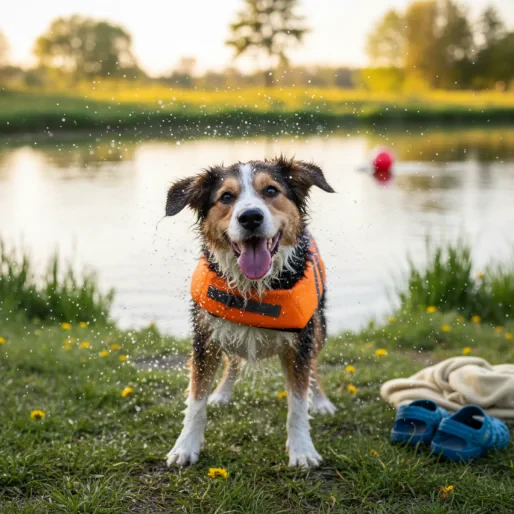
- A properly fitted canine life jacket is essential in open water with currents, drop offs, or limited visibility.
- Post swim ear drying significantly reduces otitis externa (ear infections), particularly in floppy eared breeds popular in NZ such as Labrador Retrievers and Cocker Spaniels.
Why Spring Water Safety Matters for NZ Dogs
Spring in New Zealand runs from September through November, a period when rivers swell with snowmelt from the Southern Alps, lake temperatures climb unevenly, and dogs are eager to return to the water after winter. The combination of higher flows, warming shallows that encourage toxic algal growth, and water still cold enough to cause rapid heat loss creates a distinct risk window for Kiwi dog owners.
The consequences of ignoring these risks can be severe. Cyanotoxin ingestion can cause liver failure or respiratory paralysis within hours, and the New Zealand Veterinary Association (NZVA) has highlighted the recurring nature of toxic algae related dog deaths across the country. A dog swept into a swift braided river in the Canterbury Plains or caught in a thermocline on a deep South Island lake faces life threatening danger regardless of swimming ability.
The good news: a short, consistent safety routine before and after every swim dramatically reduces these risks.
NZ Seasonal Timing: When Spring Water Risks Peak
Unlike the Northern Hemisphere, New Zealand's spring hazards peak between September and November:
- September and October: Snowmelt is at its highest in South Island catchments. Rivers like the Waimakariri, Rakaia, and Rangitata can rise rapidly. Water temperatures in the South Island commonly sit between 8 °C and 13 °C, cold enough to pose hypothermia risk for most dogs.
- October and November: Warming shallows in North Island lakes (such as Lake Rotorua, Lake Taupō margins, and Waikato River backwaters) create ideal conditions for cyanobacteria blooms. Regional councils typically begin issuing health warnings from mid October onward.
- Throughout spring: Unpredictable weather, including nor'westers in Canterbury and spring storms nationwide, can change lake and river conditions within hours.
Pre Swim Site Assessment (Every Visit)
Conditions at any waterway can shift dramatically between visits. Professional canine water safety guidance recommends a structured check before every swim:
- Visual scan: Look for green, brown, or reddish discolouration, floating debris, foam, or surface scum. In braided rivers, scan for new channels and undercut banks.
- Smell test: Cyanobacterial blooms often produce a musty, earthy, or sewage like odour detectable from the bank.
- Current speed: Toss a stick or leaf into the flow and watch how quickly it moves. If it travels faster than a brisk walking pace, the current is likely too strong for most dogs.
- Entry and exit points: Ensure there are gradual, stable banks. Spring saturated soil along NZ riverbanks can collapse underfoot, particularly on silt based banks in lowland areas.
- Check local alerts: Regional councils (Environment Canterbury, Waikato Regional Council, Greater Wellington, and others) publish cyanobacteria and water quality alerts on their websites and at signage near popular swimming spots. The LAWA (Land Air Water Aotearoa) website aggregates water quality data from monitoring sites across the country.
Cyanobacteria in New Zealand: A Recurring Lethal Risk
Why NZ Waters Are Particularly Affected
New Zealand's freshwater bodies are under significant nutrient pressure from agricultural runoff, making many lakes and slow moving rivers prone to cyanobacterial blooms. Both planktonic blooms (floating in lakes) and benthic mats (attached to rocks in riverbeds) occur in NZ. Benthic cyanobacteria, particularly Phormidium species, are a notable hazard in Canterbury and Hawke's Bay rivers, as dogs may dislodge and ingest detached mats while wading or drinking.
How to Identify a Potential Bloom or Mat
- Planktonic blooms: Appear as green, paint like scum on lake surfaces. Water may look like thick pea soup.
- Benthic mats: Dark brown or black mats attached to rocks on the riverbed, sometimes with an earthy or musty smell. Detached mats may float downstream and accumulate along river margins.
- Shoreline residue: Dried, crusty material along the waterline indicates recent bloom activity, even if the water currently looks clear.
Toxicity: Why Minutes Matter
Cyanotoxins include hepatotoxins (microcystins, nodularin) and neurotoxins (anatoxin a). Dogs are at extreme risk because they drink water while swimming and lick contaminated fur afterward. Clinical signs can appear within 15 to 60 minutes:
- Vomiting and diarrhoea (sometimes bloody)
- Excessive drooling, disorientation
- Seizures and muscle tremors
- Difficulty breathing
- Collapse
If any signs appear after water contact, this is a veterinary emergency. Rinse the dog thoroughly with clean water, do not induce vomiting, and transport to the nearest veterinary clinic immediately. [LOCAL_VET_EMERGENCY_en-nz]
Dog Access Rules on NZ Waterways
Under the Dog Control Act 1996, local councils set bylaws governing where dogs may access waterways, beaches, and reserves. Many popular swimming spots, particularly those near conservation land managed by the Department of Conservation (DOC), have seasonal or permanent dog restrictions to protect native wildlife including nesting shorebirds and kiwi habitat. Before heading to any waterway:
- Check your local council's dog access map (most are available online).
- Keep dogs on a lead in any area marked as a controlled dog area.
- Be aware that some DOC managed areas prohibit dogs entirely, even on lead.
- Ensure your dog's microchip registration is current, as required under New Zealand law.
Water Temperature Thresholds by Breed Size
Hypothermia risk varies based on a dog's size, body composition, coat type, and overall health. Veterinary sports medicine literature offers general thresholds applicable to NZ spring conditions:
- Small breeds and lean bodied dogs (under roughly 10 kg): Water below approximately 15 °C presents meaningful hypothermia risk. Many NZ waterways remain below this threshold until late October or November.
- Medium breeds (10 to 25 kg) with moderate coat: Water between 12 °C and 15 °C may be tolerated for brief, supervised swims of 5 to 10 minutes.
- Large breeds with dense double coats (e.g., Labrador Retrievers, Newfoundlands, Heading Dogs): Generally tolerate water down to roughly 10 °C for short sessions, though individual variation is significant.
- Senior dogs and those with arthritis or chronic conditions: Regardless of size, these dogs are more vulnerable to cold stress. Err on the side of warmer water and shorter durations.
Signs of Cold Stress
Monitor for shivering, reluctance to re enter the water, tucked tail, stiff movement, or whining. If any appear, end the session, dry the dog with an absorbent towel, and move to shelter. Lethargy, lack of coordination, or unresponsiveness after cold water exposure warrants veterinary assessment for hypothermia.
Life Jacket Fitting for NZ Conditions
Canine life jackets are available from New Zealand pet retailers and are strongly recommended for any open water swimming, particularly in rivers with variable flow or lakes with wind driven chop. The NZVA supports the use of flotation devices for dogs in open water.
Fitting Steps
- Measure accurately: Use the manufacturer's sizing chart. Measure girth at the widest part of the ribcage and length from base of neck to base of tail.
- Secure all straps: Neck, chest, and belly straps should be snug enough to prevent the jacket sliding forward or rotating, but allow two fingers between strap and body.
- Test the dorsal handle: Gently lift the dog by the handle on dry land. The jacket should hold evenly without riding up or pressing on the throat.
- Check leg freedom: The dog should walk, trot, and paddle without restriction. Watch for chafing behind the front legs.
- Shallow water test first: Let the dog swim in a controlled shallow area before heading to open water.
Post Swim Ear Drying Protocol
Dogs with floppy ears (Labrador Retrievers, Cocker Spaniels, Golden Retrievers, and Cavalier King Charles Spaniels, all popular in New Zealand) are particularly prone to otitis externa from trapped moisture. Veterinary dermatology sources identify swimming as a leading predisposing factor.
- Immediately after swimming, gently lift each ear flap and blot visible moisture from the inner flap and ear canal entrance using a soft cloth or cotton ball. Do not insert anything deep into the canal.
- If recommended by your vet, apply a veterinary approved ear drying solution.
- Allow air circulation for a few minutes by gently folding ear flaps back.
- Monitor for 24 to 48 hours: Head shaking, scratching, redness, odour, or discharge warrant a veterinary visit.
What to Bring: NZ Spring Swim Kit
- Canine life jacket (inspected weekly for strap and buckle integrity)
- Long line (5 to 10 metres) for initial introductions and controlled access
- Fresh drinking water from home (reduces temptation to drink from lakes or rivers)
- Absorbent towels and a windbreak or open car boot for drying
- Basic first aid kit: antiseptic wipes, styptic powder, thermal blanket
- Sunscreen formulated for dogs (NZ UV levels are notably high in spring, particularly for dogs with thin coats or pink skin on the nose and ears)
When to See a Vet
Seek veterinary attention promptly if your dog shows any of the following after open water exposure:
- Vomiting, diarrhoea, or appetite loss within hours of swimming (possible cyanotoxin exposure or waterborne infection, including leptospirosis)
- Persistent shivering, lethargy, or weakness after drying and warming (possible hypothermia or limber tail syndrome)
- Head shaking, ear scratching, redness, or foul odour from ears within 24 to 72 hours (possible otitis externa)
- Coughing, laboured breathing, or nasal discharge (possible water aspiration)
- Skin irritation, hot spots, or rashes (possible contact dermatitis)
- Lameness or reluctance to move (possible musculoskeletal injury from underwater obstacles)
Never adopt a wait and see approach with suspected toxic algae exposure. This is always an emergency. [LOCAL_VET_EMERGENCY_en-nz]
Leptospirosis: An Additional NZ Waterborne Risk
Leptospirosis is a bacterial disease transmitted through water contaminated with infected animal urine, and it is present in New Zealand. Dogs that swim in rivers, lakes, or ponds, especially in rural or farming areas, are at increased risk. A leptospirosis vaccine is available in New Zealand and is recommended by the NZVA for dogs with waterway exposure. Discuss vaccination status with your veterinarian before the spring swimming season begins.
Building a Safe Spring Swimming Routine
Consistent habits make the difference. A pre swim site check takes under five minutes. Life jacket use, temperature awareness, post swim ear drying, and checking council water quality alerts collectively address the most common and most serious risks NZ dog owners face at the waterside. Spring swimming, approached thoughtfully, remains one of the best forms of canine exercise: low impact on joints, excellent for cardiovascular conditioning, mentally enriching, and deeply enjoyable for water loving breeds across Aotearoa.
Frequently Asked Questions
When is the highest risk period for toxic algae in New Zealand waterways? ↓
Are dogs allowed to swim at all New Zealand beaches and rivers? ↓
What water temperature is too cold for dogs in New Zealand spring? ↓
Should my dog be vaccinated against leptospirosis before swimming in NZ rivers? ↓
How do I check for cyanobacteria alerts in my region? ↓

Lena Voss
Pet Wellness & Lifestyle Coach
Pet wellness and lifestyle coach — proactive fitness, weight management, and preventive care for healthier, happier pets.
Content Disclosure
This article was created using state-of-the-art AI models with human editorial oversight. It is intended for informational and entertainment purposes only and does not constitute veterinary medical advice. Always consult a licensed veterinarian for your pet's specific health needs. Learn more about our process.